Mental health · England
Understanding EUPD and BPD
Your browser or device provides the reading voice.
These are names used for some mental health difficulties.
You deserve support and respect.

Understanding the names
EUPD and BPD are names you may hear.
Ask a professional what your diagnosis means.
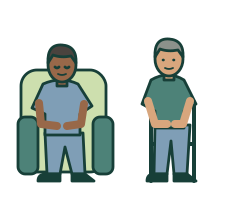
Strong feelings
Feelings may be very strong or change quickly.
Relationships or how you feel about yourself may be difficult.

Careful assessment
A specialist should listen to your experience.
A difficult day does not prove someone has this condition.

Ask questions
You can ask why a diagnosis was given.
You can ask for it to be reviewed.

Your experiences
People have different histories and support needs.
You can ask for help to feel safe and understood.

Treatment can help
Therapy can help you manage feelings and relationships.
Ask about the choices and any changes you need to take part.

Medicines
Ask what each medicine is for.
Ask when it will be reviewed.
Do not stop prescribed medicines yourself.

Make a support plan
Agree what helps when you feel distressed.
Know who to contact.
Include your own wishes and goals.

Getting help
For urgent mental health help, call 111 and select the mental health option.
Call 999 or go to A&E if you cannot keep yourself or someone else safe.
What you can do next
Ask for treatment and support that fit your needs.
People can improve and recover.
Read NHS information about BPD Web pageThis link opens another website.
It may use harder words.
More useful links
- NHS: borderline personality disorder Web page
Information about assessment, experiences and treatment.
- Royal College of Psychiatrists: personality disorder Web page
Changing terminology, assessment, care planning and questions about a diagnosis.
- Mind: understanding BPD and EUPD Web page
Different views on diagnosis and support needs.
- NHS: urgent mental health help Web page
Urgent and emergency routes.
These links open other websites.
They may use harder words.
EUPD and borderline personality disorder
Understand the names, assessment, intense emotions, treatment and respectful support.
Adults · England · Diagnosis requires careful individual assessment
Understanding the names
EUPD means emotionally unstable personality disorder. It is a name commonly used alongside borderline personality disorder, or BPD. Diagnostic terminology is changing, and some services use terms such as complex emotional needs. Ask what a label means in your care. People have different views about these names; you can explain which wording feels useful or upsetting.
Experiences differ
A person may experience very intense emotions, fear of being left, a changing sense of identity, impulsive actions or difficulties in relationships. Some experience feeling disconnected from themselves or their surroundings. These difficulties can be very painful and affect everyday life. A list of experiences cannot diagnose someone. The person’s strengths, goals, relationships and own explanation of their distress matter.
Ask for careful assessment
A trained mental health professional should consider the pattern over time, daily life, other possible explanations and any other conditions. Autism and personality disorder can overlap or be confused; some people receive both diagnoses. Communication and developmental history need attention. Ask the clinician to explain their reasoning. If a diagnosis does not fit your experience, you can ask for a review or discuss a second opinion.
Causes and personal history
There is no single established cause. A combination of personal experiences and other factors may be involved. Some people have experienced trauma or neglect, while others do not report these experiences. Do not assume a history or pressure someone to disclose it. Support should recognise what helps them feel safe and understood now.
Psychological treatment and recovery
Treatment often involves structured psychological therapy from trained professionals. Options may include dialectical behaviour therapy, or DBT, which develops skills for managing emotions and distress, or mentalisation-based therapy, or MBT, which explores understanding your own and other people’s feelings and intentions. The right approach depends on assessment and preferences. Ask about adaptations, waiting times and support between appointments. Many people improve and recover over time.
Understand the role of medicines
NICE advises against using medicines specifically to treat BPD itself or its individual symptoms routinely. A prescriber may recommend medicine for another condition, or carefully planned short-term treatment during a crisis. Ask why each medicine is prescribed, what benefit is expected and when it will be reviewed. Do not stop prescribed treatment yourself; discuss concerns with the prescriber.
Make a practical support plan
Agree goals, early signs of distress, situations that make things harder, helpful responses and named contacts. Include what to do between appointments and out of hours. Explain communication and sensory needs, and who you want involved. Supporters should respond calmly, take distress seriously and discuss boundaries clearly. Review the plan together after a crisis, including what helped and what needs to change.
Getting urgent help
For urgent help, use NHS 111’s mental health option or an urgent GP appointment. Call 999 or go to A&E if life is at risk or someone cannot be kept safe.
Words you could use
“Please explain the assessment and treatment options, listen to my experience, and agree a support plan with me.”
More useful links
- NHS: borderline personality disorder Web page
Information about assessment, experiences and treatment.
- Royal College of Psychiatrists: personality disorder Web page
Changing terminology, assessment, care planning and questions about a diagnosis.
- Mind: understanding BPD and EUPD Web page
Different views on diagnosis and support needs.
- NHS: urgent mental health help Web page
Urgent and emergency routes.
These links open other websites.
They may use harder words.
Where the information comes from
Links checked 9 November 2026.
These links open other websites.
They may use harder words.
- NHS: BPD overview Web page
Individual variation, assessment, treatment and recovery.
- NHS: BPD symptoms Web page
Emotional, relationship and identity difficulties that require individual assessment.
- NHS: BPD diagnosis Web page
Specialist assessment, alternative explanations and choice about involving others.
- Mind: BPD and EUPD names Web page
Names and differing views about diagnosis.
- Mind: possible causes Web page
No single cause and no universal history of trauma.
- NHS: BPD treatment Web page
Psychological therapies, DBT, MBT and individual treatment.
- NICE CG78: BPD care and treatment Web page
Medication limits, collaborative care plans and calm crisis support.
- Royal College of Psychiatrists: personality disorder Web page
Current terminology, careful assessment and reviewing a diagnosis.
- Royal College of Psychiatrists: autism and mental health Web page
Possible overlap, misdiagnosis and co-occurrence with personality disorder.
- NICE NG54: adapted mental health care Web page
Communication, preferences and individual care planning.
- NHS: urgent mental health help Web page
Urgent and emergency support.