Education · England
Going to college
Your browser or device provides the reading voice.
This guide is for people in England.
You can keep learning after school.

Think about what you enjoy.
Think about what you want to learn or do.
Your wishes matter.
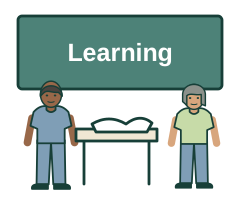
You could go to college or an adult learning class.
You could learn skills for work or everyday life.
Ask to visit before you decide.

Residential college
At some colleges you can stay overnight.
This is called a residential college.
Other colleges have day places.
Look at your choices
Ask to visit and meet people.
Ask whether you can try a session or a short stay.
Think about what matters to you.

Life outside lessons
Ask about your room, privacy and free time.
Ask how you can see friends and family.
Check who can help at night.

Tell the college what helps you learn.
You may need pictures, equipment, breaks or a quiet space.
Ask the learning support team for help.

Some people have an Education, Health and Care plan.
This is sometimes called an EHC plan.
A plan does not automatically end when you become 18.
It does not automatically last until 25.
A supported internship helps some young people learn at work.
A job coach helps them.
The placement is usually unpaid.
The aim is to help the person get paid work.

An apprenticeship is a paid job with training.
Ask what you need to apply.
Ask what support you can get.

Check course costs and travel costs.
Ask about help to pay.
Check whether studying changes your benefits.
Get a clear funding decision
A college offer does not always mean funding is agreed.
Ask who will pay for each part.
Get the agreement in writing before paying.

Check weekends and holidays
Ask which nights and weeks are included.
Plan travel and support when college is closed.
Plan what happens when your course ends.
If you disagree
Ask why the council has refused your choice.
Ask for independent SEND advice.
Check any deadline for challenging the decision.

You can ask someone you trust to help compare choices.
Plan what happens after your course.
Adults can keep learning at different ages.
What you can do next
Contact a college or your council's adult learning service.
You could say: I want to learn. Please help me find the right course and support.
Explore further education courses Web pageThis link opens another website.
It may use harder words.
More useful links
- Supported internships Web page
How a work placement and job coach support the move towards paid employment.
- Apprenticeships Web page
Paid employment combined with training.
- Find your council Web pageFuller information
Search your council website for its SEND Local Offer and adult learning service.
- Natspec: find a specialist college Web page
Search member colleges, including day and residential options. Check which colleges are in England.
- IPSEA: choosing a school or college with an EHC plan Web page
Explains requesting a setting and the different legal rules for providers.
- GOV.UK: appealing an EHC plan decision Web page
Which decisions can be appealed and how the SEND Tribunal process works.
- Contact: education beyond 16 Web page
Information for families about further education, specialist colleges and individually tailored learning.
- GOV.UK: help with college accommodation costs Web page
The Residential Bursary Fund has separate age, course and institution rules. Ask the college about eligibility.
These links open other websites.
They may use harder words.
Going to college, including residential college — Easy Read
Compare local, specialist and residential colleges, learning support, funding and life outside lessons.
Post-school education and adult learning · England
Start with what you want to learn
Further education includes learning after secondary school, such as practical skills, qualifications and preparation for work. Explore mainstream colleges, specialist providers and local adult learning services. A useful course should connect with your interests and goals: a job, communication, daily living, friendships or community participation. Visit if possible and ask to try a session. Your aspirations should guide planning, including when progress is not measured through exams.
Ask the college about support
Contact the college's learning support or special educational needs team before starting. Explain communication, sensory, physical and health needs. Ask about accessible teaching, equipment, personal care, quiet spaces, breaks and support on placements. Colleges have reasonable adjustment duties and must use their best endeavours to secure required special educational provision for relevant students. An EHC plan is not required for every learner to receive support. Agree how staff will check whether support works.
What a residential college means
Some specialist colleges offer day places, residential places or both. A residential place means staying at college for agreed nights or weeks while learning there. Arrangements vary: do not assume weekends or holidays are included. A specialist college may teach communication, independent living or work skills alongside other learning. Residential college is one option, not the right choice for everyone. Compare what matters to you, including staying near family, friends and your community.
Compare colleges and try a visit
Natspec’s directory lists member specialist colleges and shows day or residential provision. It covers more than England, so check the location and rules that apply. Ask about age range, courses and the needs each college can support. Arrange an accessible visit and ask whether an assessment or trial stay would help. Meet students where possible. Bring questions about teaching, communication, health support, personal care and what you will do outside lessons.
Check everyday life as well as lessons
Ask to see bedrooms, bathrooms, classrooms, leisure spaces and routes around the site. Check privacy, visitors, friendships, internet access, meals, cultural needs and activities. Ask who is available at night and how epilepsy, medicines or other health needs are supported. Explain communication and sensory needs, including support for autistic people. Ask how staff will help you speak up, complain or change a plan. Your wishes should shape the arrangements.
EHC plans after school
An Education, Health and Care plan, often called an EHC plan or EHCP, may continue during further education or training where it remains necessary. It does not automatically end at 18 or 19. Equally, a plan is not an automatic entitlement to education until 25. Decisions must reflect the individual and legal criteria. The annual review should consider outcomes and the move into adult life. Degree-level higher education uses different support arrangements; an EHC plan does not continue simply because someone goes to university.
Learning through work
Supported internships are usually for young people aged 16 to 24 with special educational needs or disabilities and an EHC plan. They combine education with a substantial work placement and a job coach. Placements are normally unpaid; the aim is paid employment, not a guaranteed job. Some local pilot provision includes people without an EHC plan. Apprenticeships are different: you are an employee who earns a wage while learning. Ask the training provider and employer about entry requirements and adjustments.
Check funding and practical arrangements
Ask for a written explanation of course fees, additional learning support, travel, meals and equipment. Funding depends on your age, course and circumstances; a learning disability does not make every course free. Ask about bursaries and other help. Check how study or paid training could affect your benefits before changing arrangements. Adults can also explore community learning, English, maths, digital skills and other courses beyond the EHC age range.
Agree the placement and funding in writing
Discuss a proposed specialist or residential placement through the EHC plan process where applicable. Explain what provision you need and why the proposed setting can meet it. The council must apply the relevant legal tests when considering your preferred college; the rules differ for some types of independent provider. An offer from a college does not by itself confirm council funding. Ask for written decisions, the named placement and the agreed education, accommodation, care and transport arrangements before committing to costs.
Separate education, care and accommodation costs
Ask which organisation will fund each part, what is included and whether any personal contribution is proposed. Health or care provision that educates or trains a child or young person is treated as special educational provision for EHC plan purposes; it should not simply be labelled chargeable care. Other support may require a separate health or social care assessment. Residential bursary schemes have their own eligibility rules and are not a general guarantee of funding for specialist residential college. Get individual advice if responsibility is disputed.
Plan evenings, weekends, holidays and coming home
Write down the nights and weeks covered by the placement. Agree who arranges travel, equipment, medicines and support during closures, visits home and holidays. Ask what happens if you are ill or the placement breaks down. Plan how to keep friendships and community connections. Start discussing the next step well before the course ends, including where you want to live and learn or work.
If the council refuses your preferred option
Ask for the decision and reasons in writing, and compare them with your needs, EHC plan and college assessments. IPSEA and your local SEND information, advice and support service can explain the options. Some EHC plan decisions can be appealed to the SEND Tribunal, including disputes about the named placement. Check the decision letter promptly because deadlines apply. A complaints process is not a substitute for an appeal when an appeal is needed.
Find local choices and plan ahead
Your council's SEND Local Offer should explain provision for children and young people, including post-16 options and transport arrangements. For older adults, ask local colleges and adult education services directly. Bring someone you choose to planning meetings. Ask who will organise health or social care support when college is closed, and prepare the next step before a course finishes.
Words you could use
“I want to compare local, specialist and residential college options. Please explain learning, access, living arrangements, funding and support outside lessons.”
More useful links
- Supported internships Web page
How a work placement and job coach support the move towards paid employment.
- Apprenticeships Web page
Paid employment combined with training.
- Find your council Web pageFuller information
Search your council website for its SEND Local Offer and adult learning service.
- Natspec: find a specialist college Web page
Search member colleges, including day and residential options. Check which colleges are in England.
- IPSEA: choosing a school or college with an EHC plan Web page
Explains requesting a setting and the different legal rules for providers.
- GOV.UK: appealing an EHC plan decision Web page
Which decisions can be appealed and how the SEND Tribunal process works.
- Contact: education beyond 16 Web page
Information for families about further education, specialist colleges and individually tailored learning.
- GOV.UK: help with college accommodation costs Web page
The Residential Bursary Fund has separate age, course and institution rules. Ask the college about eligibility.
These links open other websites.
They may use harder words.
Where the information comes from
Links checked 27 October 2026.
These links open other websites.
They may use harder words.
- DfE: further education SEND guide Web page
College duties, SEN support and preparing for adulthood.
- DfE: EHC plans from 19 to 25 Web page
Individual decisions about continuing a plan and the distinction from higher education.
- DfE: supported internship guidance Web page
Eligibility, work placements, job coaching and the pilot without EHC plans.
- GOV.UK: apprenticeships Web page
Employment and training arrangements.
- GOV.UK: further education courses and funding Web page
Types of courses and routes to financial help.
- GOV.UK: financial help for further education Web page
Course and living-cost support depends on individual circumstances.
- Natspec: find a specialist college Web page
Search member colleges, including day and residential options. Check which colleges are in England.
- IPSEA: choosing a school or college with an EHC plan Web page
Explains requesting a setting and the different legal rules for providers.
- GOV.UK: appealing an EHC plan decision Web page
Which decisions can be appealed and how the SEND Tribunal process works.
- Contact: education beyond 16 Web page
Information for families about further education, specialist colleges and individually tailored learning.
- GOV.UK: help with college accommodation costs Web page
The Residential Bursary Fund has separate age, course and institution rules. Ask the college about eligibility.
- Children and Families Act 2014, section 21 Web page
Health or social care provision which educates or trains is treated as special educational provision.
A page for you to fill in
You can type your answers and download a copy.
You can also print a page to write or draw on.
Someone you trust can help you.