Planning & support · England
Get ready for a planning meeting
Your browser or device provides the reading voice.
A planning meeting looks at your support and next steps.
A review meeting checks whether your plan still works for you.

Ask when and where the meeting will happen.
Ask who will be there.
Ask what decisions people want to make.

Tell people what helps you take part.
You can ask for pictures, simpler words, more time or breaks.
Say who you would like to support you.

Think about what is going well in your life.
Explain what you want to keep.
Use examples that matter to you.

Think about what you want to change.
Explain how the problem affects your life.
Say what you would like to happen instead.

Check the next steps before the meeting ends.
Ask who has agreed to do each task.
Ask when each task will be done.
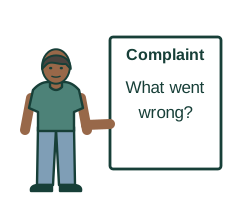
People may disagree about what should happen.
Ask for your view to be written down clearly.
Ask how the disagreement will be dealt with.

Ask for the meeting notes in a form you understand.
Check that the notes explain your wishes correctly.
Ask for mistakes to be corrected.
Agree when your plan will be checked again.
Ask who to contact if your needs change sooner.
You can use the blank worksheet to prepare.
What you can do next
Open the blank meeting worksheet on this page.
Write down the most important thing you want people to understand.
Read about reviewing your support Web pageThis link opens another website.
It may use harder words.
Prepare for a planning or review meeting
A worksheet to explain what is working and agree clear next steps.
A practical planning worksheet · for use in England
Get ready in a way that works for you
Ask what the meeting is for, who is coming and what decisions may be made. Ask for papers in a format you can use, enough time to prepare, breaks and communication support. Choose someone to help you prepare or take part if you want.
Bring your priorities
Start with the changes you want in your everyday life. Give examples of support that helps and things that are difficult. Other people may have different views. Keep those views distinct so your own wishes remain clear.
Agree practical actions
For each action, name the person responsible, the date and how you will know it has happened. Ask who will help if a task is delayed. If something cannot be agreed, record the disagreement, reasons and how it will be considered further.
Check the record afterwards
Ask for the notes and action plan in a form you understand. Check that your views were recorded accurately and request corrections where needed. Set a review date, and contact the responsible service sooner if your needs change.
Use this alongside the service's process
The Clearer worksheet is a preparation aid, not an official assessment or an appeal form. Take it to a care review, education planning discussion or another suitable meeting. The service still needs to follow the rules for its own decisions and reviews.
Words you could use
“These are my main priorities. Please record my views, any disagreement, and the actions each person has agreed to take.”
Where the information comes from
Links checked 26 October 2026.
These links open other websites.
They may use harder words.
- NHS England: personalised care and support planning Web page
Good practice on preparation, involvement, agreed outcomes and reviewing plans.
- Helen Sanderson Associates: working/not-working Web page
An established tool for hearing different perspectives and identifying change.
- SCIE: care planning and involvement Web page
Practical checks for person-centred involvement and coordinated support.
A page for you to fill in
You can type your answers and download a copy.
You can also print a page to write or draw on.
Someone you trust can help you.