Rights & choices · England
Agreeing an access plan for a meeting or conference
Your browser or device provides the reading voice.
Ask for the changes you need before the meeting.
Write down what the organiser agrees to arrange.

Get ready for the meeting
Ask what the meeting is for.
Ask how your views will help make decisions.

Ask for information before the meeting.
Choose a format you understand.

Agree the changes you need
Tell the organiser what helps you take part.
You can ask someone to help you explain.

Write down the changes you agree.
Record who will arrange them and when.
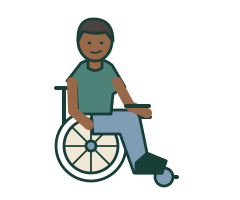
Check the room, toilets and journey.
Check the support you need during the day.

Agree enough time and breaks.
Agree how you can ask people to slow down.

Communication and online meetings
You can use your own way of communicating.
Ask people to speak to you directly.

For an online meeting, try the link beforehand.
Agree what happens if your connection fails.

Costs, privacy and follow-up
Ask who pays for travel and support.
Get agreement before spending money.
Ask about photographs and recordings.
Explain your privacy needs.

Not every requested change must be agreed.
Ask for reasons and a useful alternative.
Ask for an accessible record after the meeting.
Check the decisions and who will act next.
What you can do next
Choose the help that works for you.
You can ask someone you trust to help.
Read NHS England’s accessible meeting guidance Web pageThis link opens another website.
It may use harder words.
More useful links
- NHS England: making meetings accessible Web page
Preparation, accessible papers, communication, presentations and participation.
- GOV.UK: reasonable adjustments for services Web page
Anticipatory duties and the circumstances that affect reasonableness.
- NHS England: Accessible Information Standard guidance Web page
The standard’s scope and recording, sharing and meeting communication needs.
These links open other websites.
They may use harder words.
Agreeing an access plan for a meeting or conference
Prepare the changes you need, record who will arrange them and check that you can take part.
Meetings, conferences and involvement events in England · Duties depend on the setting
Be clear about your role
Ask what the event is for, what decisions may be made and how your views will be used. You may be attending, speaking, voting or sharing experience. Say how you want to contribute and who you want alongside you. A supporter can help you prepare without replacing your own views. For a care review, also use the planning-meeting guide.
Contact the organiser early
Ask who is responsible for access. Describe what is difficult and the changes that help, rather than giving only a diagnosis. For example, explain that you need questions beforehand and enough time to use a communication device. Ask when the organiser will reply. If you join at short notice, still explain your needs; asking late does not automatically remove legal duties.
Prepare accessible information
Request an agenda, the purpose of each item and any questions in the format you use. This could be Easy Read, audio or a short video. Agree a date that gives you time to prepare with support. Ask who will attend and what their roles are. If papers change, ask for a clear explanation of what is new.
Agree a written access plan
Record each barrier, the agreed change, who will arrange it and when it will be ready. Include anything not yet agreed, an alternative if needed and a contact on the day. Ask for a copy you understand. An access plan is a practical agreement; it does not itself guarantee funding or replace the organiser’s legal responsibilities. Share only the relevant parts with speakers and staff.
Make the room and journey work
Confirm step-free routes, suitable toilets, seating, food arrangements and a quieter space. Check transport and a realistic start and finish time. Agree breaks and personal care arrangements. If a supporter, interpreter or other communication professional is needed, confirm who books and pays. A venue’s general accessibility statement does not confirm all these individual arrangements.
Take part during the meeting
Agree one speaker at a time, clear language and time to process questions. You can use words, writing, pictures, signs or a communication aid. Agree a signal for slowing down, asking a question or taking a break. Speakers should address you directly. Ask the chair to check that your point is recorded accurately rather than treating silence as agreement.
Plan online or hybrid access
Ask for a practice session with the link, captions, microphone and your device. Check that remote participants can hear, see shared information and contribute equally. Agree another way to send your views if the connection fails. You can ask to contribute afterwards where the process allows; check the deadline and whether a decision must be made sooner.
Check expenses and privacy
Before committing to costs, ask about travel, personal assistance, accommodation and any payment for participation. Schemes differ and payment may affect benefits or tax, so get advice where relevant. Ask whether recording, photography or livestreaming is planned and how your preferences can be respected. Do not assume a confidential discussion can be shared publicly.
Understand the legal position
The Equality Act requires reasonable disability adjustments where the relevant duty applies. The duties differ between a public event, employment, education and other settings. Some requests may be met through a suitable alternative. Ask for reasons if an adjustment is refused. Organisations providing publicly funded NHS or adult social care must also have regard to the Accessible Information Standard for relevant communication needs; it does not apply to every conference.
Follow up and improve the next meeting
Ask for an accessible record of decisions, actions, responsible people and dates. Tell the organiser if your views were missed or recorded wrongly. Check whether agreed adjustments actually happened and what needs changing. If access prevented meaningful involvement in a decision about you, explain the effect and ask what can be put right. Get advice promptly about any separate challenge deadline.
Words you could use
“To take part in this meeting I need … Please agree an access plan with me showing each change, who will arrange it and when. Please send an accessible record afterwards.”
More useful links
- NHS England: making meetings accessible Web page
Preparation, accessible papers, communication, presentations and participation.
- GOV.UK: reasonable adjustments for services Web page
Anticipatory duties and the circumstances that affect reasonableness.
- NHS England: Accessible Information Standard guidance Web page
The standard’s scope and recording, sharing and meeting communication needs.
These links open other websites.
They may use harder words.
Where the information comes from
Links checked 1 November 2026.
These links open other websites.
They may use harder words.
- NHS England: making meetings accessible Web page
Preparation, accessible papers, communication, presentations and participation.
- GOV.UK: reasonable adjustments for services Web page
Anticipatory duties and the circumstances that affect reasonableness.
- NHS England: Accessible Information Standard guidance Web page
The standard’s scope and recording, sharing and meeting communication needs.
- Equality Act 2010, section 20 Web page
The adjustment duty; the applicable setting matters.
A page for you to fill in
You can type your answers and download a copy.
You can also print a page to write or draw on.
Someone you trust can help you.