Everyday life · England
Learning a skill one step at a time
Your browser or device provides the reading voice.
You can choose something you want to learn.
You can get help in a way that works for you.

Choose what you want to learn
Choose an activity that matters to you.
You might want to get your bag ready or use an app.

Break the activity into small steps.
The long name for this is task analysis.
You do not have to learn every step at once.

Try the activity with someone you trust.
Notice the parts you already do.
Get help with the parts you find difficult.

Choose what helps you
Pictures, objects or short words may help.
You might like someone to show you.
You could watch a short video of one step.
Different equipment may make a task easier.
A bigger zip pull might help you open a bag.

Ask people to give you time to understand and try.
They should explain before touching you to help.
You can say no.
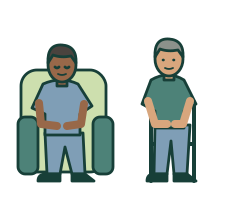
You can ask for a break.
You can change your mind.
Tell someone if something hurts or feels wrong.
Try a little at a time
You might practise the first step first.
Or you might practise the last step first.
Or you might try all the steps with help.
Choose an approach that works for you.
Your supporter can give less help as you learn.
You can ask for more help when you need it.
Example: get your bag ready
Put your bag on the table.
Open the zip.

Pick up your sketchbook.
Put your sketchbook inside the bag.
Pick up your pencil case.
Put your pencil case inside the bag.
Close the zip.
This is only an example.
Use steps that work for you and your bag.
You can make a difficult step smaller.
Notice what is changing
You might do another step or need fewer reminders.
You might feel more confident or enjoy joining in.
These are all useful changes.
You can keep using your picture list or video.
You do not have to do everything without help.

A new place or different equipment may need more practice.
Check the plan together and change what does not help.
What you can do next
Open the worksheet below to plan your steps.
The More detail tab explains how supporters can help.
The link below has more information for supporters.
Read about teaching new skills Web pageThis link opens another website.
It may use harder words.
More useful links
- Challenging Behaviour Foundation: teaching new skills Web page
UK guidance for children and adults with severe learning disabilities. Explains task analysis, backward chaining and reducing prompts.
- United Response: Active Support Web page
Meaningful participation, small opportunities, suitable assistance and choice.
- Norfolk and Suffolk NHS: backward chaining Web page
Examples of teaching the last part of an activity first and allowing time to learn.
These links open other websites.
They may use harder words.
Products you can explore
You can look at products on a separate page of this website.
Money earned from these links will help maintain Clearer Support and the My Life My Say app, and provide free advocacy.
Task analysis: teaching a skill one step at a time
Break a chosen activity into small steps, agree useful help and notice progress. Includes an example, teaching methods and a planning worksheet.
People with learning disabilities, families and supporters · England
What task analysis means
Task analysis means describing an activity as smaller actions. Then you identify what the person already does and which parts need teaching, adaptation or assistance. The list is a starting point. Teaching also needs useful explanations, practice and review. One person may need many small steps; another may need only a few.
1. Choose a meaningful goal together
Ask what the person wants to learn or join in with. Agree where the activity starts and what finishing means. A goal might be getting a bag ready for an art group. Success can mean choosing an item, completing one part, enjoying participation or needing fewer reminders. Learning should increase the person’s choice and control.
2. Make the activity accessible
Check communication, movement, vision, hearing, energy and processing time. Ask what helps: photographs, objects, short words, a demonstration or a video of one step. Check that the person understands the aid. A larger zip pull or quieter space may help more than repeating an instruction. Use age-appropriate materials. Ask an occupational therapist or speech and language therapist for individual advice when needed.
3. Write and check the steps
Do the activity yourself with the actual equipment. Write observable actions: “Put the sketchbook inside the bag” is clearer than “Get ready”. Check the list by following it literally. Add missing actions. Split a difficult step further, or combine actions the person already manages. There is no fixed number of steps for everyone.
4. Notice existing skills
Invite the person to try the activity and allow their usual response time. Record what happens at each step. If an early step needs help, provide it and offer a chance to attempt later steps. An early difficulty does not show that all later steps are difficult. Do not allow unsafe attempts simply to obtain a starting score.
5. Choose a teaching approach
Choose from the three approaches below using the person’s preferences, current skills and response to practice. Adapt the approach if it is not helping. Chaining means gradually linking the learned steps together. The activity still happens in its ordinary order, including when you teach the last part first.
Forward chaining: teach the first step first
Teach the first step and support the remaining parts. When the person is ready, teach the first two steps, then the first three. Continue adding steps. For the bag example, start with putting the bag on the table. Someone supports the rest of the routine.
Backward chaining: teach the last step first
Support the earlier steps and teach the final step. Then teach the last two steps, gradually adding earlier ones. For the bag example, prepare the bag and teach closing the zip first. Next, practise putting in the pencil case and closing the zip. Finishing the activity can give a clear sense of achievement.
Whole-task teaching: try each step
Offer an opportunity to attempt every step during each practice. Give help where needed and allow the person to do parts they already know. This may suit someone who can take part throughout the activity. Whole-task teaching is also called total-task teaching.
6. Agree prompts and reduce them when helpful
A prompt is extra help, such as pointing, a short spoken reminder or a demonstration. Choose an effective, acceptable type of help. There is no single order that suits everyone: spoken instructions are not always easier than watching. Agree response time before another prompt. As learning develops, try less help and record what works. Reducing extra prompts is called prompt fading. Keep useful picture lists or other chosen aids available.
Physical help, choice and comfort
Explain physical help before touching the person. It must be acceptable to them. Pause if they pull away, refuse or become distressed. Explore pain, tiredness, sensory discomfort, unclear instructions or a wish to do something else. Do not force movements to complete the list. Tasks involving heat, sharp tools, roads or medicines need suitable individual safety arrangements and support.
7. Practise during everyday life
Use manageable opportunities in familiar routines. Allow rest and keep the approach understandable across supporters. Notice success in a way the person welcomes. For example: “You found your sketchbook yourself.” Completing a meaningful activity can be rewarding. The person should not have to earn basic care or access to communication.
Worked example: getting a bag ready
This example assumes the chosen bag, sketchbook and pencil case are available. The steps are: 1. Put the bag on the table. 2. Open the zip. 3. Pick up the sketchbook. 4. Put the sketchbook inside the bag. 5. Pick up the pencil case. 6. Put the pencil case inside the bag. 7. Close the zip. Check these steps with the person and their actual equipment. Finding the items can be added if it is part of the goal. Opening a zip may itself need smaller steps.
8. Record the help used at each step
Record the date, action, result and assistance. Useful labels are: no additional staff prompt; independently uses a picture or video aid; gesture; spoken reminder; demonstration; agreed physical assistance; not attempted. Describe a combination if more than one type was used. “Not attempted” might mean choosing to stop or no opportunity that day. It does not automatically mean unable. Completing a task with repeated staff reminders differs from doing it without those reminders.
Agree success and review progress
Choose a realistic sign of progress. An example is completing one chosen step without a staff prompt on three separate occasions; this is not a universal rule. Review the person’s confidence, comfort and enjoyment too. If progress stalls, reconsider the step size, equipment, communication, timing or teaching method. Keep needed support available. One successful attempt does not justify removing it.
Check learning over time and in other places
Return to the skill after a gap. Try a different supporter, place or item with suitable preparation and help. A skill learned with one bag or device may not transfer automatically. Record independent use of a picture list separately from staff prompting. Using an aid yourself can be a successful long-term outcome.
What the research can tell us
Research usually combines task analysis with structured teaching, prompts and practice. Small adult studies show promising results. In 2023, Stierle and colleagues studied three young adults with intellectual disabilities who improved cooking performance using smartphone video instructions. They already used smartphones. The app and researcher safety support remained available during follow-up. This does not prove unaided or unsupervised cooking, or one method for everyone. AFIRM’s evidence summary concerns autistic learners aged 3–22 and should not automatically be generalised to all adults with learning disabilities.
Words you could use
“I want to learn this: … . Please help me find the small steps and the support that works for me. Give me time, and listen if I want to stop.”
More useful links
- Challenging Behaviour Foundation: teaching new skills Web page
UK guidance for children and adults with severe learning disabilities. Explains task analysis, backward chaining and reducing prompts.
- United Response: Active Support Web page
Meaningful participation, small opportunities, suitable assistance and choice.
- Norfolk and Suffolk NHS: backward chaining Web page
Examples of teaching the last part of an activity first and allowing time to learn.
These links open other websites.
They may use harder words.
Products you can explore
You can look at products on a separate page of this website.
Money earned from these links will help maintain Clearer Support and the My Life My Say app, and provide free advocacy.
Where the information comes from
Links checked 8 November 2026.
These links open other websites.
They may use harder words.
- Challenging Behaviour Foundation: teaching new skills Web page
UK guidance for children and adults with severe learning disabilities. Explains task analysis, backward chaining and reducing prompts.
- United Response: Active Support Web page
Meaningful participation, small opportunities, suitable assistance and choice.
- Indiana University: task analysis and chaining Web page
Practical guidance on describing steps, observing existing skills and choosing a teaching sequence. Written in an autism context.
- Norfolk and Suffolk NHS: backward chaining Web page
Examples of teaching the last part of an activity first and allowing time to learn.
- AFIRM: task analysis guide and worksheets (PDF) PDF
2024 guide to planning, teaching and monitoring. Its evidence summary concerns autistic learners aged 3–22. Use person-centred, acceptable assistance; never force physical guidance.
- Stierle and colleagues (2023): smartphone video instructions Video
A small study of three young adults with intellectual disabilities learning cooking tasks. Follow-up retained access to the app and researcher support for safety.
A page for you to fill in
You can type your answers and download a copy.
You can also print a page to write or draw on.
Someone you trust can help you.