Communication & senses · England
Support for people with PMLD
Your browser or device provides the reading voice.
PMLD means profound and multiple learning disabilities.
This means a very severe learning disability and other disabilities.
People need a lot of help in daily life.
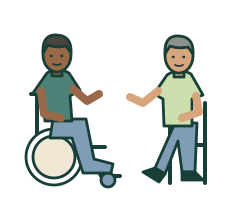
Every person is different.
Their interests, wishes and relationships matter.
Adults should be treated as adults.
People can communicate without speaking.
They may use sounds, movements or facial expressions.
Learn how this person communicates.
Give them time to respond.

Words and pictures do not work for everyone.
A speech and language therapist can help with communication.
Familiar objects or other ways of communicating may help.

Write down how the person communicates.
This can be called a communication passport.
Include how they show enjoyment, discomfort or a wish to stop.
Keep checking that the information is right.
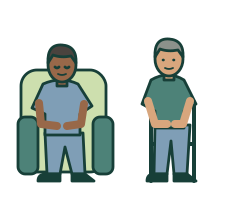
Make time for people and activities the person enjoys.
Offer ways to join in.
Notice when they need a break.

Checking good support
There is a guide called the PMLD Service Standards.
It explains what good support should include.
You can use it to ask for better support.
Ask who will make changes and when.

Changes in the person's usual behaviour may mean they are unwell.
They may be in pain.
Ask for health advice if you are worried.

Help the person take part in decisions.
Not speaking does not mean someone cannot make a decision.
Their wishes still matter when someone must decide for them.
Ask the support team what is working well.
Ask what needs to change.
Agree when to check again.
What you can do next
Ask the support team to review the person's support.
Include people who know them well.
Use the way of communicating that works for the person.
Read the guide to good support (PDF) PDFThis link opens another website.
It may use harder words.
More useful links
- Joanna Grace: The Sensory Projects Web page
Ideas about sensory experiences and inclusion.
- PMLD Link: Core and Essential Service Standards (PDF) PDF
Free standard-text guidance, first published in November 2017. Use it to discuss and review support.
- PMLD Link: Raising the Bar Web page
Free Spring 2018 journal issue with examples of using the standards. Standard text for families and supporters.
- PMLD Link: resources and information Web page
Resources on communication, health, education, advocacy and everyday support. Some are older publications.
- PMLD Link: latest news and conferences Web page
Check current Raising the Bar conference information, dates, booking and any charges.
- Mencap: Raising Our Sights guides Web page
Free guides and films on support for people with PMLD, based on the 2010 Raising Our Sights report. These are older standard-text resources.
- BILD: Active Support Web page
A free introduction to supporting participation, choices and everyday skills. Professional training programmes are offered separately; check their costs.
These links open other websites.
They may use harder words.
Supporting people with profound and multiple learning disabilities
Communication, relationships, health and everyday support for people with PMLD.
Children and adults in England · Guidance for families and supporters · Mental Capacity Act points apply mainly from age 16
What PMLD means
Profound and multiple learning disabilities (PMLD) describes a profound learning disability together with other disabilities. People need extensive everyday support. Additional needs may involve movement, sight, hearing or complex health conditions. Each person has their own history, relationships, interests and preferences.
Learn how this person communicates
Communication may involve facial expression, sounds, movement, posture or responses to familiar people and routines. Some people use signs, symbols or communication aids. Others rely on people carefully interpreting their responses. Speak to the person directly and give them time. Check interpretations with familiar supporters; a movement does not have the same meaning for everyone.
Choose an accessible way to connect
Easy Read text and pictures will not be accessible to everyone with PMLD. Ask a speech and language therapist about individually suitable approaches. Familiar objects, consistent cues, communication equipment or responsive interaction may help. An object used before an activity may help someone anticipate it. Touch must be appropriate and welcomed. Allow pauses and consider hearing, vision, comfort and fatigue.
Keep a useful communication passport
A communication passport records how someone communicates and how others can respond. Include signs of enjoyment, discomfort and refusal, alongside what remains uncertain. Record useful support and response time. Involve the person and familiar supporters. Keep it current and available to those supporting them, with appropriate privacy safeguards.
Support a full life
Good support includes companionship, privacy, relationships and enjoyable experiences. Offer ways to join in home and community life. Treat adults as adults. Notice enjoyment, tiredness or discomfort and adapt activities. Sensory activities and Intensive Interaction can help people share experiences. Plan these around the person’s preferences and responses.
Ask for consistent, skilled support
The PMLD Core and Essential Service Standards are a good-practice framework, not a separate law or an automatic funding entitlement. Use them to discuss staff continuity, communication, accessible environments, health and meaningful time. Ask who will train staff, share knowledge at handovers and review support.
Raising the Bar and checking support
Raising the Bar is PMLD Link’s conference series about improving support and opportunities. The PMLD Core and Essential Service Standards were launched at its first conference in 2017. Its Spring 2018 journal issue gives examples of using the standards at home, school and in other settings. These older resources can help structure a review of support. Ask what will improve, who will act and when progress will be checked. The standards are good-practice guidance, not a separate law or a promise of funding. PMLD Link’s website has current conference information.
Check changes in health and comfort
A change in sleep, appetite, movement, breathing, mood or usual responses may signal illness or pain. Record what is different from the person's usual presentation and seek appropriate health advice promptly. Explain what people who know them well have noticed. Diagnostic overshadowing means wrongly attributing symptoms to an existing disability rather than investigating another cause. A sensory activity is not a substitute for assessment of a new health concern. Follow the person's existing health and emergency plans.
Include the person in decisions
PMLD or an inability to speak does not by itself establish that someone cannot make a particular decision. For people aged 16 and over, the Mental Capacity Act requires support to decide and an assessment of the specific decision when needed. If a decision must be made in the person's best interests, their wishes, feelings and participation still matter. Family knowledge is valuable, but a relative does not automatically have legal authority to decide for an adult.
Words you could use
“Please review how this person's communication, health, relationships and sensory needs are supported. What will change, who will do it and when will we review it?”
More useful links
- Joanna Grace: The Sensory Projects Web page
Ideas about sensory experiences and inclusion.
- PMLD Link: Core and Essential Service Standards (PDF) PDF
Free standard-text guidance, first published in November 2017. Use it to discuss and review support.
- PMLD Link: Raising the Bar Web page
Free Spring 2018 journal issue with examples of using the standards. Standard text for families and supporters.
- PMLD Link: resources and information Web page
Resources on communication, health, education, advocacy and everyday support. Some are older publications.
- PMLD Link: latest news and conferences Web page
Check current Raising the Bar conference information, dates, booking and any charges.
- Mencap: Raising Our Sights guides Web page
Free guides and films on support for people with PMLD, based on the 2010 Raising Our Sights report. These are older standard-text resources.
- BILD: Active Support Web page
A free introduction to supporting participation, choices and everyday skills. Professional training programmes are offered separately; check their costs.
These links open other websites.
They may use harder words.
Where the information comes from
Links checked 27 October 2026.
These links open other websites.
They may use harder words.
- Mencap: profound and multiple learning disabilities Web page
Explains PMLD, individual support needs and different ways people communicate.
- PMLD Link: Core and Essential Service Standards (PDF) PDF
A 2017 good-practice framework by Thomas Doukas, Annie Fergusson, Michael Fullerton and Joanna Grace, covering communication, health, relationships and meaningful lives.
- Mencap and Manchester Metropolitan University: communication and complex needs (PDF) PDF
Juliet Goldbart and Sue Caton's 2010 report on familiar communication partners, communication passports and approaches to communication.
- Berkshire Healthcare NHS: signs of deteriorating physical health VideoFuller information
Recognising changes from a person's usual health and behaviour, including signs that someone may be unwell.
- NHS: Mental Capacity Act Web pageFuller information
Decision-specific capacity, communication support and best-interests decisions for people aged 16 and over.
- PMLD Link: Raising the Bar, Spring 2018 Web page
Explains the 2017 launch of the standards and gives examples of their use.
- Mencap: Raising Our Sights Web page
Older guides and films for people supporting someone with PMLD.
- BILD: Active Support Web page
A free introduction to supporting participation, choices and everyday skills. Professional training programmes are offered separately; check their costs.