Everyday life · England
Getting your bins collected
Your browser or device provides the reading voice.
Your council can explain your bin collections.
Ask for help if the arrangements are difficult.

Check the calendar
Find the collection days for your address.
Different bins may have different dates.

Choose a reminder
Use a calendar, phone reminder or someone’s agreed help.
Check for changes to collection days.
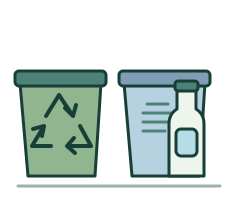
Label your bins
Words and pictures can help you choose the right bin.
Follow your local instructions.
Check the route
Keep the path and exits clear.
Do not struggle with a heavy bin.

Ask about assistance
Tell the council if you cannot put bins out safely.
Ask what assisted collection it can arrange.
Shared bins
Ask your landlord or housing team about shared bins.
Report access problems or overflowing bins.

Medical waste
Ask about extra space for continence products if needed.
Medicines and used needles need special disposal arrangements.

Missed collections
Check service updates and report a missed collection to the council.
Keep the report number.

Large or unusual items
Ask how to arrange the right collection.
Do not leave extra waste beside bins without an agreed arrangement.
What you can do next
Use your postcode and ask for accessible information.
Find your local collection information Web pageThis link opens another website.
It may use harder words.
More useful links
- GOV.UK: collection day Web page
Find your council’s information using your postcode.
- GOV.UK: missed collections Web page
Reach your council’s reporting service.
- GOV.UK: clinical-waste collection Web page
Find local arrangements for waste needing specialist disposal.
- GOV.UK: household waste Web page
Other collection and disposal options.
These links open other websites.
They may use harder words.
Bin collections: dates, reminders and practical support
Find your collection arrangements, ask for help moving bins and deal with missed or unsuitable collections.
Adults · England · Check arrangements for your address
Find the right collection calendar
Use GOV.UK’s postcode service to reach your council’s collection information. Check the day for each type of waste, when it must be ready and where it should be placed. Look for changes around bank holidays, severe weather or service disruption. Do not assume a neighbour’s calendar or another council’s bin colours apply to your home.
Make reminders understandable
Choose a paper calendar, phone reminder, spoken reminder or support-worker prompt that works for you. Use the actual bin name and a picture if helpful. Include both putting the bin out and bringing it back when required. Agree who checks changes and what happens if that person is away. Ask for help using the council’s website if needed.
Store and move bins safely
Ask the council to confirm an accessible collection point. Keep the route clear without blocking pavements, doors or fire exits. Do not strain to move a heavy bin, drag it down steps or reach into waste to compress it. Ask for practical support if the route, weight or lid is difficult. An occupational therapist may help with wider access needs at home.
Ask about assisted collections
An assisted collection may allow the crew to collect from an agreed point when you cannot use the usual arrangement. Contact your own council to explain the difficulty and ask about eligibility, evidence, assessment and review dates. Services differ; do not assume crews can enter your home or provide indoor cleaning. Get the agreed location and arrangements confirmed.
Plan for shared bins
In flats or shared housing, ask the landlord, managing agent or housing team which bins serve your home and who manages the area. Explain problems such as heavy lids, inaccessible doors, overflowing bins or confusing labels. Agree a practical way to reach and use the bins. Do not leave bags in corridors or other escape routes while waiting for help.
Extra waste and medical needs
If continence products or another need creates more waste than the bin holds, ask about extra capacity or a suitable collection. Not all healthcare waste is clinical waste. Explain the items to your healthcare professional or council, especially where infection may be involved. Medicines and sharps need their own disposal arrangements; do not mix them into ordinary household bins.
If a collection is missed
Check the correct date, service updates and any note explaining why waste was not taken. Use your council’s missed-collection process within its reporting window. Ask when and where to leave the bin while waiting, and keep the reference number. Report repeated failures, including missed assisted collections, and explain any immediate access or hygiene difficulty.
When ordinary collections are not enough
Ask about replacements for damaged bins, bulky-item collections and local recycling-centre arrangements. Confirm any charges or booking rules. Batteries and electricals need a designated route, even where the council offers a separate collection from home. Do not leave extra bags or large items beside bins unless the council has agreed this. Ask for help arranging lawful disposal.
Words you could use
“I need help with my collections because … Please confirm the dates, safe collection point and any assistance you can arrange.”
More useful links
- GOV.UK: collection day Web page
Find your council’s information using your postcode.
- GOV.UK: missed collections Web page
Reach your council’s reporting service.
- GOV.UK: clinical-waste collection Web page
Find local arrangements for waste needing specialist disposal.
- GOV.UK: household waste Web page
Other collection and disposal options.
These links open other websites.
They may use harder words.
Where the information comes from
Links checked 9 November 2026.
These links open other websites.
They may use harder words.
- GOV.UK: collection day Web page
Council-specific collection calendars and postcode lookup.
- GOV.UK: missed collections Web page
Report through your own council.
- Wandsworth: assisted collections — local example Web page
Illustrates individual requests, agreed collection points and separate communal-bin arrangements; policies differ elsewhere.
- Westmorland and Furness: clinical waste — local example Web page
Distinguishes infectious waste from non-infectious hygiene waste and offers a route to request extra capacity.
- GOV.UK: clinical-waste collection Web page
Council-specific collection arrangements and possible charges.
- NHS: pharmacy help Web page
Return unwanted medicines to a pharmacy.
- Kent Community Health: sharps disposal Web page
Medical sharps require appropriate containers and special disposal.
- GOV.UK: batteries and electrical waste Web page
Separate collection rather than ordinary household bins.
- GOV.UK: household waste Web page
Council services, replacement bins, bulky waste and authorised disposal.