Care & support · England
What you may pay for care
Your browser or device provides the reading voice.
This guide is for people in England.
You can read it with someone you trust.

The council can assess what care you need.
It may also check how much you can pay.

Ask which care you must pay for.
Ask when payments start.

Get the calculation in writing.
Ask for help to understand it.

Some money must be left for everyday living.
Ask which rules apply to your care.

Your disability may cause extra costs.
These might include extra heating, washing or equipment.
Tell the council about these costs.

Keep bills and explain why you need these things.
Ask the council to consider your own situation.
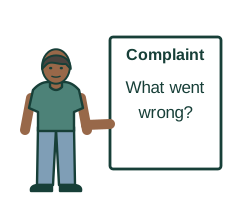
Tell the council if the calculation is wrong or you cannot afford it.
Ask it to look again.
Do not ignore bills while you wait for a reply.
What you can do next
Ask the council to explain your care charges.
You could say: Please check my extra disability costs.
Read the NHS financial assessment guide Web pageThis link opens another website.
It may use harder words.
More useful links
- Financial assessment explained Web page
Prepare information and ask the council to explain its calculation.
- Find free debt advice Web page
Free advice if bills or care charges are becoming difficult to manage.
These links open other websites.
They may use harder words.
Paying for social care
Understand the financial assessment, disability-related costs and how to question a charge.
Adults aged 18 and over · Council social care charges · England
Separate needs from money
A needs assessment looks at the support you require. A financial assessment, sometimes called a means test, looks at what you may have to pay. Ask the council which service is being charged for and when charges begin. NHS Continuing Healthcare uses different funding rules; it is not a council means test.
Prepare the information
The council may ask about income, benefits, savings and property. Provide accurate details and ask which items must be ignored under the rules. The value of your home is treated differently for care at home and a permanent care-home placement. Ask for an explanation relevant to your situation before making financial decisions.
Keep money for everyday living
Charging rules protect an amount for ordinary living costs. The approach differs between care at home and care-home accommodation. Ask which protected amount applies, which housing costs were allowed and how disability-related expenses were considered. Do not assume that receiving a benefit means the council can take all of it.
Explain disability-related expenditure
Extra necessary costs arising from disability are often called disability-related expenditure, or DRE. Examples to discuss include additional heating, laundry, equipment maintenance or privately arranged support for needs the council does not meet. Keep bills and explain why the extra cost is necessary. Each expense needs individual consideration; not every purchase is automatically accepted.
Check the calculation
Request the assessment, charge, start date and reasons in a format you understand. Check whether income was counted twice, expenses were missed or circumstances have changed. Ask what evidence is needed if a cost is refused. The Ombudsman has criticised blanket limits that prevent individual consideration of disability-related expenditure.
Act if a charge is wrong or unaffordable
Contact the council promptly, explain the problem and ask for reassessment or use its complaints procedure. Keep copies. Explain if paying would leave essential needs unmet and ask what happens while the dispute is considered. Do not ignore bills or assume a complaint cancels them. Obtain independent benefits or debt advice if needed.
Words you could use
“Please give me the full charging calculation and explain how my necessary disability-related costs and living costs were considered.”
More useful links
- Financial assessment explained Web page
Prepare information and ask the council to explain its calculation.
- Find free debt advice Web page
Free advice if bills or care charges are becoming difficult to manage.
These links open other websites.
They may use harder words.
Where the information comes from
Links checked 27 October 2026.
These links open other websites.
They may use harder words.
- NHS: financial assessment for social care Web page
Information requested, property treatment and written results.
- Care and support statutory guidance Web page
Charging principles and disability-related expenditure.
- Local Government and Social Care Ombudsman: charging decision Web page
Individual assessment, protected income and a finding against a blanket DRE cap.
- NHS: continuing healthcare Web page
The distinct NHS funding route.