Conditions & syndromes · England
Chromosome deletions
Your browser or device provides the reading voice.
This guide is for people in England.
You can read it with someone you trust.

Your body has genetic instructions called DNA.
A chromosome deletion means that part of this DNA is missing.

There are many kinds of chromosome deletion.
They do not all affect people in the same way.

You may need support with health, learning or daily activities.
Other people may need little or no support.
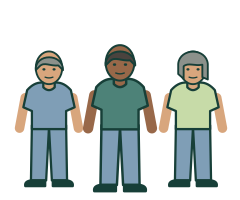
A deletion can be passed from a parent or happen as a new change.
This is not anyone's fault.

A genetics specialist can explain your test result.
Ask what the result means for you.

Some results do not give a clear answer.
Ask whether the result could be reviewed later.
Ask which health checks you need.
Tell a health worker about new pain or changes.

Tell people what you find difficult and what helps.
Your interests and choices matter when planning support.

Unique has information about different chromosome conditions.
Ask for help finding information about your result.
What you can do next
Please explain my chromosome result and help me plan support around my own needs.
Find chromosome information and support from Unique Web pageThis link opens another website.
It may use harder words.
More useful links
- Unique: Easy Read deletions guide (PDF) PDFEasy Read
An illustrated explanation to read alone or with support.
- Unique: condition guides Web page
Look for a guide matching the exact chromosome result.
- Unique: practical family guides Web page
Information about appointments, communication, education and everyday support.
These links open other websites.
They may use harder words.
Chromosome deletions and microdeletions
Understand different chromosome deletions, genetic results and individual support needs.
Children and adults · England · General information
Understand what a deletion means
Chromosomes contain DNA, including genes that help our bodies develop and work. A deletion means that some DNA is missing. A microdeletion is a very small deletion. Chromosome deletion syndrome is a broad description, not one condition. Examples include 22q11.2 deletion syndrome and cri du chat syndrome, associated with a deletion on chromosome 5.
Start with the individual
The effects depend on the location and the genes involved. A larger deletion does not always mean greater difficulties. Some deletions have no known health effect. Others affect health, development or learning. Not everyone has a learning disability. People with similar deletions can have different strengths and needs; a result cannot predict every part of someone's future.
Understand how it happens
A deletion may happen as a new genetic change or be inherited. A new change is sometimes called de novo. It is not caused by something a parent did during pregnancy. A genetics specialist can explain whether testing relatives would help and what the result might mean for future pregnancies. Family circumstances differ, so ask for individual advice.
Ask for an understandable result
Tests may include a chromosome microarray, which looks for missing or extra genetic material. Ask the genetics team to explain the exact location and any genes involved. Request a copy of the report and an explanation you understand. Before testing, ask about possible results, choices and implications for you and your family.
Allow for uncertainty and review
Finding a deletion does not always explain someone's difficulties. The result may be known to cause a condition, harmless, or uncertain. An uncertain finding is not a confirmed explanation. Ask what is known, what remains unclear and whether future review could help. Keep the report so another clinician can consider the exact finding if needs change.
Plan health support for this deletion
There is no single health checklist for every chromosome deletion. Ask which checks or specialist appointments apply to the particular result and the person's symptoms. Record medicines, communication needs and helpful adjustments. Ask a clinician about new symptoms rather than assuming they are part of the deletion. Include the person's own account of pain or changes.
Describe practical support needs
Discuss any difficulties with learning, communication, movement or everyday activities. Ask education staff or the relevant clinician what assessment could help. Adults who need help with daily life can ask their council for a care needs assessment. Support decisions depend on assessed needs and service criteria. A chromosome result alone does not guarantee a particular service.
Find information that matches the result
Unique provides information and family support about rare chromosome conditions. Its guides cover many different deletions, including some Easy Read guides. Ask for help finding information that matches the report; another deletion on the same chromosome may have different effects. Review support when goals, health, education or living arrangements change.
Words you could use
“Please explain my chromosome result and help me plan support around my own needs.”
More useful links
- Unique: Easy Read deletions guide (PDF) PDFEasy Read
An illustrated explanation to read alone or with support.
- Unique: condition guides Web page
Look for a guide matching the exact chromosome result.
- Unique: practical family guides Web page
Information about appointments, communication, education and everyday support.
These links open other websites.
They may use harder words.
Where the information comes from
Links checked 9 November 2026.
These links open other websites.
They may use harder words.
- NHS Genomics Education: deletions and microdeletions Web page
Missing genetic material, tests and why size alone does not determine the effects.
- NHS Genomics Education: chromosome deletion visual guide Web page
Different deletions can have different effects, including no effect on health.
- Unique: deletions and microdeletions quick guide (PDF) PDF
Inheritance, new changes, reports and uncertainty about some findings.
- NHS: DiGeorge syndrome Web page
22q11.2 deletion as one example, with varied needs and individual care.
- Unique: cri du chat 5p deletion syndrome Web page
A named example associated with deletion on chromosome 5.
- NHS: genetic and genomic testing Web page
Testing choices, genetic counselling and implications for relatives.
- NHS: getting a care needs assessment Web page
Asking for assessment of everyday care needs and how support decisions are made.
- Unique: information and support for families Web page
Family support, individual differences and finding information about a rare chromosome condition.