Health · England
Showing pain without words
Your browser or device provides the reading voice.
You can show pain without speaking.
People should take your pain seriously.

How you show pain
Use the way of communicating that works for you.
You might use sounds, movements, pictures or a device.
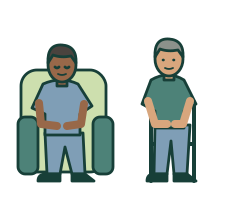
Supporters should learn how you look when you are comfortable.
They should notice when this changes.

Pain can change how someone moves, sleeps or eats.
Some people become quiet.
Being quiet does not mean there is no pain.

Record changes and get help
Write down what happened and when.
Keep observations separate from guesses about the cause.

Pain can have many causes.
Ask a health professional to help find the cause.

Ask people to give you time to answer.
Tell them how you show no or stop.

A record can help people understand you.
It cannot diagnose pain or illness.

Check what helps
Agree what will help you feel more comfortable.
Use medicines as the health professional has directed.

Write down what helped and what did not.
Ask for another review if pain continues.

Urgent help and sharing records
Get help quickly if someone becomes very unwell.
Call 999 for severe breathing difficulty.
Call 999 if someone cannot be woken.

Share useful information with the people providing care.
Keep private information safe.
Use the blank worksheet if it helps.
Do not wait to finish it before getting urgent help.
What you can do next
Ask for advice about a change in comfort or health.
Use the person’s usual communication and involve someone they trust.
Read NHS advice about changes in health VideoFuller informationThis link opens another website.
It may use harder words.
More useful links
- NHS: recognising changes in physical health VideoFuller information
Signs to notice and ways to explain a concern to health staff.
- Pain management and learning disability (PDF) PDFFuller information
A public-health guide for supporters. Discuss treatment and assessment tools with the health team.
- DisDAT: recording comfort and distress (PDF) PDFProfessional guidance
A clinical tool for recording individual signs. Ask the health team how to use it.
- NHS: help with long-term pain Web pageFuller information
GP assessment and services for persistent pain. New or urgent symptoms need earlier help.
These links open other websites.
They may use harder words.
Recognising pain and discomfort when someone does not use speech
Understand a person’s usual signs of comfort, notice changes and get appropriate assessment and relief.
Adults · England
Start with the person
Pain is personal. Ask the person directly using their familiar communication, including words, signs, pictures, objects or a device. Give time and avoid asking repeated questions that suggest the answer you expect. Some people need familiar supporters to help interpret their responses. Not speaking, smiling or remaining quiet does not establish that someone is comfortable.
Describe the usual comfortable pattern
With the person and people who know them, record what comfort and enjoyment usually look like. Include expression, sounds, movement, interaction, sleep, eating and activities. Note how the person shows yes, no, stop and uncertainty. Different supporters may notice different things. Treat the description as a starting point to keep reviewing, not a fixed rule about what a movement always means.
Notice changes from that pattern
Possible signs include unusual sounds, facial tension, guarding or rubbing a body part, less movement, withdrawal or changes in sleep and eating. Some people become more active or distressed. Compare with that person, not a stereotype of learning disability. A familiar long-standing difficulty can also be painful and deserves attention; it does not become acceptable because it is usual.
Separate observation from explanation
Write what happened, when and in what circumstances. For example, “moved away when the shoe was put on” is an observation. “The shoe might hurt” is an interpretation that needs checking. Distress can relate to pain, illness, worry, sensory discomfort, communication or more than one factor. Do not decide that a behaviour plan explains away a possible health problem.
Get the cause assessed
Tell the GP or other health professional what is different and how everyday life is affected. Mention known health conditions, medicines, injuries and changes such as bowel problems, eating less or disturbed sleep. Ask for an examination and an explanation of the next steps. Do not wait for a routine annual check if there is a new concern. Supporters should not use pressing, pinching or other painful tests to try to prove pain.
Use tools with suitable support
A clinician or learning disability nurse can advise on a suitable pain assessment or distress record. DisDAT records the individual’s signs when content and distressed; distress does not identify a single cause. Different tools have different purposes and need appropriate interpretation. The original Clearer worksheet below is a conversation and observation record. It is not a clinical score, diagnostic test or substitute for a prescribed care plan.
Agree relief and practical comfort
Ask for a clear plan for pain relief, how to give any medicine safely, what effects or side effects to watch for and when to seek more advice. Use prescribed medicines and existing plans as directed. Comfortable positioning, an accessible quiet space or familiar reassuring company may help, depending on the person. Seek advice before using heat, massage or moving someone where injury or clinical precautions could matter.
Check what happens next
Record any action, when it happened and how the person responded. A change after treatment is useful information but does not prove the cause. Ask who will reassess persistent or recurring pain and what to do if the agreed plan is not helping. Longer-term pain may need support from a range of professionals. Avoid letting ongoing symptoms disappear from handovers because they are familiar.
Make health care accessible
Share relevant communication and comfort information with the clinician, with appropriate privacy safeguards. Ask for extra time, familiar support, suitable positioning or the hospital learning disability liaison team where needed. Explain any known signs of refusal or fear. Not being able to describe pain in speech does not by itself mean someone cannot take part in decisions about assessment or treatment.
Escalate deterioration promptly
Seek urgent medical advice if the person appears acutely unwell, pain is severe or worsening, or there are concerning changes in breathing, alertness, movement, eating or drinking. Call NHS 111 if urgent advice is needed and you are unsure what to do. Call 999 for life-threatening signs such as severe breathing difficulty or unresponsiveness. Follow an agreed emergency plan while getting help; do not wait to complete a chart.
Keep a useful shared record
Agree who needs the information and how to keep it private and current. Include the person’s own contribution and name the observers. Show new supporters how to recognise familiar responses, while encouraging them to report new concerns. Ask for the clinical advice and review arrangements to be recorded in the care plan or hospital passport. Share enough to help safe care without circulating unrelated personal information.
Words you could use
“This person is different from their usual self. These are the changes we observed and when they started. Please assess possible pain or illness and agree what we should do next.”
More useful links
- NHS: recognising changes in physical health VideoFuller information
Signs to notice and ways to explain a concern to health staff.
- Pain management and learning disability (PDF) PDFFuller information
A public-health guide for supporters. Discuss treatment and assessment tools with the health team.
- DisDAT: recording comfort and distress (PDF) PDFProfessional guidance
A clinical tool for recording individual signs. Ask the health team how to use it.
- NHS: help with long-term pain Web pageFuller information
GP assessment and services for persistent pain. New or urgent symptoms need earlier help.
These links open other websites.
They may use harder words.
Where the information comes from
Links checked 1 November 2026.
These links open other websites.
They may use harder words.
- NHS England: clinical support for learning disability and autism Web pageProfessional guidance
Individual pain communication, avoiding assumptions and seeking specialist support.
- Berkshire Healthcare NHS: deteriorating physical health VideoFuller information
Changes from the person’s usual health and prompt communication of concerns.
- Public Health England: pain management and learning disability (PDF) PDFFuller information
2017 guide on recognising pain and agreeing support; the tools are linked rather than reproduced.
- DisDAT hosted by East Sussex Healthcare NHS (PDF) PDFProfessional guidance
Clinical resource for recording the individual’s signs of distress.
- NHS: help with long-term pain Web pageFuller information
Assessment, treatment and support for continuing pain.
- NHS: support when going into hospital Web pageFuller information
Passports, adjustments, communication and understanding treatment.
- Challenging Behaviour Foundation: communication Web pageFuller information
Individual methods, processing time and communication support.
- NHS: shortness of breath Web pageFuller information
Urgent and emergency help for breathing difficulties.
- London Ambulance Service: when to call 999 Web pageFuller information
Unconsciousness and other life-threatening situations require emergency help.
A page for you to fill in
You can type your answers and download a copy.
You can also print a page to write or draw on.
Someone you trust can help you.