Health · England
Having a feeding tube
Your browser or device provides the reading voice.
This guide is for people in England.
Some people have a tube to help with food and drinks.
Your team must explain your own tube and care.

A gastrostomy tube goes through your tummy wall into your stomach.
It can give your body food and fluid.

You should be involved in decisions about a tube.
Ask about the benefits, risks and other choices.

Staff must teach you and your supporters how to care for your tube.
Ask them to check your understanding.

Have a written plan for your own tube.
Keep the phone numbers for help during the day and at night.

A feeding tube does not stop every swallowing problem.
Saliva can still go into your airway.
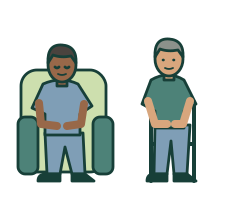
Keep following your mouth-care plan.
Ask your team about eating and drinking by mouth.
Tell them your wishes and discuss any risks.
If your tube comes out, stop using it and get urgent medical help.
Only replace it if your team has trained you and your emergency plan says you can.
Go to A&E if urgent specialist help is unavailable.

For new pain, bleeding or leakage, stop feeding and get urgent advice.
Get urgent advice if your tube stays blocked.
Call 999 for severe breathing difficulty or unconsciousness.
What you can do next
Ask your feeding team for a plan you understand.
Ask who to call if something goes wrong.
Read NHS information about having a PEG Web pageThis link opens another website.
It may use harder words.
More useful links
- Understanding a PEG tube Web page
An NHS explanation of a PEG procedure and care. Follow your own team's instructions.
- Mouth care with tube feeding Web page
Why mouth care matters for tube-fed children and adults.
- Making treatment decisions Web pageFuller information
NHS information about informed consent to treatment.
These links open other websites.
They may use harder words.
Gastrostomy tubes and everyday support
Understand feeding tubes, decisions, training and when to get urgent help.
Children and adults · England · Care depends on the person and tube type
What a gastrostomy is
A gastrostomy is an opening through the abdominal wall into the stomach for a feeding tube. A PEG is one way of placing it using an endoscope, a flexible camera. Tubes and buttons differ. They may provide some or all nutrition and fluid when eating enough by mouth is difficult. Approved medicines may also be given through a suitable tube. A learning disability alone is not a reason for tube feeding.
Support an informed decision
Ask the team to explain why a tube is proposed, expected benefits, risks, alternatives and what happens without it. Request pictures, demonstrations, communication support and time. Involve the person directly. For adults, capacity relates to the particular decision; a learning disability does not automatically remove it. If the person cannot make this decision despite support, the team must follow the applicable legal decision-making process. Children need age-appropriate involvement and consent arrangements.
Have a personal care plan
Before discharge, ask the nutrition team to provide training and check that the person and supporters can manage the agreed tasks. The written plan should identify the tube, feeds, fluid, medicines, positioning, skin care and who reviews them. Ask for daytime and out-of-hours contacts, equipment supplies and a plan for school, college, respite and travel. Procedures vary: follow the team's instructions for this particular tube, not another person's routine.
A tube does not remove every swallowing risk
Saliva or material coming back from the stomach can still enter the airway. Tube feeding does not eliminate aspiration or chest infection risk. Continue the agreed mouth-care routine and dental support. Some people can still eat or drink by mouth; others cannot. Discuss food, drinks and tastes by mouth with the swallowing team. Agree a plan that explains risks and respects the person's informed choices. If they cannot make this decision despite support, follow the applicable legal process. Ask how enjoyment and social contact will be supported.
Know what needs urgent help
If the tube falls out or seems displaced, stop using it and contact the feeding team immediately. The opening can close quickly. If urgent specialist help is unavailable, go to A&E; do not wait for a routine appointment. Only attempt replacement if your clinical team has specifically trained and authorised you for this tube and situation. Follow your emergency plan and get urgent help if unsure. Do not put feed, water or medicines through a tube whose position is uncertain. For new pain during feeding, bleeding or leakage, stop feeding and get urgent clinical advice.
Deal with problems through the trained plan
For a blocked tube, follow only the troubleshooting you have been taught and seek urgent clinical advice if it remains blocked or essential fluid or medicines cannot be given. Do not force it, insert objects or improvise remedies. Call 999 for severe breathing difficulty or unconsciousness. Tell hospital staff about the tube and take the current feeding and swallowing plans with you.
Words you could use
“Please explain my tube and check that we understand the care plan. What should we do if it comes out or stops working, including at night?”
More useful links
- Understanding a PEG tube Web page
An NHS explanation of a PEG procedure and care. Follow your own team's instructions.
- Mouth care with tube feeding Web page
Why mouth care matters for tube-fed children and adults.
- Making treatment decisions Web pageFuller information
NHS information about informed consent to treatment.
These links open other websites.
They may use harder words.
Where the information comes from
Links checked 27 October 2026.
These links open other websites.
They may use harder words.
- Leeds Teaching Hospitals NHS: having a PEG Web page
What a PEG is, individual care and training.
- NHS: consent to treatment Web pageFuller information
Information, consent and support for treatment decisions.
- NHS: assessing capacity to consent Web page
Presuming capacity and assessing the particular treatment decision.
- Cambridge University Hospitals NHS: having and looking after a gastrostomy Web page
Training, nutrition plans and urgent care when a tube comes out. This leaflet concerns adults with head and neck conditions.
- Leeds Teaching Hospitals NHS: balloon gastrostomy care advice Web page
Stop feeding and obtain urgent advice for displacement, leakage, bleeding or pain; do not use a tube of uncertain position.
- The Rotherham NHS Foundation Trust: mouth care for tube-fed children and adults Web page
Mouth care remains necessary; oral intake depends on individual swallowing needs.
- University Hospitals of Leicester NHS: feeding options after stroke Web page
Confirms that saliva aspiration and reflux-related chest infections remain possible with a PEG. Stroke-specific prognosis does not apply to this general guide.
- NHS Specialist Pharmacy Service: feeding-tube blockages Web page
Professional guidance supporting trained troubleshooting and specialist advice; not a home procedure guide.
- Yorkshire Ambulance Service NHS: calling 999, Easy Read PDFEasy Read
Emergency help for serious breathing problems or unconsciousness.
- Kent Community Health NHS: when a gastrostomy tube comes out Web page
Urgent help and the distinction between tube types and individually trained replacement plans.
- Cambridge University Hospitals NHS: gastrostomy support Web page
Tube care and informed choices about eating and drinking; treatment instructions need individual advice.