Health · England
My blood pressure check
Your browser or device provides the reading voice.
A check can help you look after your health.
Ask for help to understand what happens.

You may feel well
High blood pressure often has no symptoms.
A check can find it.

Ask for a check
Ask your GP or pharmacy.
Check whether the pharmacy service is free for you.

Explain what helps
Ask staff to show you the equipment.
You can ask for more time or a quieter space.
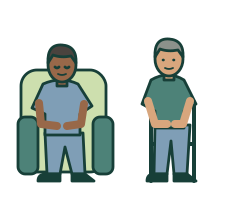
The cuff squeezes your arm
It tightens briefly and then releases.
Tell staff if it hurts or you need a pause.

Ask about the result
The result has two numbers.
Ask what they mean for you.

You may need more checks
The team may repeat the test.
Some people use a monitor at home.

Get help with home checks
Ask someone to show you what to do.
Agree how to record and share the results.

Discuss the options
Some people need medicine.
Ask about food, activity and other support too.

Keep the follow-up plan
Know when your next check is due.
Do not change medicines yourself.
Chest pain can need emergency help
Call 999 for sudden chest pain that does not go away.
Also call for chest pain with sweating, sickness or breathlessness.

Know who to contact
Ask who will explain tests and treatment.
Contact the team if the promised help does not happen.
What you can do next
Ask for information you understand.
Use the blank page to prepare for your appointment.
Read about the blood pressure test Web pageThis link opens another website.
It may use harder words.
More useful links
- NHS: what happens in a blood pressure test Web page
The cuff, repeat readings, home monitoring and understanding the two numbers.
- NHS: find a free pharmacy blood pressure check Web page
Check eligibility and find a participating pharmacy in England.
- NHS: high blood pressure Web page
Assessment, treatment and symptoms needing urgent help.
- NHS: getting a cholesterol test Web page
A separate blood test that can be part of a heart-health assessment.
These links open other websites.
They may use harder words.
Heart health and blood pressure checks — Easy Read
Understand blood pressure checks, ask for adjustments and agree what happens after the result.
England · Adults · Pregnancy and children need their own clinical advice
Why blood pressure matters
Blood pressure describes the pressure of blood in your blood vessels. High blood pressure is also called hypertension. It can increase the risk of heart disease and stroke, often without making you feel unwell. Low blood pressure can sometimes cause dizziness or fainting. Ask a clinician about symptoms rather than deciding the cause yourself.
Ask where to have a check
You can ask your GP practice or a pharmacy about a blood pressure check. Some pharmacies charge; others provide an NHS service for eligible people. Use the NHS finder and check before attending. A check can also be part of care for another condition. Ask when it is due for you.
Check the free pharmacy service criteria
The NHS public service information lists people aged 40 or over in England who have no existing high-blood-pressure diagnosis and have not been checked in the past 5 years. Some younger people at increased risk may also qualify. If you do not meet those criteria, ask your GP or pharmacist about the appropriate route. Existing hypertension needs its own follow-up.
Make the appointment manageable
Tell staff about communication, sensory or movement needs. Ask to see the equipment and understand what will happen before the cuff is put on. Agree how you can request a pause. You may want a quieter space or a familiar supporter. Ask staff to record useful adjustments for later appointments.
What the test feels like
An inflatable cuff usually goes around your upper arm. It tightens briefly and then releases. The clinician will explain how to sit and support your arm. The squeezing can feel uncomfortable. Say if it hurts or you need help to stay in the position. The measurement may be repeated.
Understand the result
A reading has two numbers, showing pressure when the heart pumps and when it relaxes. Ask what your numbers mean and what happens next. A clinician may arrange repeat measurements, home checks or a monitor worn for 24 hours before confirming a diagnosis. One reading should not lead you to change medicine yourself.
If you are asked to monitor at home
Ask the team to show you the correct device, cuff and position, and give a schedule you can follow. Agree who will help, how to record results, when to send them and whom to contact about concerns. Explain if equipment is unaffordable or difficult to use. Do not rely on an online chart as a personalised treatment plan.
Look at heart health as a whole
Ask the GP which checks are appropriate, including cholesterol or diabetes assessment where relevant. Cholesterol is measured with a blood test; it is different from a blood pressure reading. Discuss family history, existing conditions and medicines. These checks can be discussed alongside your annual learning disability health check, without waiting for it if you have new symptoms.
Agree realistic treatment and support
Food, activity, smoking and alcohol support may be part of the discussion. Some people also need blood pressure medicines. Ask what each treatment is for and how it will be reviewed. Tell the prescriber about side effects or practical problems. Keep taking medicines as directed; feeling well does not mean treatment is no longer needed.
Know when symptoms need urgent help
Call 999 for sudden chest pain or discomfort that does not go away, pain spreading to the arms, neck, jaw, stomach or back, or chest pain with sweating, sickness or breathlessness. Do not drive yourself to hospital. Chest pain that comes and goes also needs urgent advice through NHS 111. Do not wait for a routine blood pressure appointment.
Leave with a clear plan
Ask for the result, any treatment changes, the next review and a named contact in a format you understand. Check who will arrange further tests and explain the results. Ask for help if follow-up does not happen. Support should make healthy choices possible, with suitable food, enjoyable activity and the assistance you choose.
Words you could use
“Please explain my blood pressure result, any further checks and who will arrange the next step. I need these adjustments: …”
More useful links
- NHS: what happens in a blood pressure test Web page
The cuff, repeat readings, home monitoring and understanding the two numbers.
- NHS: find a free pharmacy blood pressure check Web page
Check eligibility and find a participating pharmacy in England.
- NHS: high blood pressure Web page
Assessment, treatment and symptoms needing urgent help.
- NHS: getting a cholesterol test Web page
A separate blood test that can be part of a heart-health assessment.
These links open other websites.
They may use harder words.
Where the information comes from
Links checked 7 November 2026.
These links open other websites.
They may use harder words.
- NHS: blood pressure test Web page
What the cuff does, measurements and clinician-directed home monitoring.
- NHS: high blood pressure Web page
Often no symptoms, confirmation, treatment and chest-pain escalation.
- NHS: free pharmacy blood pressure checks Web page
Current public eligibility criteria and the service finder.
- NHS: cholesterol testing Web page
Blood testing and discussing appropriate checks.
- NHS England: reasonable adjustments Web page
Accessible appointments and recorded communication support.
A page for you to fill in
You can type your answers and download a copy.
You can also print a page to write or draw on.
Someone you trust can help you.