Health · England
Seeing your doctor
Your browser or device provides the reading voice.
This guide is for people in England.
You can read it with someone you trust.

Your GP is your local doctor.
You can ask a GP surgery to register you.
Registration is free.

You do not need ID or proof of address.
Ask for help with the registration form.
Ask for a reason if the surgery says no.

Tell the surgery how you need to book appointments.
Explain if calls or online forms are difficult.
Ask for a way that works for you.
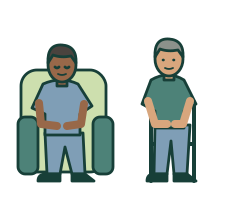
Ask for changes that help you get care.
You might need more time or somewhere quiet.
Ask staff to record what helps.

Ask about the GP’s learning disability register.
It helps the practice plan your care.
Other services have separate referral rules.

Annual health checks start at age 14.
You need to be on the GP learning disability register.
Ask how to get your check.

Tell the doctor what is worrying you.
Explain what has changed from your usual health.
Do not wait for your annual check when unwell.

Ask staff to explain tests and treatments.
Ask about benefits, risks and other choices.
You should get support to decide.

Ask when and how you will get test results.
Check who will arrange any specialist referral.
Contact the surgery if promised information does not arrive.
You can ask someone you trust to help.
Explain what information they may receive.
Ask to speak privately if you want.
Ask for urgent help when you need it.
For a life-threatening emergency, call 999.
NHS 111 can advise about urgent medical problems.
What you can do next
Contact your GP surgery.
Ask for the adjustments and follow-up information you need.
Read how to register with a GP Web pageThis link opens another website.
It may use harder words.
More useful links
- NHS: appointments and bookings Web page
Booking routes, urgent requests and other services.
- NHS England: the learning disability register Web page
What the register is for and how it supports care.
- NHS: annual health checks Web page
Eligibility, adjustments and what to discuss.
These links open other websites.
They may use harder words.
Registering with and seeing your GP
Get accessible appointments, explain health concerns and follow up tests, referrals and annual checks.
GP services · England · Annual learning disability checks from age 14
Register with a GP surgery
GP registration is free. You can usually apply online or ask the surgery for a form and help completing it. You do not need ID, an NHS number, proof of address or proof of immigration status to register. People without a fixed address can use a temporary address or the surgery’s address. A practice may have other lawful reasons to refuse, such as a closed list or being outside its area. Ask for the written reason and help finding a suitable practice.
Ask for an accessible way to book
Contact the practice by phone, in person or using its available online route. Explain if forms, telephone queues, recorded messages or apps are difficult. Ask for an adjustment, such as support completing a request or an agreed contact method. Staff may ask what is wrong so they can direct you to the right clinician and assess urgency. You can explain privacy concerns and ask how to give sensitive information discreetly.
Plan the appointment around your needs
Tell staff what helps before the visit: longer appointments, a quieter waiting place, accessible information, an interpreter, wheelchair access or a familiar supporter. Ask them to record agreed adjustments and check that clinicians will see them. A telephone or video appointment is not suitable for everyone or every problem; explain why you need another format. Staff should speak directly to you and give time for your own answers.
Check the learning disability register
Ask whether your GP record correctly identifies your learning disability. The GP learning disability register helps practices plan relevant care; it is not the same as the Dynamic Support Register or acceptance by a specialist community team. If your needs have not been recognised, explain them and ask the GP to consider the available information. Support with ordinary appointments should not depend on waiting for a specialist team to accept you.
Ask about the annual health check
People aged 14 or over on the GP learning disability register can have a free annual health check. Most practices offer them; if yours does not, ask the practice or community learning disability team how to access one elsewhere. The check is a planned review of health, medicines and support needs, usually followed by a health action plan. You do not need to be ill. Do not save up new or urgent symptoms until the annual appointment.
Prepare the main things you want to discuss
Write, draw or record your main concern and questions. Say when a symptom began, what is different from usual and what makes it better or worse. Bring relevant medicines information and a communication passport if useful. A supporter can help describe changes, with your agreement, but should not replace your voice. Tell the clinician about pain, constipation, eating, sleep or mental health concerns rather than assuming they are simply part of learning disability.
Understand examinations and treatment choices
Ask what an examination, test or medicine is for and what the alternatives are. Ask staff to explain before touching you and tell them what helps you feel safe. You can request a chaperone for an intimate examination and discuss any other support needed. Check how to take medicines and what to do about side effects. The clinician should support your decision-making; relatives do not automatically decide for an adult.
Follow up tests and referrals
Before leaving, ask how and when results will be explained and whom to contact if you hear nothing. Ask whether a specialist referral is needed, who will make it and how you will know it has arrived. Being on the learning disability register or having an annual check does not automatically create every specialist referral. Ask for the next steps in your preferred format. Keep a note of promised actions and follow up missing appointments.
Help from another person and privacy
You may want someone to help book appointments, attend or understand letters. Ask the surgery how to record your permission and any limits. For online help, ask about authorised proxy access rather than sharing passwords. A carer’s relationship alone does not give access to all records or permission to make treatment decisions. You can ask to speak privately and change who is involved, subject to the relevant legal safeguards.
If you cannot get the help you need
Explain the specific barrier to the practice manager and request a practical solution. You can use the practice’s complaints process or ask the local integrated care board about the appropriate NHS complaint route. For an urgent medical problem, contact the surgery or NHS 111 as appropriate; call 999 for a life-threatening emergency. See the urgent health guide for more detail. A complaint or routine appointment request should not delay urgent care.
Words you could use
“Please record the adjustments I need, check my learning disability register entry and explain my next appointment, results and referral steps.”
More useful links
- NHS: appointments and bookings Web page
Booking routes, urgent requests and other services.
- NHS England: the learning disability register Web page
What the register is for and how it supports care.
- NHS: annual health checks Web page
Eligibility, adjustments and what to discuss.
These links open other websites.
They may use harder words.
Where the information comes from
Links checked 1 November 2026.
These links open other websites.
They may use harder words.
- NHS: registering with a GP Web page
Registration without ID or address evidence and possible refusal reasons.
- NHS: booking GP appointments Web page
Appointment routes and help with access difficulties.
- NHS England: reasonable adjustments Web page
Examples of accessible appointments and recorded support needs.
- NHS England: the learning disability register Web page
The register, annual checks and health action plans.
- NHS: annual learning disability health checks Web page
Checks from age 14 and what to do if a practice does not offer them.
- NHS: Mental Capacity Act Web pageFuller information
Supporting decisions and avoiding assumptions about capacity.
- CQC: chaperones in GP care Web page
Explanation, consent and chaperone requests for intimate examinations.
- NHS: giving a trusted person online access Web page
Proxy access, choosing limits and withdrawing permission.