Health · England
Multiple sclerosis: MS
Your browser or device provides the reading voice.
This guide is for adults.
You can read it with someone you trust.

What MS means
MS means multiple sclerosis.
It affects the brain and spinal cord.
The spinal cord carries messages between your brain and body.

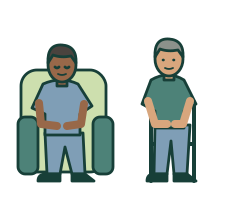
People are different
MS affects people in different ways.
You cannot tell someone’s needs just by looking at them.
Possible symptoms
You may feel very tired or have pain.
Your sight, balance or movement may change.
Other conditions can cause these symptoms too.

A specialist checks
Tell your GP about unexplained changes.
A brain and nerve specialist may arrange tests.
Ask them to explain each test.

Symptoms can change
Some symptoms get worse and then improve.
For some people, difficulties increase gradually.
Ask your specialist what this means for you.

Treatment choices
Treatment can help with MS.
The right treatment depends on your needs.
Do not change prescribed medicines yourself.

Everyday support
Ask for help with tiredness, movement or daily tasks.
You can ask for equipment or support at home.
Your care should be reviewed regularly.

Thinking and feelings
Tell your team about changes in memory or mood.
Ask for more time or clearer information.
Your choices still matter.

Sudden changes
A sudden drooping face, weak arm or speech problem may be a stroke.
Call 999.
Do not assume sudden changes are MS.
What you can do next
Ask your health team to explain your support plan.
Know whom to contact when symptoms change.
Read NHS information about MS Web pageThis link opens another website.
It may use harder words.
More useful links
- NHS: multiple sclerosis Web page
An overview of symptoms, assessment, treatment and support.
- MS Society: what is MS? Web page
Information about MS and links to specialist support.
- MS Trust: relapses and their management Web page
How the MS team assesses changes and plans help.
- MS Society: disease-modifying therapies Web page
Prepare questions about treatment choices with your specialist.
These links open other websites.
They may use harder words.
Multiple sclerosis (MS)
Understand MS, changing symptoms, specialist treatment and support with everyday life.
Adults · England · General information
What MS means
Multiple sclerosis is usually called MS. It is a condition of the brain and spinal cord. The immune system, which usually protects the body from infection, mistakenly damages the protective covering of nerves. This can interrupt messages between the brain and body. MS is not infectious. It is not a learning disability, although someone can have both. A diagnosis does not tell you everything about a person’s abilities or support needs.
Symptoms vary between people
MS may cause severe tiredness, called fatigue, blurred vision, numbness, tingling, muscle stiffness, weakness or difficulty with balance. Bladder, bowel and sexual difficulties can also happen. Some people have pain or changes in thinking and mood. Not everyone has all these symptoms. Some effects are not visible to others. Similar symptoms have many possible causes, so a symptom list cannot diagnose MS. Tell a GP about unexplained changes.
Getting a specialist assessment
If MS is suspected, a GP can refer you to a neurologist, a doctor specialising in the brain and nerves. There is no single test that gives the whole answer. Assessment combines your history, examination and test results, which may include an MRI scan and other tests. Ask what each test is for and how it will be made accessible. Sometimes further appointments are needed before the diagnosis is clear.
Relapsing and progressive MS
In relapsing remitting MS, new symptoms or a clear worsening are followed by some recovery. Recovery can be full or partial. Secondary progressive MS describes a pattern of gradually increasing difficulties after an earlier relapsing phase. Primary progressive MS involves gradual worsening from the start. Relapses can also happen with progressive MS. These names help describe the condition; they cannot predict exactly what will happen to you. Your specialist should explain your pattern and review changes over time.
Treatment is an individual decision
There is currently no cure for MS. Disease-modifying therapies, often called DMTs, can reduce relapses or slow the condition in people for whom they are suitable. Options depend on the type and activity of MS and other health factors. Discuss benefits, risks, monitoring and your preferences with the specialist. Treatment for symptoms is also available. Steroids may be offered for some relapses, but not every relapse needs them. Do not start, stop or change prescribed treatment yourself.
Support with everyday life
An MS nurse, physiotherapist or occupational therapist can help with symptoms, movement, equipment and daily tasks. Plan activities and rest around your energy and priorities. Ask about a personal approach to fatigue, rather than being told simply to push through it. Speech and language therapy can help with communication or swallowing concerns. NICE recommends a full review of MS care at least yearly. Ask for a care needs assessment if you need help at home.
Thinking, feelings and communication
Some people find concentration, remembering or planning harder. Fatigue, poor sleep, mood, medicines and infections can also affect thinking, so changes need assessment. A quieter space, reminders, one task at a time and extra time may help. Tell your team about anxiety or low mood. Ask for information in the format you use. If you already have a learning disability, compare changes with what is usual for you; do not dismiss them as part of that disability.
Changes and urgent help
Agree whom to contact if symptoms change. Heat or an infection can temporarily worsen existing symptoms without a new MS relapse. Contact your MS team or GP about new, lasting or worsening symptoms rather than deciding the cause yourself. Call 999 for possible stroke symptoms, such as sudden face drooping, weakness in one arm or difficulty speaking. Sudden loss of vision or balance also needs emergency assessment. Do not wait to see whether this is MS.
Words you could use
“Please explain my MS and treatment choices clearly. Help me plan everyday support and tell me whom to contact if symptoms change.”
More useful links
- NHS: multiple sclerosis Web page
An overview of symptoms, assessment, treatment and support.
- MS Society: what is MS? Web page
Information about MS and links to specialist support.
- MS Trust: relapses and their management Web page
How the MS team assesses changes and plans help.
- MS Society: disease-modifying therapies Web page
Prepare questions about treatment choices with your specialist.
These links open other websites.
They may use harder words.
Where the information comes from
Links checked 9 November 2026.
These links open other websites.
They may use harder words.
- NHS: multiple sclerosis Web page
Variable symptoms, assessment, supportive care and emergency advice for sudden neurological symptoms.
- MS Society: what is MS? Web page
Immune-system damage to nerve coverings, lifelong condition and individual effects.
- MS Society: types of MS Web page
Relapsing remitting, secondary progressive and primary progressive patterns.
- NICE NG220: multiple sclerosis in adults Web page
Specialist diagnosis, individual symptom management, rehabilitation and at least annual comprehensive review.
- NICE NG220: rationale and impact Web page
Checking other causes of fatigue and tailoring energy-management support.
- MS Society: disease-modifying therapies Web page
Treatment suitability, potential benefits, side effects and monitoring discussions.
- MS Trust: relapses and their management Web page
Relapses can occur in different MS patterns; infection and heat can mimic worsening; individual relapse treatment.
- MS Trust: thinking and memory problems Web page
Possible contributors to cognitive changes and practical communication, memory and planning support.
- NHS: learning disabilities Web page
Distinguishing a developmental learning disability from later neurological or cognitive changes.
- NHS: stroke symptoms Web page
Call 999 for possible stroke symptoms, including when symptoms have improved.