Parents & family life · England
Help with being a parent
Your browser or device provides the reading voice.
This guide is for parents in England.
It is also for people who are going to have a baby.

Being a parent
Having a learning disability does not mean you cannot be a parent.
Your child needs care and safety.

Ask for parenting support
You can ask for help with parenting.
Tell your midwife, health visitor or social worker what you need.

Your own support needs
Ask the council to look at your support needs.
Tell them about caring for your child.

Clear information
Tell workers how you understand information best.
You can ask for pictures and clear words.

Make a plan together
Ask for a plan you understand.
It should say who will help and when.
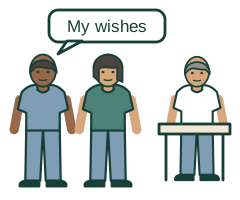
Ask for an advocate early
An advocate helps you understand information.
They help you explain your wishes.
Ask your social worker to help you find an advocate.

What have courts said?
Courts have said that some parents need extra help to take part fairly.
This can include a special kind of advocate.
The court must look at what help you need.

You may need different people to help
A solicitor gives you legal advice.
An advocate helps you understand and be heard.
Having a solicitor does not always give you all the help you need.
Explain what helps you
Tell your worker or solicitor what you find difficult.
You can ask for clear words, pictures and breaks.
Explain if you need someone to help you during meetings.
Plan help for court
Tell your solicitor early if you need extra help for court.
Ask them to explain what the judge needs to know.
The judge decides what help the court will arrange.

Ask who will pay
Ask who will arrange your support.
Ask who will pay for it.
Check which meetings the support covers.
If someone says no
Ask them to explain why.
Ask what other help they can offer.
Ask your solicitor or a trusted supporter how to challenge the decision.

Letters about court
Ask for help with letters you do not understand.
Get legal advice quickly if a letter says your case may go to court.
What you can do next
Tell your worker what help you need.
Ask about an independent advocate.
Keep going to meetings and follow court dates while you ask for help.
Find your local council Web pageFuller informationThis link opens another website.
It may use harder words.
More useful links
Choose a topic below. You can ask someone you trust to read a booklet with you. The descriptions say when a resource is older or written for another country.
Pregnancy and caring for your baby
Picture guides, feeding information and an app.
- Pregnancy and Me — From Bump to Baby PDFEasy Read
An older pregnancy booklet with easy words and pictures. Read it with your midwife and ask about your own care.
- Parenting in Pictures: babies — Australia Web page
Illustrated guides to caring for a baby. These are Australian resources; services and local advice may differ.
- Parenting in Pictures: pregnancy — Australia Web page
Picture guides about pregnancy, birth and preparing for a baby. These are Australian resources.
- All About Breastfeeding — Easy Read PDFEasy Read
An older picture booklet for new mothers in North Wales. Ask your midwife about feeding support available to you now.
- Breastfeeding booklets and helpful information — Betsi Cadwaladr UHB Web page
NHS Wales information and booklets about breastfeeding. This wider information page is not itself Easy Read.
- Baby Buddy app Web pageFree
The official page for the free, advert-free Baby Buddy app, with videos and tips about pregnancy and caring for a baby.
Your child, support and social services
Information about support, wellbeing and meetings. Ask your worker to explain how services work where you live now.
- Family Rights Group: support and advocacy for parents Web page
Information for parents with learning disabilities, including help to be heard by children’s services.
- Working Together: family resources Web page
Includes an illustrated guide for children, young people and families.
- Easy Read guide to wellbeing PDFEasy Read
An older picture guide about children’s wellbeing: being safe, healthy, cared for, respected and included.
- Meanings of different Social Services Meetings PDF
Short explanations of meetings. This is an older local booklet: some names and procedures have changed. Ask your worker what your meeting is for.
- When Children, Young People and Families Services are involved PDF
An older Plymouth booklet made with and for parents with learning difficulties. Includes emotional, physical and sexual abuse and neglect. Local contacts and procedures may have changed.
Solicitors and the family court
These older booklets can help you prepare questions. Your solicitor can explain current rules and dates for your case.
- The Court and your child: when social workers get involved PDFEasy Read
An older booklet using easy words and pictures to explain cases about a child’s care. Ask your solicitor to explain the current process for your case.
- The Official Solicitor — Easy Read PDFEasy Read
An older picture booklet about the Official Solicitor’s role in helping someone conduct a court case. Ask your solicitor whether this applies to your case.
- How to use a solicitor in England and Wales — Easy Read PDFEasy Read
An older Law Society guide to finding and working with a solicitor in England and Wales.
Advocacy and court decisions
These judgments and guidance use legal language. The More detail view explains the main points. Ask your solicitor how they apply to your needs.
- Re D (A Child) (No 3) [2016] EWFC 1 Web pageLonger information
Court judgment. Paragraphs 27–29 and Annex paragraph 164(5)–(6) discuss accessible support and advocacy for parents with learning disabilities. Longer legal information.
- Re C (Lay Advocates) [2019] EWHC 3738 (Fam) Web pageLonger information
Court judgment. Paragraphs 19–25 explain why these parents needed specialist help for a fair hearing. Read with the 2020 funding correction below. Longer legal information.
- Re C (Lay Advocates) (No 2) [2020] EWHC 1762 (Fam) Web pageLonger information
Court judgment. Paragraph 11 explains the lay advocate’s role; paragraphs 16–19 correct the funding arrangements. Longer legal information.
- Re M (A Child: Intermediaries) [2025] EWCA Civ 440 Web pageLonger information
Court of Appeal judgment. Paragraph 7 explains the fair-hearing test and the need to consider each person and task. Longer legal information.
- Family Court guidance: intermediaries and lay advocates Web pageLonger information
Guidance updated on 7 November 2025. Paragraphs 2 and 8–12 explain how the court considers support. Longer information for solicitors and supporters.
Parents’ experiences and being heard
Easy Read research about parents’ experiences and support.
- Supporting Parents Well — Easy Read PDFEasy Read
Easy Read research findings about how services can support parents with learning difficulties and listen to them.
- Hidden Voices of Maternity — Easy Read PDFEasy Read
A 2015 Easy Read research summary about parents with learning disabilities and their experiences of maternity services.
Example letters and plans
These Word documents are examples, not official blank forms or documents about your family. You may need a Word-compatible app to open them.
- Example of Letter before Proceedings DownloadWord example document
A Word example by Miriam Williams, West Sussex County Council. It is not a letter about your own family. Show any real letter to your solicitor promptly.
- Example of Care Plan DownloadWord example document
A Word example by Miriam Williams, West Sussex County Council. It shows one way to present a plan; your own plan must reflect your family.
- Example of Danger Statement DownloadWord example document
A Word example by Miriam Williams, West Sussex County Council. It shows how concerns might be explained; it is not an assessment of your family.
Scotland only
Scotland has a different legal system. This booklet is for parents and carers in Scotland.
- Going to Court: Easy Read Information for Parents/Carers — Scotland only PDFEasy Read
An older guide to the Scottish children’s hearings and court system. It does not explain the process in England.
More detail for supporters and workers
Older research and practice resources. These are longer documents.
- Finding the Right Help — research report (2008) PDFLonger information
A December 2008 research report by Beth Tarleton and Anna Marriott, including resources for supporting parents with learning difficulties. This longer report is for supporters and workers; listed services may have changed.
- Supporting Parents with a Learning Disability through the Child Protection System — toolkit (2017) PDFLonger information
A January 2017 professional toolkit. It is longer information for supporters and workers, rather than an Easy Read booklet for parents. Check current guidance alongside it.
These links open other websites.
They may use harder words.
Being a parent with a learning disability
Support with parenting, independent advocacy and taking part fairly in meetings and court.
Parents and parents-to-be · England
Start with your family
You are a parent with your own strengths, relationships and hopes. A diagnosis alone cannot show whether your child is safe or what support you need. Ask workers to explain their concerns using examples from your family’s life. Support planning should involve you and consider your child as an individual.
Ask for help early
You can tell your midwife, health visitor, GP or social worker about help you need. Ask adult social care for a needs assessment if you may need care and support yourself. Parenting responsibilities should be considered. An assessment does not automatically mean you qualify for funded support. Ask children’s services about help for your family too.
Make information work for you
Ask for reasonable adjustments: changes that help you use a service. Explain what works for you, such as pictures, one question at a time or someone reading letters with you. Ask workers to check their explanation is clear without making you feel tested. Keep an accessible record of appointments and agreed actions.
Learning and practical help
Discuss demonstrations, practising tasks together and reminders you can use at home. Explain when you need more time or repetition. Ask workers to distinguish learning a new skill from needing ongoing assistance with that task. Support needs can change as your child grows; needing help does not automatically mean you cannot parent.
Join up the support
Ask for a named contact and a plan showing who will do each task, when help starts, and how progress will be reviewed. Adult and children’s services should work together. Explain housing, money, health or relationship difficulties affecting daily life. If your child provides care for you, ask whether they need their own young carer’s assessment.
Ask for independent parent advocacy early
An independent parent advocate can help you understand concerns, prepare for meetings and explain your wishes to children’s services. Ask your social worker for this support as early as possible. The Working Together with Parents Network’s good-practice guidance recommends early access. Working Together to Safeguard Children 2026 says the lead practitioner should explain that families may bring an advocate, friend or supporter to an initial child-protection conference, and give information about advocacy agencies. Ask what can be arranged, when it will start and who will pay.
What case law says: Re D
Case law means decisions made by courts. In Re D (A Child) (No 3) [2016] EWFC 1, paragraphs 27–29 and Annex paragraph 164(5)–(6), the Family Court endorsed guidance about helping parents with learning disabilities take part meaningfully. This includes explaining the possibility of an advocate, making information accessible and allowing time and breaks. These principles support a request for help; they do not guarantee a particular advocate, funding or the outcome of your case.
Specialist help alongside a solicitor: Re C
In Re C (Lay Advocates) [2019] EWHC 3738 (Fam), paragraphs 19–25, the judge found that the two parents needed specialist lay advocates alongside their solicitors to understand and take part in the proceedings. Without that help, there was a serious risk to their right to a fair hearing under Article 6. The decision depended on evidence about those parents’ needs. A learning disability does not automatically mean every parent must have the same support. The funding order was later changed in Re C (No 2).
Advocates, solicitors and intermediaries have different roles
A solicitor gives legal advice and deals with the legal case. An independent parent advocate helps you understand services and express your views. A court lay advocate provides specialist support with understanding and participation. Re C (Lay Advocates) (No 2) [2020] EWHC 1762 (Fam), paragraph 11, explains that this role is distinct from a lawyer, an intermediary and a McKenzie Friend. An intermediary helps with communication in legal proceedings. Ask which kind of help fits your needs; one person does not automatically replace another.
How the court decides what support is needed
Re M (A Child: Intermediaries) [2025] EWCA Civ 440, paragraph 7, says intermediary support must be necessary for a fair hearing. The decision depends on the person, the particular task and other suitable adjustments. The President of the Family Division’s guidance, updated on 7 November 2025, applies this approach to court lay advocates too. Ask your solicitor to raise your needs early and explain where support is needed: preparing your case, meetings with your legal team, hearings or giving evidence. The judge decides what to authorise; an assessment informs that decision.
Who pays for court support?
Re C (No 2), paragraphs 16–19, corrected the earlier funding order. It distinguished HM Courts & Tribunals Service funding for lay-advocate assistance at hearings from Legal Aid Agency funding for justified, reasonable support with a legally aided solicitor outside court. Do not assume that an order for hearing support covers every meeting or its cost. Ask your solicitor to confirm who will arrange and fund each part before costs are incurred. These court funding arrangements do not automatically fund independent parent advocacy with children’s services.
How to ask for an advocate or other help
Explain what you find difficult and what helps: reading reports, remembering information, asking questions or explaining your wishes. Give examples from meetings. Ask for your needs and request to be recorded, with a plan for support before and during meetings. You can say: “I need help to understand the concerns and explain my views. Please consider an independent advocate and explain what support you will arrange.” For court support, ask your solicitor to explain the evidence needed and make the appropriate application.
If advocacy or court support is refused
Ask for the reasons in words you understand and a written record of the decision. Ask what other support will meet your needs and how the decision can be reviewed. For children’s services, you can speak to the manager, ask about the complaints procedure or contact Family Rights Group. For a court decision, speak promptly to your solicitor about review or appeal and any deadline. A service complaint does not change a court order. Do not miss a meeting or court deadline while waiting for advocacy.
Care Act advocacy is a separate route
If adult social care is assessing your own needs, ask whether you qualify for a Care Act independent advocate. This duty applies to specified adult assessment, planning, review and safeguarding processes, usually where you have substantial difficulty taking part and no appropriate person to help you. It is not an automatic right to an advocate at every children’s services meeting. See the types of advocacy guide for more detail.
If children’s services are worried
Your child’s safety and needs remain central. Ask what the worry is, what needs to change and what support will be offered. Ask for information you understand and help to take part in decisions. If you receive a letter before proceedings or court papers, contact a children-law solicitor promptly using the family court guide.
Words you could use
“Please help me understand the concerns and explain my views. Record my communication needs, consider an independent advocate, and explain who will arrange the support. If you refuse, please give me accessible reasons and explain how I can challenge the decision.”
More useful links
Choose a topic below. You can ask someone you trust to read a booklet with you. The descriptions say when a resource is older or written for another country.
Pregnancy and caring for your baby
Picture guides, feeding information and an app.
- Pregnancy and Me — From Bump to Baby PDFEasy Read
An older pregnancy booklet with easy words and pictures. Read it with your midwife and ask about your own care.
- Parenting in Pictures: babies — Australia Web page
Illustrated guides to caring for a baby. These are Australian resources; services and local advice may differ.
- Parenting in Pictures: pregnancy — Australia Web page
Picture guides about pregnancy, birth and preparing for a baby. These are Australian resources.
- All About Breastfeeding — Easy Read PDFEasy Read
An older picture booklet for new mothers in North Wales. Ask your midwife about feeding support available to you now.
- Breastfeeding booklets and helpful information — Betsi Cadwaladr UHB Web page
NHS Wales information and booklets about breastfeeding. This wider information page is not itself Easy Read.
- Baby Buddy app Web pageFree
The official page for the free, advert-free Baby Buddy app, with videos and tips about pregnancy and caring for a baby.
Your child, support and social services
Information about support, wellbeing and meetings. Ask your worker to explain how services work where you live now.
- Family Rights Group: support and advocacy for parents Web page
Information for parents with learning disabilities, including help to be heard by children’s services.
- Working Together: family resources Web page
Includes an illustrated guide for children, young people and families.
- Easy Read guide to wellbeing PDFEasy Read
An older picture guide about children’s wellbeing: being safe, healthy, cared for, respected and included.
- Meanings of different Social Services Meetings PDF
Short explanations of meetings. This is an older local booklet: some names and procedures have changed. Ask your worker what your meeting is for.
- When Children, Young People and Families Services are involved PDF
An older Plymouth booklet made with and for parents with learning difficulties. Includes emotional, physical and sexual abuse and neglect. Local contacts and procedures may have changed.
Solicitors and the family court
These older booklets can help you prepare questions. Your solicitor can explain current rules and dates for your case.
- The Court and your child: when social workers get involved PDFEasy Read
An older booklet using easy words and pictures to explain cases about a child’s care. Ask your solicitor to explain the current process for your case.
- The Official Solicitor — Easy Read PDFEasy Read
An older picture booklet about the Official Solicitor’s role in helping someone conduct a court case. Ask your solicitor whether this applies to your case.
- How to use a solicitor in England and Wales — Easy Read PDFEasy Read
An older Law Society guide to finding and working with a solicitor in England and Wales.
Advocacy and court decisions
These judgments and guidance use legal language. The More detail view explains the main points. Ask your solicitor how they apply to your needs.
- Re D (A Child) (No 3) [2016] EWFC 1 Web pageLonger information
Court judgment. Paragraphs 27–29 and Annex paragraph 164(5)–(6) discuss accessible support and advocacy for parents with learning disabilities. Longer legal information.
- Re C (Lay Advocates) [2019] EWHC 3738 (Fam) Web pageLonger information
Court judgment. Paragraphs 19–25 explain why these parents needed specialist help for a fair hearing. Read with the 2020 funding correction below. Longer legal information.
- Re C (Lay Advocates) (No 2) [2020] EWHC 1762 (Fam) Web pageLonger information
Court judgment. Paragraph 11 explains the lay advocate’s role; paragraphs 16–19 correct the funding arrangements. Longer legal information.
- Re M (A Child: Intermediaries) [2025] EWCA Civ 440 Web pageLonger information
Court of Appeal judgment. Paragraph 7 explains the fair-hearing test and the need to consider each person and task. Longer legal information.
- Family Court guidance: intermediaries and lay advocates Web pageLonger information
Guidance updated on 7 November 2025. Paragraphs 2 and 8–12 explain how the court considers support. Longer information for solicitors and supporters.
Parents’ experiences and being heard
Easy Read research about parents’ experiences and support.
- Supporting Parents Well — Easy Read PDFEasy Read
Easy Read research findings about how services can support parents with learning difficulties and listen to them.
- Hidden Voices of Maternity — Easy Read PDFEasy Read
A 2015 Easy Read research summary about parents with learning disabilities and their experiences of maternity services.
Example letters and plans
These Word documents are examples, not official blank forms or documents about your family. You may need a Word-compatible app to open them.
- Example of Letter before Proceedings DownloadWord example document
A Word example by Miriam Williams, West Sussex County Council. It is not a letter about your own family. Show any real letter to your solicitor promptly.
- Example of Care Plan DownloadWord example document
A Word example by Miriam Williams, West Sussex County Council. It shows one way to present a plan; your own plan must reflect your family.
- Example of Danger Statement DownloadWord example document
A Word example by Miriam Williams, West Sussex County Council. It shows how concerns might be explained; it is not an assessment of your family.
Scotland only
Scotland has a different legal system. This booklet is for parents and carers in Scotland.
- Going to Court: Easy Read Information for Parents/Carers — Scotland only PDFEasy Read
An older guide to the Scottish children’s hearings and court system. It does not explain the process in England.
More detail for supporters and workers
Older research and practice resources. These are longer documents.
- Finding the Right Help — research report (2008) PDFLonger information
A December 2008 research report by Beth Tarleton and Anna Marriott, including resources for supporting parents with learning difficulties. This longer report is for supporters and workers; listed services may have changed.
- Supporting Parents with a Learning Disability through the Child Protection System — toolkit (2017) PDFLonger information
A January 2017 professional toolkit. It is longer information for supporters and workers, rather than an Easy Read booklet for parents. Check current guidance alongside it.
These links open other websites.
They may use harder words.
Where the information comes from
Links checked 5 November 2026.
These links open other websites.
They may use harder words.
- WTPN: joint working protocol, 2024 PDF
Practice guidance on supporting parents and coordinating services; not a statutory entitlement to a particular package.
- Care and support statutory guidance Web pageFuller information
Chapter 6 covers parenting and family assessments; chapter 7 explains the separate Care Act advocacy duty and its conditions.
- Working Together to Safeguard Children 2026 Web page
England statutory guidance. Page 97 covers advocacy information and bringing an advocate, friend or supporter to an initial child-protection conference.
- WTPN: Good Practice Guidance, 2021 PDF
Section 1.5.2 recommends advocacy from the earliest stage. Specialist practice guidance, not itself statutory guidance.
- Family Rights Group: parents with learning difficulties and disabilities Web page
Guidance on support for parents, including access to independent advocacy.
- GOV.UK: finding a legal adviser Web page
The role of solicitors and routes to legal advice.
- Re D (A Child) (No 3) [2016] EWFC 1 Web page
Court judgment. Paragraphs 27–29 and Annex paragraph 164(5)–(6) discuss accessible support and advocacy for parents with learning disabilities. Longer legal information.
- Re C (Lay Advocates) [2019] EWHC 3738 (Fam) Web page
Court judgment. Paragraphs 19–25 explain why these parents needed specialist help for a fair hearing. Read with the 2020 funding correction below. Longer legal information.
- Re C (Lay Advocates) (No 2) [2020] EWHC 1762 (Fam) Web page
Court judgment. Paragraph 11 explains the lay advocate’s role; paragraphs 16–19 correct the funding arrangements. Longer legal information.
- Re M (A Child: Intermediaries) [2025] EWCA Civ 440 Web page
Court of Appeal judgment. Paragraph 7 explains the fair-hearing test and the need to consider each person and task. Longer legal information.
- Family Court guidance: intermediaries and lay advocates Web page
Guidance updated on 7 November 2025. Paragraphs 2 and 8–12 explain how the court considers support. Longer information for solicitors and supporters.