Safety & safeguarding · England
Help if you or someone else is not safe
Your browser or device provides the reading voice.
This guide is about abuse and neglect in England.
You can ask for help for yourself or another person.

Spotting harm
Nobody should hurt, frighten or exploit you.
Abuse can happen at home, online or in a service.

Neglect means not getting care you need.
This could mean missing food, medicines or help to use the toilet.

Tell someone if you think abuse or neglect may be happening.
You do not need proof.
You do not have to wait for it to happen again.

Get help to stay safe
Call 999 if someone is in immediate danger.
Call 999 for a life-threatening medical emergency.
NHS 111 can help with other urgent medical problems.
For an adult, contact the council’s adult safeguarding team.
An adult is someone aged 18 or over.
Ask someone you trust to help if you want.
For a child, contact the council’s children’s social care team.
Call 999 if the child is in immediate danger.
Explain what you need
Ask to speak somewhere private and safe.
Tell people how they can contact you safely.

Ask for information you understand.
You can use pictures, signs or a communication aid.
An online form should not stop you getting help.

Say what worries you and what you want to happen.
If helping someone else, listen to what they want.
Ask who needs to know about the concern.
Sometimes information must be shared to help keep people safe.

What happens next
If safe, keep a note of what happened and when.
Write down who you contacted and what they said.
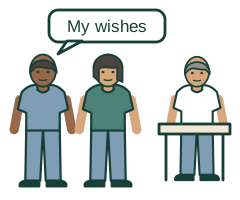
Ask whether an independent advocate can help you take part.
An advocate helps you understand and have your views heard.

Ask who will help and when you will hear back.
If you are still unsafe, tell the safeguarding team again.
Do not wait for a complaint outcome if there is danger.
What you can do next
Ask for the safeguarding team.
Explain the concern and any immediate danger.
Find your council Web pageFuller informationThis link opens another website.
It may use harder words.
More useful links
- Find the council to report a concern Web pageFuller information
Ask for adult safeguarding, or children’s social care for someone under 18.
- NHS: raising a safeguarding concern Web page
Who can help and when to contact the police.
- Report child abuse Web page
The separate route for worries about a child.
- CQC: report concerns about care Web page
Tell the regulator about unsafe care; this does not replace a safeguarding report.
- Complaints about adult social care Web page
When the Ombudsman can consider a council or care-provider complaint.
These links open other websites.
They may use harder words.
Safeguarding: what to do if you or someone else is not safe
When to raise a concern about abuse or neglect, who to contact and how to get help if concerns are ignored.
Adults aged 18 and over · England · Separate reporting route for children
What safeguarding is for
Safeguarding is action to protect a person’s safety, wellbeing and human rights when abuse or neglect may be happening. It can concern you or someone else. Harm can occur at home, online, in education, in hospital or in a care service. It may come from a stranger, someone close, another resident, a worker or an organisation.
When to raise a concern
Raise a concern when you suspect abuse or neglect, including a risk that it may happen. You do not need to prove it or wait for another incident. Examples include violence, sexual pressure, threats, humiliation, discriminatory abuse, coercive control, stolen money or exploitation. Neglect may include essential food, medicines, personal care or medical help being withheld or repeatedly missed.
Unsafe services and restrictive routines
A serious single incident or a pattern of poor care may require safeguarding action. Examples include people being left without necessary support, punishment, inappropriate restraint or harmful rules imposed on everyone. Changes such as fear, withdrawal, unexplained injuries or distress need attention but do not prove abuse. Explain what you observed; staff shortages or a label of challenging behaviour do not excuse harm.
Get urgent help first
Call 999 if someone is in immediate danger or has a life-threatening medical emergency. For urgent medical help that is not life-threatening, contact NHS 111. Report a suspected crime to the police; use 101 or the police online reporting route when it is not an emergency. A safeguarding referral does not replace urgent medical care or police help.
Contact the council directly
Contact the adult safeguarding team at the council where the adult is. Its website should explain how to report; you can also phone the council and ask. Ask about its emergency or out-of-hours service if necessary. A GP, social worker, advocate or trusted person can help you report. You can contact the council without permission from the care provider or the person you are concerned about.
What the council must consider
Under section 42 of the Care Act, the council must make, or arrange, necessary enquiries where it reasonably suspects an adult has care and support needs, is experiencing or at risk of abuse or neglect, and because of those needs cannot protect themselves. The duty is not limited to council-funded care or people lacking capacity. You do not have to decide this legal test before reporting. Other support may be appropriate if the duty does not apply.
Listen and involve the person
Where safe, speak privately, listen calmly and ask what the person wants to happen. Seek their agreement to sharing information wherever possible. Do not promise absolute secrecy: serious risk to them or others, coercion, crime or other legal duties may justify sharing without agreement. If capacity is in question, support the particular decision and follow the Mental Capacity Act. A refusal does not mean professionals should simply walk away.
Make reporting accessible
Ask for a safe contact method, an interpreter, Easy Read information, communication aids or a meeting with someone independent. You should not have to use an inaccessible online form. For someone who communicates without speech, explain their usual expressions and changes. Ask how their preferences will be established. Independent Care Act advocacy may be required if the person has substantial difficulty participating and nobody appropriate can support them.
Record and follow up safely
Write down dates, what you saw or heard, the person’s own words and any action taken. Keep records safely and distinguish facts from concerns. Do not confront someone if this could increase danger or try to investigate yourself. Ask for acknowledgement, a contact person, immediate safety arrangements and a date for an update. A person reporting about someone else may not receive confidential details.
If nothing changes
Tell the safeguarding team about continuing or new risks and ask for a manager or the local escalation process. Ask for reasons if it will not make an enquiry and what alternative help is offered. Complaints to the provider or council may run alongside safeguarding. CQC accepts information about regulated services but does not resolve individual complaints. The Local Government and Social Care Ombudsman can consider eligible complaints, usually after the organisation has had a chance to respond. Do not wait for a complaint outcome if someone remains unsafe.
If the concern is about a child
For someone under 18, contact the children’s social care team at their local council. You can report a reasonable suspicion without being certain. Call 999 for immediate danger. The child’s safety and wishes need appropriate attention; do not assume the adult safeguarding process is the right route. The linked government page explains reporting and further advice.
Words you could use
“I want to raise a safeguarding concern. I am worried about … The immediate risks are … The person wants … Please tell me who will respond, what will happen now and how we can take part accessibly.”
More useful links
- Find the council to report a concern Web pageFuller information
Ask for adult safeguarding, or children’s social care for someone under 18.
- NHS: raising a safeguarding concern Web page
Who can help and when to contact the police.
- Report child abuse Web page
The separate route for worries about a child.
- CQC: report concerns about care Web page
Tell the regulator about unsafe care; this does not replace a safeguarding report.
- Complaints about adult social care Web page
When the Ombudsman can consider a council or care-provider complaint.
These links open other websites.
They may use harder words.
Where the information comes from
Links checked 1 November 2026.
These links open other websites.
They may use harder words.
- Care Act 2014, section 42 Web page
The three conditions and local authority enquiry duty.
- Care and support statutory guidance: safeguarding Web page
Person-led enquiries, safeguarding duties, advocacy and information sharing.
- NHS: abuse and neglect of adults at risk Web page
Recognising harm, listening and seeking help.
- NHS England: raising concerns Web page
Reporting concerns and emergency/non-emergency police routes.
- NHS safeguarding guide: raising concerns Web page
Anyone can contact the local authority about a child or adult; response may include an enquiry or other support.
- Local Government Association: safeguarding-concern FAQs Web page
Consent, public-interest considerations and not withdrawing support simply because someone declines an enquiry.
- NHS: when to use 111 Web page
Urgent medical help and emergency escalation.
- GOV.UK: report child abuse Web page
Children’s social care, suspicion and emergency reporting.
- CQC: public concerns about care Web page
Regulatory information and the limits of CQC’s individual complaints role.
- Local Government and Social Care Ombudsman: adult care complaints Web page
Complaints about safety, safeguarding and care, including usual prior complaint requirements.