Mental health & feelings · England
Rejection sensitivity and RSD
Your browser or device provides the reading voice.
You can read this with someone you trust.
You can ask for support with difficult feelings.

Understanding rejection
Rejection can mean feeling unwanted or left out.
Criticism can feel very painful for some people.

What RSD means
RSD means rejection sensitive dysphoria.
People use this term for very strong feelings around rejection.
It is not an official medical diagnosis.
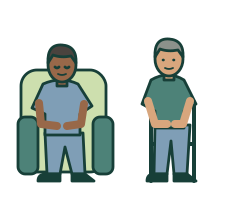
Your feelings matter
You may feel hurt, worried, ashamed or angry.
You deserve support with these feelings.

People are different
Some people with ADHD describe these experiences.
This does not happen to everyone.
The feelings alone do not diagnose ADHD or autism.

Take some time
You can pause before replying when feelings are strong.
A short break or quieter place may help.

Ask what someone means
A message can have more than one meaning.
You can ask for a clear explanation.
You can ask for time to think.
Mistreatment matters
Bullying and abuse should be taken seriously.
Ask someone you trust for help if you are being treated badly.

Find support
Tell your GP if the feelings are affecting daily life.
Ask what support could help you.
Do not change medicines yourself.

Urgent help
For urgent mental health help, call 111 and choose the mental health option.
If life is at risk, call 999 or go to A&E.
Use emergency help if you cannot keep yourself or someone else safe.
What you can do next
Ask for support that fits your needs.
Tell the health team how you want information explained.
Read about NHS talking therapies Web pageThis link opens another website.
It may use harder words.
More useful links
- NHS Cheshire and Merseyside: adult ADHD information pack (PDF) PDF
Includes emotions, rejection sensitivity and practical coping ideas.
- NHS: considering unhelpful thoughts Web page
A general exercise for exploring evidence and different meanings. It is not a diagnostic test.
- NHS: talking therapies Web page
Information about assessment, referrals and support for difficult feelings.
- NHS: urgent mental health help Web page
Current advice for urgent help and emergencies.
These links open other websites.
They may use harder words.
Rejection sensitivity and RSD
Understand strong reactions to rejection or criticism, the limits of the RSD label and ways to seek support.
Adults · England · General information
What the words mean
Rejection sensitive dysphoria, or RSD, describes intense emotional pain around rejection, criticism or perceived failure. Dysphoria means strong distress or discomfort. People also use the broader term rejection sensitivity. RSD is not a recognised separate medical diagnosis and does not have agreed diagnostic criteria. You may hear rejection sensitivity disorder, but that name can give a misleading impression of a formally established condition.
How it may feel
Someone may feel hurt, ashamed, anxious or angry very quickly after feedback, exclusion or an unclear interaction. They may withdraw, repeatedly seek reassurance or avoid activities because they fear getting something wrong. These experiences vary. Describe what happened, how long feelings lasted and how daily life was affected, rather than assuming a label explains every reaction.
ADHD, autism and uncertainty
RSD is often discussed in ADHD communities. Difficulties managing strong emotions can occur with ADHD, but this does not establish RSD as a distinct disorder. Research specifically on rejection sensitivity is limited and findings are not uniform. People can be sensitive to rejection with or without ADHD or autism. Rejection sensitivity alone cannot diagnose either condition, and support should be based on the person’s own needs.
Pause and find what helps you settle
If possible, pause before replying or making a major decision when emotions are intense. Notice early signs such as tension or a racing heart. A short break, a quieter place or an agreed signal to a trusted person may help. Choose an approach that feels comfortable; breathing exercises or other strategies do not suit everyone. Return to the issue when you have enough space to think.
Check meaning without dismissing your experience
When calmer, separate what happened from what you think it means. For example, a short message might mean someone is busy, but it is reasonable to ask for clarification. Consider the evidence and more than one possible explanation. RSD should never be used to dismiss bullying, discrimination or abuse. If someone is treating you badly, ask for support with that situation as well as its emotional effects.
Make feedback and communication accessible
Discuss what helps with people you trust. You might prefer specific feedback, a private conversation, written points or time to process before answering. You can ask what a message means rather than guessing. Agree clear boundaries and ways to repair misunderstandings. Supporters should listen to distress, avoid ridicule and give explanations in a form the person can use.
Ask for an individual assessment
Speak to a GP or mental health professional if these reactions are frequent, severe or affecting relationships, work or daily life. Assessment can consider anxiety, low mood, ADHD, past experiences and other explanations. Talking therapy may help with relevant difficulties. There is no established RSD-specific treatment pathway. Medicine decisions should be based on an appropriate clinical assessment; do not start, stop or change medication because of an online RSD label.
Plan support and urgent help
Record what helps and what makes things harder, if you find this useful. Agree whom to contact and review whether support is working. For urgent mental health help, ask for an urgent GP appointment or call NHS 111 and select the mental health option. Call 999 or go to A&E if life is at risk or you cannot keep yourself or someone else safe.
Words you could use
“Criticism or feeling rejected can be overwhelming for me. Please listen, explain clearly and help me work out what support I need.”
More useful links
- NHS Cheshire and Merseyside: adult ADHD information pack (PDF) PDF
Includes emotions, rejection sensitivity and practical coping ideas.
- NHS: considering unhelpful thoughts Web page
A general exercise for exploring evidence and different meanings. It is not a diagnostic test.
- NHS: talking therapies Web page
Information about assessment, referrals and support for difficult feelings.
- NHS: urgent mental health help Web page
Current advice for urgent help and emergencies.
These links open other websites.
They may use harder words.
Where the information comes from
Links checked 9 November 2026.
These links open other websites.
They may use harder words.
- Cleveland Clinic: rejection sensitive dysphoria Web page
Meaning of RSD and lack of formal diagnostic status. Treatment decisions need individual UK clinical advice.
- NHS Cheshire and Merseyside: adult ADHD information pack (PDF) PDF
Emotional experiences, recognising early signs, breaks, quiet space and communication signals.
- Canu and Carlson, 2007: rejection sensitivity and ADHD Web page
A small study whose findings did not support uniformly higher rejection sensitivity in participants with ADHD.
- NHS: considering unhelpful thoughts Web page
Separating events, thoughts and evidence while considering alternative interpretations.
- NHS: talking therapies Web page
Support based on the person’s difficulties and referral needs.
- NHS: urgent mental health help Web page
Urgent GP and NHS 111 mental health help; emergency care where safety is at risk.