Everyday life · England
Having an allotment or growing plants
Your browser or device provides the reading voice.
You can grow food or flowers.
You can start small.
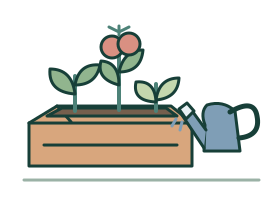
An allotment
An allotment is land you usually rent.
You can use it to grow food and plants.
Ask about a plot
Ask your council about allotments.
You may need to join a waiting list.

Choose a space
You could ask for a small plot.
You could try a community garden.
You could grow herbs in pots at home.
Grow food with other people
Incredible Edible has local food-growing groups.
You can ask to join a group near you.
Ask which tasks you could try.

Plan the help you need
Groups offer different kinds of help.
Ask about access, costs and your support before you go.
Ask before picking or tasting plants.
Check access
Visit before you agree.
Check paths, gates, water and toilets.
Ask for changes that would help you.

Check costs
Ask about rent and other charges.
Think about tools, seeds and travel too.

Read the rules
Ask someone you trust to explain the agreement.
Check the rules before adding a shed or changing the plot.
Make it easier
A raised bed may make plants easier to reach.
Seats and suitable tools may help.
Choose what works for you.

Plan your help
Plants need regular care.
Agree who will help when you need it.
Plan help for holidays or illness.
Use tools safely
Ask someone to show you how tools work.
Ask for help with heavy things.
Take breaks.

Keep clean
Wash your hands after gardening.
Wash food you have grown before eating it.
Look after the site
Keep paths clear.
Follow the rules about water and garden chemicals.
Ask before using another person’s tools or crops.

Enjoy your gardening
Choose plants you like.
You can learn as you go.
It is fine to change your plan.
What you can do next
Ask about a visit, a plot or a waiting list.
Take someone you choose if that helps.
Find your council’s allotment service Web pageThis link opens another website.
It may use harder words.
More useful links
- GOV.UK: apply for an allotment Web page
Enter your postcode to find your council’s allotment service.
- National Allotment Society: before accepting a plot Web page
Questions about the plot, costs, rules, access and water.
- RHS: starting an allotment Web page
Practical advice about choosing and starting a plot.
- Thrive: accessible gardening and ideas Web page
Ideas for gardening in ways that suit your needs.
- Thrive: gardening in raised beds Web page
Ideas for choosing a suitable height and growing space.
- Incredible Edible: find a group in England Web page
Find local food-growing groups. Contact the group to check current activities, access and support.
- Incredible Edible: joining and support questions Web page
Explains independent local groups and why support arrangements must be checked with each group.
- Social Farms & Gardens: find a community project Web page
Directory of community gardens, farms and nature projects. Search for an English location and ask the project about access, activities and charges.
- TCV: find a Green Gym Web page
Find outdoor volunteering groups. Ask about available places, the site and any support you need.
These links open other websites.
They may use harder words.
Having an allotment and growing food — Easy Read
Ask for an allotment, check costs and access, or try a community garden or a few pots at home.
England · Local allotment rules and availability vary
Choose what you would enjoy
You might want to grow vegetables, herbs, fruit or flowers, spend time outdoors or meet other gardeners. An allotment is usually rented land with a tenancy agreement and site rules. You can also try a community garden, a shared project or containers at home. You do not need a large plot to begin.
Find an allotment and ask to apply
Use GOV.UK to find your local council’s allotment service. The council may offer a plot or put you on a waiting list. Some sites are managed by associations or private providers. Ask who manages the site, how to apply, any local eligibility rules and how to keep your application active. A waiting-list place does not guarantee an immediate plot.
Visit before you agree
See the plot and route from the entrance. Check slopes, path surfaces, gate width, water, storage, toilets and places to rest. Ask how much clearing work is needed and who is responsible for it. Explain your access and communication needs. Ask whether a smaller plot, a raised bed or another site would work better.
Understand the agreement and costs
Ask someone you choose to help read the tenancy and rules. Check rent, any deposit, keys, water charges, insurance or association fees. Allow for seeds, tools, compost and travel as well. Ask about concessions, renewal, ending the agreement and what happens if you become unwell. Check written terms before paying or signing.
Check rules before changing the plot
Ask permission before adding a shed, greenhouse, permanent raised beds or other structures. Rules may cover water use, pesticides, bonfires, trees, animals and keeping the plot cultivated. Sharing or transferring a plot may need permission. Do not assume that something allowed on one site is allowed on another.
Make gardening accessible
A raised bed can bring plants closer and reduce bending, but its height and width must suit you. Containers, seats, light tools and clear picture labels may help. Check that you can reach safely and move around the space. Thrive has ideas for adapting gardening. If you need specialist equipment advice, ask an occupational therapist.
Plan regular help
Plants may need watering and attention several times a week, especially in warm weather. Agree who will help with visits, heavy work, carrying water and holidays. Start with a few manageable tasks and build confidence. Support should help you take part and make choices; someone else taking over the whole plot may not meet your goal.
Use tools and soil safely
Ask for a demonstration of unfamiliar tools and suitable help with lifting. Keep tools and garden chemicals stored safely and follow instructions. Wear suitable clothing, protect cuts and wash hands after handling soil and before eating. Wash harvested food. Take breaks and drinks, and plan for sun, cold or rain. Report hazards such as broken glass to the site manager.
Care for wildlife and the site
Ask about composting, saving water and growing plants for wildlife. Follow local rules about ponds, feeds and structures. Keep paths clear and remove litter safely. Ask before picking someone else’s crops or using their tools. You can enjoy the social side without having to join every activity.
Try another way to grow
If no plot is available or a full allotment feels too much, ask about community growing groups or volunteering. You could grow herbs in pots or help with a shared raised bed. Check costs, access and support arrangements first. It is fine to change your plan or stop if it is not enjoyable.
Try Incredible Edible
Incredible Edible brings people together to grow and share food in their communities. Use its England group finder to contact a local group. You could ask about sowing, watering, harvesting or another task you enjoy. Groups run independently. Its FAQ explains that not every group can support people with higher support needs, so agree the help you need directly before attending.
Other community food-growing projects
Social Farms & Gardens lists community gardens, farms and other nature projects. You might find a shared vegetable bed, orchard or group garden without taking on your own allotment. Some projects offer learning, volunteering or structured support, but these are different arrangements. Ask whether the activity is a volunteer session, a paid service or a funded placement, and whether a referral is needed. The directory is not a promise of a place or suitable support.
Agree how a shared garden works
Ask when you can attend, who welcomes new people, what equipment is available and whether there are any charges. Check accessible paths, seating, toilets and a quiet place if needed. Agree who provides personal assistance or transport. Ask which crops are for sharing and when they are ready; do not assume that any plant in a public space is safe to eat. Follow signs and ask the organiser before picking or tasting.
Growing food through Green Gym
Some TCV Green Gym groups grow food as part of caring for local green spaces. Green Gym sessions are free, but activities differ between groups. Ask whether food growing is part of your local programme and agree the tasks and support that suit you. Our conservation volunteering guide explains TCV, previously called BTCV, and how to plan a first visit.
Words you could use
“I would like to grow plants. Please help me check the plot, costs, rules, access and regular support before I decide.”
More useful links
- GOV.UK: apply for an allotment Web page
Enter your postcode to find your council’s allotment service.
- National Allotment Society: before accepting a plot Web page
Questions about the plot, costs, rules, access and water.
- RHS: starting an allotment Web page
Practical advice about choosing and starting a plot.
- Thrive: accessible gardening and ideas Web page
Ideas for gardening in ways that suit your needs.
- Thrive: gardening in raised beds Web page
Ideas for choosing a suitable height and growing space.
- Incredible Edible: find a group in England Web page
Find local food-growing groups. Contact the group to check current activities, access and support.
- Incredible Edible: joining and support questions Web page
Explains independent local groups and why support arrangements must be checked with each group.
- Social Farms & Gardens: find a community project Web page
Directory of community gardens, farms and nature projects. Search for an English location and ask the project about access, activities and charges.
- TCV: find a Green Gym Web page
Find outdoor volunteering groups. Ask about available places, the site and any support you need.
These links open other websites.
They may use harder words.
Where the information comes from
Links checked 7 November 2026.
These links open other websites.
They may use harder words.
- GOV.UK: apply for an allotment Web page
Local council applications and waiting lists.
- National Allotment Society: before accepting a plot Web page
Visiting, access, water, costs, rules and the tenancy agreement.
- RHS: starting an allotment Web page
Choosing a manageable plot, facilities and preparation.
- Thrive: gardening in raised beds Web page
Choosing accessible growing spaces and recognising watering and design needs.
- Thrive: gardening for health and wellbeing Web page
Ideas for starting gardening and adapting activities.
- Food Standards Agency: cleaning Web page
Food hygiene information and links to detailed cleaning advice.
- Incredible Edible: find a group in England Web page
Find local food-growing groups. Contact the group to check current activities, access and support.
- Incredible Edible: joining and support questions Web page
Explains independent local groups and why support arrangements must be checked with each group.
- Social Farms & Gardens: find a community project Web page
Directory of community gardens, farms and nature projects. Search for an English location and ask the project about access, activities and charges.
- TCV: find a Green Gym Web page
Find outdoor volunteering groups. Ask about available places, the site and any support you need.
- Incredible Edible: the movement Web page
Community food-growing and sharing.
- TCV: Green Gym Web page
Free outdoor volunteering, including food-growing activities at some groups.
A page for you to fill in
You can type your answers and download a copy.
You can also print a page to write or draw on.
Someone you trust can help you.