Rights & choices · England
Making your own decisions
Your browser or device provides the reading voice.
This guide is about making decisions in England.
It is mainly for people aged 16 or over.

People must start by assuming you can make your own decisions.
Having a learning disability does not mean you cannot decide.

Mental capacity means being able to make a particular decision.
It is about that decision at that time.
You may be able to make some decisions but not others.

You should get help to understand your choices.
You may need pictures, simple words or more time.
Ask for help to explain what you want.
Other people may disagree with your choice.
That alone does not mean you cannot make the decision.

Sometimes you cannot make a decision even with help.
A decision made for you must be in your best interests.
This means looking carefully at what is best for you.
Your wishes and feelings still matter.
People making the decision must consider them.
They must consider choices that limit your freedom less.
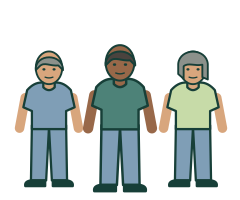
Family members do not automatically have legal power to decide for an adult.
Ask staff who can make this decision and why.
What you can do next
Ask someone to explain your choices in a way you understand.
You can read the longer guide with someone you trust.
Read the NHS guide to making decisions Web pageFuller informationThis link opens another website.
It may use harder words.
Making your own decisions
Your choices, the help you can ask for, and mental capacity.
Mental Capacity Act · generally age 16 and over · England
Capacity is about a particular decision
“Mental capacity” means being able to make a particular decision when it needs to be made. You may be able to make one decision but need help with another.
Ask for support first
This might mean pictures, simpler explanations, communication aids, more time or a person you trust.
Your wishes still matter
If you cannot make that decision despite support, a decision made for you under the Mental Capacity Act must be in your best interests. Your wishes and feelings matter. People must consider options that restrict your freedom less.
Family members do not automatically decide
Being a relative or “next of kin” does not automatically give someone authority to consent to treatment for an adult. A relevant lasting power of attorney or court order can give specific powers.
Words you could use
“Please explain the choices in a way I understand. Give me the support I need to decide.”
Where the information comes from
Links checked 26 October 2026.
These links open other websites.
They may use harder words.
- Mental Capacity Act 2005, section 1 Web page
The five principles, including support to decide and best interests.
- Mental Capacity Act 2005, section 2 Web page
Capacity is assessed for the decision at the relevant time.
- Mental Capacity Act Code of Practice Web page
Official guidance for applying the Act. It also applies in Wales; this website covers England.
- University Hospital Southampton: the role of next of kin Web page
Explains the limits of next-of-kin decision-making authority.