Health · England
Getting your vaccinations
Your browser or device provides the reading voice.
Vaccines help protect you from some infections.
You can ask questions about them.

Ask your GP to check your vaccine record.
You may be able to catch up missed vaccines.

Different vaccines protect against different illnesses.
Ask which ones are right for you.

Adults with a learning disability can get free flu vaccination.
Ask about it each year.
Children have their own vaccination arrangements.

Many carers can get free flu vaccination too.
Ask your GP or pharmacist.

COVID vaccine rules are different from flu vaccine rules.
Check this season’s rules with your GP or vaccination team.
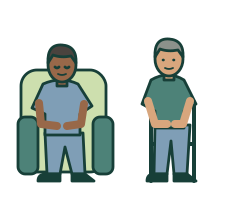
Tell staff what makes appointments easier.
You can ask for more time or somewhere quiet.

Tell staff if you are scared of needles.
Ask for a plan to help you feel safer.

Staff should help you understand and decide.
Family members do not automatically decide for an adult.

Tell staff about allergies and previous serious reactions.
Tell them about your medicines and health conditions.

Ask what to expect after the vaccine.
Ask who to contact if you feel unwell.

Call 999 for severe breathing difficulty or sudden throat swelling.
Call 111 for urgent advice about other worrying symptoms.
What you can do next
Ask which vaccines are due for you.
Agree any support before your appointment.
Check the current NHS vaccination schedule Web pageThis link opens another website.
It may use harder words.
More useful links
- NHS: current vaccination schedule Web page
Routine, catch-up and additional risk-group programmes.
- NHS: flu vaccination Web page
Current eligibility and booking for adults; includes links to children’s vaccination.
- NHS: COVID-19 vaccination Web page
Current seasonal eligibility, booking and aftercare.
- NHS England: accessible vaccine information Web page
Easy Read information, films and accessible invitation resources.
- NHS: support with needle fear Web page
Talking about fear and asking for professional support.
These links open other websites.
They may use harder words.
Vaccinations and making appointments easier
Check routine and seasonal vaccines, catch up missed protection and plan the support you need.
Children and adults · England · Seasonal eligibility checked 1 November 2026
Check routine vaccines and your records
Ask the GP practice to check your vaccination record against the current NHS schedule. Bring any child health book, previous records or information from another country. Tell staff if records are missing; they can advise on catch-up rather than leaving you to guess. Many missed vaccines can be caught up, but the right plan depends on age, health and earlier doses. An annual learning disability health check is a useful time to ask, without delaying a vaccine already due.
Different vaccines protect different people
The NHS schedule includes childhood vaccines, teenage vaccines and vaccines offered in later life, pregnancy or particular health conditions. MMR and the newer MMRV programme have age and birth-date rules, so use the current schedule rather than an old list. Ask about extra protection relevant to your health or living arrangements. Routine NHS vaccination offered to an eligible person is free; some travel or private vaccines may have a charge.
Flu vaccination and learning disability
For the 2026–2027 flu season, adults with a learning disability qualify for a free NHS flu vaccine. Children with a learning disability can qualify from age 6 months through clinical risk groups; many children also qualify through age-based programmes. Ask the GP or school vaccination team which route applies. Main carers of older or disabled people, and people receiving Carer’s Allowance, also qualify. Tell the practice if the learning disability is missing from the record. Ask about vaccination even if an invitation has not arrived.
COVID-19 vaccination: check this season’s rules
For autumn 2026, the NHS COVID-19 offer covers people aged 75 or over, including those turning 75 by 31 January 2027; residents of care homes for older adults; and people aged 6 months or over whose immune system is weakened within the programme’s clinical criteria. A learning disability or being a carer alone does not create eligibility under these autumn rules. Ask the GP or specialist if uncertain. Flu and COVID eligibility differ, and later campaigns may change.
Find a suitable vaccination service
The right service may be the GP, a participating pharmacy, school vaccination team, maternity service or another NHS clinic. Check age limits and which vaccine they provide before booking. Use the NHS booking information or ask the GP for help; telephone support is available through 119 for eligible seasonal bookings. If you cannot attend an ordinary clinic, explain why and ask what accessible alternative can be arranged. Home visits or specialist clinics depend on assessment and local arrangements.
Agree adjustments before the day
Explain communication, sensory, mobility and personal-care needs. Ask about longer appointments, minimal waiting, a quieter room, a familiar supporter, accessible information or a familiarisation visit. Share a communication passport with your agreement. Agree how staff should explain each step, where you will wait and how you can ask to pause. Ask the team to record the plan so you do not have to start again with each member of staff.
Fear of needles deserves support
Tell the team about fear, fainting or distress before attending. Explain what helped or made things worse before. Ask about a gradual preparation plan, distraction, positioning and whether clinically suitable pain relief or specialist support would help. Different vaccines have different options: a nasal spray is not available instead of every injection. For severe difficulty, ask the GP or community learning disability team to help coordinate a plan; do not surprise, deceive or restrain someone simply to get the appointment finished.
Support an informed choice and lawful consent
The clinician should explain benefits, risks and alternatives in a way the person can understand. A learning disability does not automatically remove capacity to decide. An adult with capacity can consent or refuse, and a relative cannot automatically consent on their behalf. If the person lacks capacity for this particular decision despite support, the team must follow the appropriate best-interests process and check any valid health-and-welfare authority. For children, clinicians must consider competence and parental responsibility under the relevant consent rules.
Tell the vaccinator about your health
Before vaccination, explain previous serious reactions, allergies, current illness, pregnancy where relevant, medicines and treatments affecting immunity. Bring the information requested by the service. The clinician should check which vaccine is suitable and whether timing needs to change. Do not cancel or stop prescribed treatment on your own. Ask what you should expect afterwards and how the record will reach the GP if another service gives the vaccine.
Plan support afterwards and follow up
Ask about expected side effects, how long to stay at the clinic and whom to contact with concerns. Mild soreness or tiredness can happen, but do not assume every new symptom is a vaccine reaction. Call 999 for severe breathing difficulty, sudden throat or tongue swelling, or collapse with inability to wake. Contact NHS 111 for urgent or worsening concerns. Record the vaccine and any next appointment. Keep using other infection precautions appropriate to your health; vaccination does not guarantee complete protection.
Words you could use
“Please check which vaccines I need, explain this season’s eligibility and agree an appointment plan that supports my communication, comfort and consent.”
More useful links
- NHS: current vaccination schedule Web page
Routine, catch-up and additional risk-group programmes.
- NHS: flu vaccination Web page
Current eligibility and booking for adults; includes links to children’s vaccination.
- NHS: COVID-19 vaccination Web page
Current seasonal eligibility, booking and aftercare.
- NHS England: accessible vaccine information Web page
Easy Read information, films and accessible invitation resources.
- NHS: support with needle fear Web page
Talking about fear and asking for professional support.
These links open other websites.
They may use harder words.
Where the information comes from
Links checked 1 November 2026.
These links open other websites.
They may use harder words.
- NHS: vaccination schedule Web page
Current age and risk-group programmes, catch-up and contacting the GP.
- UKHSA: Flu Special 2026 Web page
Learning disability and carer eligibility for the 2026–2027 season.
- NHS: flu vaccine Web page
Adult eligibility and GP, pharmacy, maternity and other access routes.
- UKHSA: flu programme 2026–2027 Web page
Current title is 2026–2027 despite the older URL: clinical risk-group eligibility from 6 months.
- NHS Healthier Together: children and flu Web page
Learning disability within the clinical risk groups for young children.
- UKHSA: COVID-19 vaccination guidance Web page
Autumn 2026 eligible groups, including the 75th birthday cutoff and immunosuppression criteria.
- NHS: COVID-19 vaccine Web page
Booking, suitability checks, side effects and urgent help.
- NHS: booking a COVID-19 vaccination Web page
Free telephone booking through 119, interpreter help and accessible routes.
- NHS England: learning disability and vaccines Web page
Accessible information, adjustments and support with decisions.
- UKHSA: vaccination and SEND Web page
Advance planning, support, sensory adjustments and needle fear for children and young people.
- Guy’s and St Thomas’ NHS: needle fear Web page
Explaining fear, previous experiences and access to professional help.
- UKHSA: consent, Green Book chapter 2 Web page
Vaccination consent, children and adults; updated 4 November 2025.
- NHS England: Mental Capacity Act and learning disability Web page
Supported decisions, time-specific capacity, best interests and limits on family consent.
- NHS: anaphylaxis Web page
Severe allergic reaction warning signs and calling 999.
- NHS: children’s flu vaccine Web page
Child learning-disability eligibility, age groups and available routes.
A page for you to fill in
You can type your answers and download a copy.
You can also print a page to write or draw on.
Someone you trust can help you.