Health · England
Help with cups, plates and cutlery
Your browser or device provides the reading voice.
This guide is for people in England.
Some equipment can make meals easier.
Different things help different people.
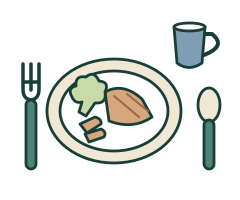
Tell people what you want to do yourself.
Tell them what help you want.

A cup with two handles may be easier to hold.
A plate with a raised edge can help with scooping.
Some knives, forks and spoons have bigger handles.
A mat can help stop your plate moving.

Bibs and clothing protectors
You can choose a bib or clothing protector.
Choose a style and fastening you like.
Check which one is made for meals.

An occupational therapist helps with everyday activities.
Ask about an assessment and trying equipment.
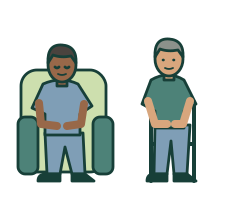
Ask for help with comfortable seating at meals.
Use the seating plan made for you.

Tell a speech and language therapist if swallowing is difficult.
They can help check which cups are suitable.

Tell your team if equipment stops helping.
Ask them to check what needs to change.
Call 999 if someone is choking and cannot breathe or speak.
For swallowing problems, ask for an urgent GP appointment or call 111.
What you can do next
Ask your GP or council about an occupational therapy assessment.
Explain what is difficult at meals.
Find out how to ask for occupational therapy Web pageVideoThis link opens another website.
It may use harder words.
More useful links
Choose what works for you. These are examples of products and information. Shop links show things that cost money. Check the full price, size and return rules.
Bibs for meals and clothing protectors
- Care Designs: adult bibs for meals Web pageCosts moneyOnline
Bibs with a waterproof layer and a pocket to catch food. This page includes different sizes. Choose the adult size you need.
- Care Designs: scarf-style clothing protectors Web pageCosts moneyOnline
Clothing protectors that look like scarves. They have an absorbent front and waterproof backing.
Dribble bibs and bandanas
Check whether the item is made for meals. Bibbilyboo says its dribble bibs should not be used at mealtimes.
- Bibbilyboo: adult dribble bibs Web pageCosts moneyOnline
Waterproof bibs for dribble. The maker says these dribble bibs should not be used at mealtimes.
- Mum 2 Mum PLUS: adult bandana bibs Web pageCosts moneyOnline
Bandanas with absorbent towelling and waterproof layers. Check the neck size. This shop currently asks you to buy at least two.
More help with meals and equipment
- Pictures of everyday aids Web page
An NHS leaflet showing adapted cups, plates, cutlery and other equipment.
- Ask about occupational therapy Web pageVideo
NHS information about assessment and referral routes.
- A swallowing passport example Web page
An NHS example of recording individual swallowing advice. Ask your own team to complete your plan.
These links open other websites.
They may use harder words.
Products you can explore
You can look at products on a separate page of this website.
Money earned from these links will help maintain Clearer Support and the My Life My Say app, and provide free advocacy.
Cups, plates and cutlery that work for you
Find equipment and support that make meals easier and help you do more for yourself.
Children and adults · England · Equipment needs are individual
Start with the person
A learning disability does not mean someone needs special eating equipment. Start with what the person enjoys, what they want to do themselves and what is difficult. Ask about comfort, grip, tiredness, sight, sensations and the help they prefer. Give time to communicate a choice. A supporter can describe what they have noticed, while keeping the person's own wishes central.
Examples to explore
A plate guard or a bowl with a raised edge can help someone scoop food. Large or cushioned cutlery handles may help with grip. Angled cutlery can suit some movements. A non-slip mat can steady a plate. Two-handled cups may be easier to hold. These are options to assess, not a shopping list that suits everyone. Heavy cutlery and specialised cups need to suit the individual.
Bibs, clothing protectors and dribble bandanas
A mealtime bib or clothing protector can help keep clothes clean. Offer the person a style and fastening they like, and check neck fit and coverage while seated. Some protectors look like scarves. Dribble bibs absorb saliva, but not all are designed for meals: Bibbilyboo advises against using its dribble bibs at mealtimes. Follow washing and product instructions. Bibs do not make swallowing safer or replace the person’s swallowing and seating plan. The clothing guide has more examples.
Ask for an assessment
An occupational therapist, often called an OT, looks at everyday activities and what could make them easier. Ask your GP about a referral, or ask your council about occupational therapy. Routes and equipment arrangements vary. Explain whether the difficulty happens at home, school, college, work or when out. Ask whether you can try suitable items before buying and who will help with fitting, cleaning or replacement.
Consider the whole mealtime
Ask the team to look at the chair or wheelchair, table height, reach and the person's comfort together. If posture is difficult, ask whether an OT, physiotherapist and speech and language therapist should assess together. Use the person's agreed positioning plan. Equipment should support participation; it does not replace the assistance a person needs. Ask supporters to agree how the person signals more, a pause or finished.
Check cups when swallowing is difficult
A lidded cup, spout or straw is not automatically safer. If someone has swallowing difficulties, ask their speech and language therapist which drinking container is appropriate. Keep any agreed food texture, drink thickness and equipment instructions together. Do not use a product's advertising as a swallowing assessment. Thickener needs an individual professional plan; see the linked swallowing guide.
Review and get help
Keep a simple note of what helps and what still feels difficult. Ask for review after a change in health, movement or swallowing, or when equipment becomes uncomfortable. Swallowing difficulty or repeated chest infections need urgent GP or NHS 111 advice. Call 999 if someone is choking and cannot breathe or speak. This page cannot assess swallowing or replace a clinical plan.
Words you could use
“I want meals to be easier. Please assess my cup, plate, cutlery, seating and the support I need. Can I try equipment before choosing?”
More useful links
Choose what works for you. These are examples of products and information. Shop links show things that cost money. Check the full price, size and return rules.
Bibs for meals and clothing protectors
- Care Designs: adult bibs for meals Web pageCosts moneyOnline
Bibs with a waterproof layer and a pocket to catch food. This page includes different sizes. Choose the adult size you need.
- Care Designs: scarf-style clothing protectors Web pageCosts moneyOnline
Clothing protectors that look like scarves. They have an absorbent front and waterproof backing.
Dribble bibs and bandanas
Check whether the item is made for meals. Bibbilyboo says its dribble bibs should not be used at mealtimes.
- Bibbilyboo: adult dribble bibs Web pageCosts moneyOnline
Waterproof bibs for dribble. The maker says these dribble bibs should not be used at mealtimes.
- Mum 2 Mum PLUS: adult bandana bibs Web pageCosts moneyOnline
Bandanas with absorbent towelling and waterproof layers. Check the neck size. This shop currently asks you to buy at least two.
More help with meals and equipment
- Pictures of everyday aids Web page
An NHS leaflet showing adapted cups, plates, cutlery and other equipment.
- Ask about occupational therapy Web pageVideo
NHS information about assessment and referral routes.
- A swallowing passport example Web page
An NHS example of recording individual swallowing advice. Ask your own team to complete your plan.
These links open other websites.
They may use harder words.
Products you can explore
You can look at products on a separate page of this website.
Money earned from these links will help maintain Clearer Support and the My Life My Say app, and provide free advocacy.
Where the information comes from
Links checked 27 October 2026.
These links open other websites.
They may use harder words.
- CNTW NHS: small aids to help you at home Web page
Examples of adapted cups, plates, cutlery and non-slip equipment.
- NHS: occupational therapy Web pageVideo
Occupational therapy supports everyday activities; referral routes include a GP and council.
- Worcestershire Acute Hospitals NHS: dysphagia passport Web page
Individual advice about cups, straws, equipment and swallowing plans.
- Bradford District Care NHS: swallowing disorders Web page
Assessment, positioning and support when eating or drinking is difficult.
- NHS: swallowing problems Web page
Symptoms that need urgent GP or NHS 111 advice.
- Yorkshire Ambulance Service NHS: calling 999, Easy Read PDFEasy Read
Emergency help when choking prevents breathing or speaking.
- Care Designs: adult bibs for meals Web pageCosts moneyOnline
Bibs with a waterproof layer and a pocket to catch food. This page includes different sizes. Choose the adult size you need.
- Care Designs: scarf-style clothing protectors Web pageCosts moneyOnline
Clothing protectors that look like scarves. They have an absorbent front and waterproof backing.
- Bibbilyboo: adult dribble bibs Web pageCosts moneyOnline
Waterproof bibs for dribble. The maker says these dribble bibs should not be used at mealtimes.
- Mum 2 Mum PLUS: adult bandana bibs Web pageCosts moneyOnline
Bandanas with absorbent towelling and waterproof layers. Check the neck size. This shop currently asks you to buy at least two.
- Bibbilyboo: dribble bib questions Web page
The maker explains that its dribble bibs are not suitable for meals.