Safety & safeguarding · England
Staying safe around fireworks
Your browser or device provides the reading voice.
This guide is about fireworks in England.
You can choose how to enjoy a celebration.

Choose and plan your evening
You can go to a display or choose something different.
Tell your supporter what you want.

Ask what will happen and when.
Plan transport, toilets and the help you need.
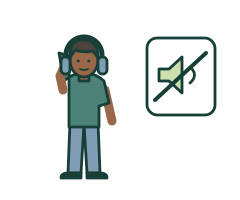
Fireworks can be loud and bright.
Ear defenders or a quieter place may help.
You can choose to stay indoors.
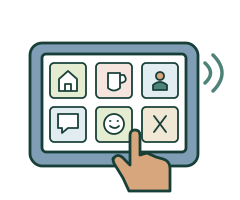
Agree how you will say or show stop.
You can ask to leave when you need to.

Keep safe around fireworks
Follow the event’s safety signs and barriers.
Keep well away from fireworks and bonfires.

Never put a firework in your pocket.
Never throw fireworks.
Never return to a firework after it is lit.
It could still explode.
Tell the person responsible for the display.

Using sparklers
Sparklers are very hot.
Children under five must not use them.
Ask for support if you need it.
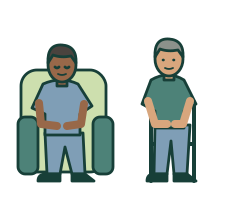
Wear gloves when holding sparklers.
Keep them away from other people and clothing.
Put finished sparklers in a bucket of cold water.

Burns and getting help
Cool a burn under cool running water for 20 minutes.
Do not use ice or creams.
Do not pull off anything stuck to the burn.
Get medical help for injuries.
Call 999 in a life-threatening emergency.
Call 111 if you are unsure what help you need.

Talk about what worked for you afterwards.
You can change your plan for next time.
What you can do next
Plan your support before the event.
Use the worksheet to record what matters to you.
Read firework safety advice Web pageThis link opens another website.
It may use harder words.
More useful links
- Firework law in England Web page
Age rules, permitted times and public-place restrictions.
- London Fire Brigade: firework safety Web page
Display and sparkler safety advice.
- NHS: burns and scalds Web page
First aid and when to get medical help.
- NHS: eye injuries Web page
When an eye injury needs emergency care.
These links open other websites.
They may use harder words.
Fireworks: staying safe and planning support
Choose how to enjoy fireworks, plan sensory and access support, and know what to do if someone is injured.
England · Firework law, individual support and first aid
Choose what you want to do
You may want to attend a display, watch from a quieter place, stay indoors or do something different. Ask for information you understand before deciding. A learning disability is not a reason to assume someone must miss an event or enjoy it in the same way as everyone else. Agree support around the person’s wishes, communication and actual risks.
Plan an accessible visit
Ask the organiser about timings, expected noise and flashes, step-free routes, toilets, seating, crowd levels and a quieter place. Check transport and a way to leave early. Agree how you will find each other if separated. Take the communication aid and essential support items you normally use. A professional organised display is usually a safer choice than handling fireworks yourself, but check whether the event meets your access needs.
Support sensory needs
Some people enjoy fireworks; others find sudden sound, flashing light, crowds or smells painful or distressing. Explain what will happen using the person’s preferred communication. Consider suitable ear defenders, watching from farther away or watching from indoors if the person prefers. Hearing protection does not remove every risk or every distressing sensation. Agree a clear stop or leave signal and respond to it. Do not force someone to stay to get used to the noise.
Prepare at home too
If nearby fireworks are expected, ask what would help: a familiar room, closed curtains, comfortable activities or chosen background sound. Keep usual communication and support available. Ask neighbours about planned displays where practical. Plan for pets to be safely indoors and away from fireworks. Unexpected fireworks can still happen, so agree how to get support if the person becomes distressed.
Know the England rules
Category 2 and 3 fireworks cannot be bought by anyone under 18. Category 4 fireworks are for professionals. Fireworks, including sparklers, must not be set off or thrown in streets or other public places. The usual prohibited hours are 11pm to 7am. The cut-off is midnight on Bonfire Night, and 1am on New Year’s Eve, Diwali and Chinese New Year. Check council rules too. These times do not make unsafe use acceptable.
If fireworks are used at home
Use a responsible adult who can follow the product instructions and safety arrangements. Buy from a legitimate registered or licensed seller. Check the instructions and required safety distance before buying, so the space is suitable. Store fireworks in a closed box and keep spectators well back. The person setting them off must not drink alcohol. Follow the official Firework Code and each label; do not adapt, combine or make fireworks. Never put them in a pocket, throw them or hold them in your hand. Sparklers have separate precautions below.
Never return to a lit firework
Do not go back to a firework after it has been lit, even if nothing seems to happen. It may still explode. Keep others away and follow the supplier’s safety advice about a failed firework. Do not try to relight it or pick it up. At an organised event, tell a steward about a problem and stay behind the barriers.
Sparklers need care
Sparklers become extremely hot. Do not give them to children under five. Supervise children and agree any support an adult needs. Wear gloves, light one at a time and keep sparklers away from other people and clothing. Do not hold a baby while holding a sparkler. Put finished sparklers into a bucket of cold water; they can stay hot after the light has gone out. People who do not want to handle one can choose another activity.
If someone is burned
Move away from the heat safely. Cool the burn under cool running water for 20 minutes as soon as possible. Remove nearby clothing or jewellery unless it is stuck to the skin. Do not use ice, creams, butter or grease. Keep the rest of the person warm. After cooling, loosely lay cling film over the burn as a temporary cover while getting medical help. Do not put it on the face or wrap it around a limb. Get medical advice about the injury; cooling should not delay calling for emergency help.
When to get urgent help
Call 999 for a life-threatening emergency. NHS guidance says call 999 or go to A&E for a very large or deep burn, or a burn on the face, genitals or bottom. A&E means the hospital emergency department. A high-speed eye injury, a pierced eye, severe eye pain or any sight change after injury also needs A&E or 999. Do not remove anything stuck in an eye or drive yourself to A&E. If unsure about a burn or injury, call NHS 111; use the telephone service for children under five.
Review the plan with the person
Ask what worked and what was uncomfortable. Use their own communication and observations from people who know them well. Change the plan for next time rather than treating distress as bad behaviour. The optional worksheet helps agree a choice, practical support and a way to leave. It is not a professional event risk assessment or a first-aid certificate.
Words you could use
“I would like to choose how I enjoy the event. Please help me plan access, sensory support and a clear way to leave.”
More useful links
- Firework law in England Web page
Age rules, permitted times and public-place restrictions.
- London Fire Brigade: firework safety Web page
Display and sparkler safety advice.
- NHS: burns and scalds Web page
First aid and when to get medical help.
- NHS: eye injuries Web page
When an eye injury needs emergency care.
These links open other websites.
They may use harder words.
Where the information comes from
Links checked 1 November 2026.
These links open other websites.
They may use harder words.
- GOV.UK: firework law Web page
England rules on ages, categories, times and public places.
- GOV.UK: fire safety when celebrating Web page
Official Firework Code and safer celebration advice.
- London Fire Brigade: fireworks Web page
Organised displays, failed fireworks and sparkler precautions.
- OPSS: firework safety campaign Web page
Current October 2026 advice on preparation, labelled safety distances and effects on neighbours and animals.
- NHS: sound sensitivity Web page
Short-term hearing protection in very noisy settings; individual sound sensitivity needs vary.
- Lancashire Fire and Rescue: fireworks Web page
Never hold fireworks in your hand; sparklers need separate precautions.
- NHS: burns and scalds Web page
Current first aid: cool for 20 minutes, remove only items not stuck, cover without wrapping and get appropriate help.
- NHS London and South East Burns Network: patient information Web page
Avoid ice and creams; keep the rest of the person warm.
- NHS: eye injuries Web page
High-speed injuries, severe pain, sight changes and other emergency signs.
- Queen Victoria Hospital NHS: burns first aid Web page
Cling film is a temporary cover, applied loosely and never on the face.
A page for you to fill in
You can type your answers and download a copy.
You can also print a page to write or draw on.
Someone you trust can help you.