Money & rights · England
I want more say about my money
Your browser or device provides the reading voice.
Someone may help you with money.
You should still be listened to and involved.

Your wishes matter
You can ask how your money is being used.
You can ask for information you understand.

Say what is wrong
You might not have money for food or things you need.
You may feel frightened to ask questions.
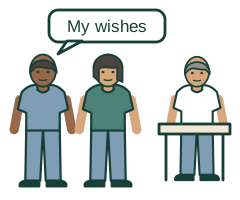
Talk to someone independent
Choose someone who is not part of the problem.
You do not need the helper’s permission to ask for help.

Find out their role
An appointee deals with benefits.
An attorney or deputy has different powers.
Ask for help to check the documents.
Problems with an appointee
Tell the benefit office.
Ask it to review the arrangement.
Say if you can now manage your benefits.

Problems with an attorney or deputy
You can report concerns to the Office of the Public Guardian.
It can investigate some cases.
Ask about other help too.
Problems with bank access
Speak to your bank through a trusted contact route.
Explain what happened and what help you need.

Keep essentials available
Tell someone if you have no food, heating or necessary care.
Ask for a safe plan while the problem is investigated.

Keep checking
Write down what was agreed.
Ask when someone will reply.
Seek more help if the problem continues.
What you can do next
You can use the worksheet to prepare.
Ask someone you choose to help if you want.
Find the official appointee contact routes Web pageThis link opens another website.
It may use harder words.
More useful links
- OPG: report an attorney or deputy concern Web page
Official reporting options and who OPG can help.
- DWP: appointee responsibilities and review Web page
Find the benefit office and understand when an appointment may end.
These links open other websites.
They may use harder words.
When someone controls your money: getting help — Easy Read
Ask for more control or report problems with an appointee, attorney, deputy or informal helper.
England · Money, rights and support
More control does not require proving abuse
You might want clearer statements, more spending choice or less help because your skills have changed. Explain your wishes and ask for a review. If there is intimidation, unexplained spending, withheld essentials or pressure to sign, seek independent help. A disability is not a reason to ignore your views.
Check the actual authority
Ask an independent adviser to help identify whether the person is a DWP appointee, attorney under a registered power of attorney, court-appointed deputy, bank mandate holder or informal helper. Each has different limits. Being a relative, next of kin or paid supporter does not automatically give control of an adult’s money. Keep copies of relevant documents where safe.
Ask DWP to review an appointee
Contact the office paying the benefit and say you are concerned about the appointeeship or can manage your own benefits with suitable support. Request an accessible assessment and written response. DWP can end an appointment when it is no longer appropriate. Ask how benefit payments and essential spending will be protected during any change. Do not assume the appointment ends just because you have complained.
Concerns about attorneys and deputies
Report misuse, poor practice or failure to follow duties to the Office of the Public Guardian. It can investigate within its remit where the person does not have the mental capacity to deal with the issue themselves. Explain what happened and provide dates or records you safely have; you do not need every detail before raising a concern. OPG is not an emergency response or the correct route for every informal helper.
Changing formal arrangements
A person with the necessary capacity can revoke an LPA using the required process. A deputy’s appointment is a court matter. Ask a solicitor or independent adviser about the correct route and urgent protection where needed. Revocation, bank access and replacement benefit-payment arrangements are separate steps; arrange follow-up rather than leaving essential payments unsupported.
Speak to the bank safely
Use the number on a genuine statement or card, or speak to a branch. Explain suspected misuse, unwanted access or a mandate you wish to change. Ask what protection and authorised access options are available. Do not give a helper security codes or move money to an alleged safe account at someone’s request. If changing access might put you at risk, plan with independent support first.
Safeguarding and immediate needs
Tell the council’s adult safeguarding team about suspected financial abuse. You can approach them directly or ask an independent advocate or trusted person to help. Tell them if there is no money for food, heating, medication or care. If a crime may have happened, ask about police support; call 999 for immediate danger. You do not have to confront the person or gather evidence in a way that puts you at risk.
Make a clear request and follow it up
Record what happened, what you want changed, who received the concern and when they will respond. Keep information somewhere safe rather than on a shared device if that creates a risk. Ask who is responsible for the next step and what to do meanwhile. Use the complaints route if the response is inadequate, while pursuing any separate legal or benefit deadline.
Words you could use
“I want an independent review of the help with my money. My concerns are … I need safe access to essentials while you consider them. Please contact me in this safe way: …”
More useful links
- OPG: report an attorney or deputy concern Web page
Official reporting options and who OPG can help.
- DWP: appointee responsibilities and review Web page
Find the benefit office and understand when an appointment may end.
These links open other websites.
They may use harder words.
Where the information comes from
Links checked 7 November 2026.
These links open other websites.
They may use harder words.
- DWP: appointeeship Web page
Responsibilities, review and ending an appointment.
- OPG: report an attorney or deputy concern Web page
Who may report, remit and reporting routes.
- GOV.UK: end an LPA Web page
Required process and capacity.
- OPG: bank access and authority Web page
Different roles and the limits of authority.
- GOV.UK: deputy responsibilities Web page
Following the order and involving the person.
- Care Act 2014, section 42 Web page
Adult safeguarding enquiries and financial abuse.
A page for you to fill in
You can type your answers and download a copy.
You can also print a page to write or draw on.
Someone you trust can help you.