Education · England
Help with reading, numbers and coordination
Your browser or device provides the reading voice.
This guide is for people in England.
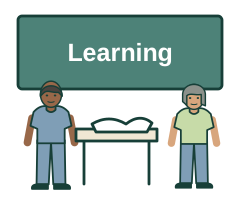
Dyslexia can make reading and writing harder.
Dyscalculia can make understanding numbers harder.
Dyspraxia can make movement and coordination harder.
People can have more than one difficulty.

These difficulties do not automatically mean a learning disability.
Everyone has different strengths and support needs.
Talk to your teacher or learning support team.
Children can get school support without a dyslexia diagnosis.

A specialist assessment can explain your needs.
An online quiz cannot give a diagnosis.

Some assessments cost money.
Ask about charges and funding before booking.

Talk to your GP about movement difficulties.
Ask about new or worsening difficulties too.

Technology and clear information may help.
Ask for support that suits your needs.

Write down agreed support at school or work.
Check whether it is helping you.
What you can do next
Ask about support and suitable assessment.
You should be involved in planning your support.
Read NHS information about dyslexia in adults Web pageThis link opens another website.
It may use harder words.
More useful links
- Dyslexia information for children and families Web page
How to start a school discussion and ask about assessment.
- Understanding dyscalculia Web page
Information about number difficulties and assessment.
- Dyspraxia and everyday life Web page
Health assessment and ways to make everyday tasks more manageable.
These links open other websites.
They may use harder words.
Dyslexia, dyscalculia and dyspraxia
Understand specific learning difficulties and routes to assessment, practical help and adjustments.
Children and adults · England
Understand the words and the person
Dyslexia mainly affects reading, spelling and writing. Dyscalculia particularly affects understanding and working with numbers. Dyspraxia, often called developmental coordination disorder or DCD, affects movement and coordination, and can affect planning everyday tasks. These difficulties vary. They are not a measure of someone’s effort or worth, and do not by themselves establish a learning disability.
Conditions can overlap
A person may have more than one specific learning difficulty. They may also be autistic, have ADHD or have a learning disability. Difficulty with reading or maths can have other explanations too, including gaps in teaching, language differences, hearing or vision problems. Ask for an assessment which considers the whole history and individual pattern rather than deciding from a checklist alone.
Children: ask for support at school
Talk to the teacher and SENCO about what is difficult and what has already been tried. Ask for a clear support plan, suitable teaching and a date to review progress. School SEN support should not wait for a formal dyslexia diagnosis. A screener may identify areas to investigate, but is not the same as a full diagnostic assessment. Discuss further assessment if difficulties continue.
Dyslexia and dyscalculia assessment
Dyslexia assessment is usually carried out by an educational psychologist or appropriately qualified specialist assessor, rather than a GP. Dyscalculia needs expertise in mathematical learning and its assessment. Ask about qualifications, relevant experience, accessible arrangements and whether the report will meet the purpose you need it for. A report should explain strengths, needs and useful support, not simply give a label.
Adults: education, work and costs
Ask a college or university disability service, apprenticeship provider or workplace about support and assessment options. Many diagnostic assessments are paid for privately; dyslexia and dyscalculia assessments are not normally provided through the NHS. Check the total charge, who will pay and any available funding before booking. Screening tools are not a diagnosis. Disabled Students’ Allowance and Access to Work have separate eligibility and evidence rules.
Dyspraxia and movement difficulties
Speak to the GP if coordination difficulties affect life, work or study. They can consider other causes and may refer to occupational therapy or another specialist; local services vary. For children, discuss concerns with the GP, health visitor and school. An assessment may consider childhood development, everyday tasks, balance and movement. Newly changed or worsening movement needs medical assessment rather than assuming lifelong dyspraxia.
Practical support with reading and numbers
Agree useful changes, such as clear layouts, spoken or recorded information, text-to-speech, speech-to-text, manageable instructions and time to practise. For numbers, try concrete examples, clear step-by-step methods and suitable tools with specialist advice. Ask the learner which approaches help, check understanding respectfully and review progress. Reading teaching and targeted support remain important even if a preferred screen colour feels more comfortable.
Practical support with coordination
An occupational therapist can help make everyday activities easier and a physiotherapist may help with movement needs. Consider adapted equipment, a quieter workspace, a different way to complete a task and sufficient time. Support should enable participation in the person’s chosen activities rather than constantly testing them against others. Follow individual professional advice where safety is affected.
Ask for adjustments and a review
Describe the barrier and the change that would help. In education or work, put agreed adjustments in a support plan or accessibility passport and check they happen. Exam access arrangements have separate rules; speak to the school or college early. If support is refused, ask for reasons and use the relevant SEND, workplace or complaints guide.
Words you could use
“I find these tasks difficult and these changes help me. Please explain the support, assessment options, any costs and how we will review progress: …”
More useful links
- Dyslexia information for children and families Web page
How to start a school discussion and ask about assessment.
- Understanding dyscalculia Web page
Information about number difficulties and assessment.
- Dyspraxia and everyday life Web page
Health assessment and ways to make everyday tasks more manageable.
These links open other websites.
They may use harder words.
Where the information comes from
Links checked 1 November 2026.
These links open other websites.
They may use harder words.
- NHS: dyslexia in children Web page
Signs, SENCO discussions, screening and specialist assessment.
- NHS: dyslexia in adults Web page
Adult assessment and study or employment support.
- British Dyslexia Association: dyscalculia Web page
Number-related difficulties and distinction from other maths difficulties.
- British Dyslexia Association: diagnosis Web page
School support without requiring a diagnosis and the purpose of assessment.
- British Dyslexia Association: assessment types and costs Web page
Assessment options, charges and NHS funding boundary.
- NHS: dyspraxia in adults Web page
GP review, local assessment options and practical therapy support.