Work & volunteering · England
Finding and keeping a paid job
Your browser or device provides the reading voice.
This guide is for people in England.
You can ask for support to find and keep paid work.

Find work and support
Think about work you enjoy.
Think about your skills and what you want to learn.

A careers adviser can help you explore jobs.
Ask about local supported employment services.

A job coach may help you learn tasks at work.
Ask who will provide support and how it is paid for.

Check the job and pay
Check what kind of work you are being offered.
Ask about duties, hours, pay and training.
Ask for information you understand.

A learning disability does not mean you should be paid less than the law requires.
Ask for help checking the correct pay.
A payslip shows your pay and money taken from it.
Employees and workers should get one each payday.
Ask about anything you do not understand.

Ask for changes that help
You can ask for changes to an application or interview.
Tell the employer what would help you take part.
Access to Work may pay for some extra support.
It has rules about who can apply.
It does not replace the employer’s duties.

Agree the support you need at work.
A passport can record this agreement.
Ask when it will be reviewed.
Benefits and next steps
Ask a benefits adviser how work could affect your benefits.
Check what changes you must report.

Talk about how the job is going.
You can ask about training and moving forward.
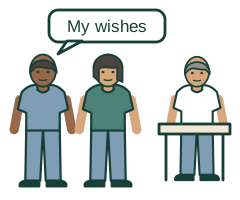
Ask for advice if pay, support or treatment worries you.
There can be short time limits for legal action.
What you can do next
Ask for advice about the kind of work you want.
Explain what helps you learn and communicate.
Use the related guides to understand your rights.
Find careers advice Web pageThis link opens another website.
It may use harder words.
More useful links
- Careers help in England Web page
Find the current advice route for your age and situation.
- Find supported employment organisations Web page
BASE’s directory; check local eligibility, availability and costs with each provider.
- Mencap: work and skills Web page
Information, Easy Read resources and employment programmes in participating areas.
- Access to Work Web page
Check support and eligibility before applying.
- Acas: understanding employment status Web page
Worker rights and why the actual working arrangements matter.
These links open other websites.
They may use harder words.
Finding and keeping a paid job
Find suitable paid work, understand pay and support, and plan for a job that works for you.
Working-age people and supporters · England
Start with your interests and goals
Think about work you enjoy, your strengths, hours, travel and the support you need. Your goals might include earning money, learning a skill or building a career. A learning disability does not determine the job someone can do. Support should help explore real options with the person, rather than assuming everyone wants the same work.
Find advice and local employment support
School or college careers advisers can help people in education. The government careers website lists current routes, including DWP careers advice for adults in England. Ask your council or local employment service about supported employment. The BASE directory and Mencap resources can help find providers. Availability, eligibility and funding differ; a listing is not a guarantee of a place.
What supported employment can offer
A job coach may help understand your skills, match you to work and learn tasks in the workplace. Support can also help employers make communication and training accessible. Agree the coach’s role, who pays, how you stay involved and what happens if support changes. Ask about development and progression, not only getting the first job.
Be clear about the arrangement
Ask whether this is paid employment, self-employment, a learning placement or volunteering. Labels do not settle legal status. Get clear information about duties, hours, pay, expenses, training, supervision and how the arrangement ends. Employees and workers have different rights in some areas. Ask Acas for advice if the written description does not match what actually happens.
Check pay and payslips
Disabled workers are entitled to the applicable minimum wage where the usual rules apply; disability is not an exemption. Employees and workers should receive an itemised payslip on or before payday. Ask for an accessible format and help checking hours, pay and deductions. Keep your own records and raise errors promptly. Use official sources for current rates rather than relying on an old leaflet.
Make applications and interviews accessible
Explain barriers and ask what would help: a clearer application format, more processing time, an accessible interview space or another suitable way to demonstrate skills. Adjustments should be individual. You can ask someone to help you prepare. The employer’s legal duty applies where the relevant conditions are met; a diagnosis alone does not identify every useful change.
Ask about Access to Work
Access to Work may fund practical support such as a job coach, assistive software or disability-related travel. Practical grants normally concern people aged 16 or over in or moving into paid work. Interview communication support and some supported-internship arrangements have separate rules. Ordinary volunteering is excluded. Check eligibility, approval and payment arrangements before committing to costs.
Agree support for starting and staying in work
Employers must make reasonable adjustments where the duty applies and cannot charge the disabled person for them. Access to Work does not replace that duty. Agree accessible instructions, training, a named contact and regular check-ins. A workplace accessibility or adjustment passport can record the agreement. Review it when tasks, managers, equipment or needs change.
Check benefits and practical costs
Before changing hours or starting work, ask a benefits adviser to check your circumstances. Different benefits have different work, earnings and reporting rules. Do not assume that starting a job stops every benefit or that low hours never affect them. Include travel, food, support and other costs in planning. Follow the relevant reporting requirements.
If something goes wrong
You can ask for help with missing support, pay problems, unfair treatment or safety concerns. The linked guides explain unions, grievances and Equality Act rights. Keep a dated account and seek advice promptly. An internal complaint does not stop tribunal time limits. Do not assume you must resign to raise a concern; get advice before making a decision with serious consequences.
Words you could use
“I want help finding or keeping paid work. Please discuss suitable jobs, communication needs, job coaching and reasonable adjustments with me.”
More useful links
- Careers help in England Web page
Find the current advice route for your age and situation.
- Find supported employment organisations Web page
BASE’s directory; check local eligibility, availability and costs with each provider.
- Mencap: work and skills Web page
Information, Easy Read resources and employment programmes in participating areas.
- Access to Work Web page
Check support and eligibility before applying.
- Acas: understanding employment status Web page
Worker rights and why the actual working arrangements matter.
These links open other websites.
They may use harder words.
Where the information comes from
Links checked 1 November 2026.
These links open other websites.
They may use harder words.
- Government careers service: help and support Web page
Current careers-advice routes in England.
- Government careers advice: disability and job support Web page
Specialist support with finding and staying in work.
- GOV.UK: Access to Work Web page
Practical support, job coaches and separation from employer adjustments.
- GOV.UK: Access to Work eligibility Web page
Work and age conditions and separate interview rules.
- Acas: reasonable adjustments at work Web page
Employer duties, recruitment and paying for reasonable adjustments.
- Acas: requesting and recording adjustments Web page
Individual discussions, written agreements and reviews.
- BASE: supported employment Web page
Vocational profiling, job matching, in-work support and progression.
- BASE membership directory Web page
Finding local supported employment providers.
- Mencap: supported employment Web page
Job coaching, work skills and the limits of local programme availability.
- Acas: worker status Web page
Employment rights depend on legal status and the actual arrangements.
- GOV.UK: who gets the minimum wage Web page
Disabled workers are covered; specific work and training exemptions have their own conditions.
- Acas: payslips Web page
Entitlement, timing, deductions and accessible formats.
- Acas: tribunal time limits Web page
Internal grievances and appeals do not alter tribunal time limits.