Later life · England
Dementia, changes and getting support
Your browser or device provides the reading voice.
Dementia is a name for symptoms caused by illnesses affecting the brain.
Having a learning disability does not mean you will get dementia.

Notice changes as you get older
You can keep doing things that matter to you.
Your support may need to change as you get older.

Some people have a higher chance of dementia.
This includes people with Down’s syndrome.
It does not mean everyone will get dementia.

Keep a record of what you usually enjoy and do.
This helps people notice changes.

Tell someone if familiar things become harder.
Notice changes in sleep, mood, talking or everyday tasks.

Ask for a health assessment
Ask your GP to check changes.
Pain, illness or medicines can sometimes cause difficulties.
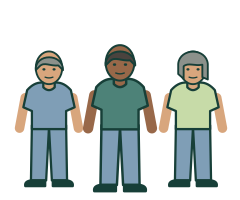
Someone who knows you well can help explain what has changed.
They should include your views.

An assessment needs to fit your communication and learning needs.
Ask about help from your learning disability team.

Sudden confusion needs urgent help
Sudden confusion can mean serious illness.
Go to A&E or call 999 if someone suddenly becomes confused.
Explain how this is different from usual.
Support that fits your life
Ask for an explanation you understand.
Ask who to contact and when you will see them again.
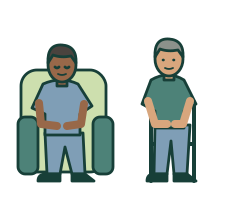
Familiar people and activities may help.
You may need more time, clear prompts or a quieter place.

You should still have help to make your own choices.
Dementia does not automatically mean you must leave your home.
Families and carers can ask for support and breaks.
Ask the council to review help if needs change.
Alzheimer’s Society can offer information and support.
The Down’s Syndrome Association also has dementia resources.
Ask for your support to be reviewed when things change.
Do not wait for a yearly health check if you are worried.
What you can do next
Write down changes and when they started.
Ask for assessment and support that fit the person.
Read about learning disability and dementia Web pageThis link opens another website.
It may use harder words.
More useful links
- Alzheimer’s Society: learning disabilities and dementia Web page
Recognising changes, diagnosis and support tailored to learning disabilities.
- Alzheimer’s Society: Dementia Support Line Web page
Current telephone details, accessible contact options and support for people and carers.
- Alzheimer’s Society: Easy Read resources Web pageEasy Read resources
Illustrated information about dementia, diagnosis and support.
- Down’s Syndrome Association: ageing and dementia Web page
Information, a free digital dementia workbook and links to family support.
- BILD: the dementia journey — archived webinar Video
An archived webinar, listed by BILD as 2021, about recognising changes and adapting support. Includes slides and a resource list. Use current health guidance alongside it.
These links open other websites.
They may use harder words.
Dementia and learning disability: recognising changes and finding support
Notice changes from the person’s usual abilities, obtain an adapted assessment and plan practical support at home.
Adults · England · Changes from the person’s usual abilities
Dementia is not inevitable
Dementia describes symptoms caused by diseases affecting the brain. It is different from a lifelong learning disability and is not an inevitable part of ageing. People with learning disabilities have a higher risk, particularly people with Down’s syndrome. Risk does not mean everyone will develop dementia. New difficulties deserve investigation rather than being dismissed as learning disability, ageing or difficult behaviour.
Know the person’s usual abilities
A baseline is a record of the person’s usual skills, communication, interests, personality and daily routines. It helps identify change over time. Involve the person and people who know them well, and use existing health or support records. For adults with Down’s syndrome, specialist guidance recommends establishing a baseline by age 30. A baseline is not itself a dementia diagnosis.
Notice patterns and record changes
Look for changes in familiar tasks, memory, communication, mood, confidence, sleep, walking, self-care or social involvement. In people with more profound disabilities, changes may be subtle and memory loss may not be the first visible sign. Record when changes began, whether they fluctuate and what else happened. Compare with the person’s own previous abilities, not another person or a standard expectation.
Ask the GP to check possible causes
Arrange an appointment for ongoing changes and explain the person’s communication needs. Ask for enough time and bring useful observations with the person’s agreement. Pain, infection, depression, thyroid disease, sleep difficulties, sensory loss and medicine effects can resemble or worsen dementia symptoms. More than one condition may be present. Ask for a physical and mental health review and medication review; do not change medicines yourself.
Request an assessment that fits the person
Ask about referral to the community learning disability team and an appropriate memory or dementia service. Assessment may involve several professionals with learning disability expertise. There is no single diagnostic test. Standard memory-test scores can be misleading without considering lifelong abilities, communication and sensory needs. Assessment should combine history, observations, clinical investigation and suitable tools, involving the person as much as possible.
Treat sudden confusion as an emergency
A sudden new change in confusion or awareness can be delirium or another serious condition, including in someone already diagnosed with dementia. NHS advice is to go to A&E or call 999 for sudden confusion. Explain what is different from the person’s usual state. Stay with them, reassure them and use simple communication. Do not wait for a routine dementia appointment or assume the change is inevitable decline.
Get an explanation and a follow-up plan
Ask for findings in a format the person can understand, a named contact and a clear plan for review. If the diagnosis is uncertain, ask what will be monitored and when reassessment will happen. If dementia is diagnosed, discuss suitable treatments, possible benefits and side effects with the clinician. Support should respond to current needs even while investigations continue.
Adapt everyday support
Build on familiar people, routines, interests and surroundings. Give time, reduce competing noise, offer clear prompts and break tasks into manageable steps. Adjust communication as needs change. Ask occupational therapy about access and safety, and speech and language therapy about communication or swallowing concerns. Maintain enjoyable activities and relationships rather than withdrawing opportunities automatically. Review pain recognition, mobility, eating, continence and sleep.
Keep the person involved in choices
A dementia diagnosis alone does not decide capacity or where someone must live. Support each decision using the person’s communication and appropriate timing. Capacity concerns must relate to the particular decision; wishes remain important if a best-interests decision is needed. Discuss future preferences early and sensitively. Ask about support at home, adaptations and advocacy before assuming residential or nursing care is necessary.
Ask for care and carer support
Request a council needs assessment or review when everyday support changes. Family carers can request their own assessment, discuss breaks and make an emergency backup plan. Ask the health and social care teams to coordinate rather than expecting one family member to manage everything. If a service says it cannot meet changing needs, request a planned review of options, staffing and specialist advice.
Find information and people who can help
Alzheimer’s Society offers a Dementia Support Line, local support information and Easy Read dementia resources. The Down’s Syndrome Association provides ageing and dementia information, family support and a dementia workbook with a free digital version. Ask these organisations about suitable local help and accessible contact methods. Their information services support people and families but do not replace an individual clinical assessment.
Review support as needs change
Continue routine health care and eligible annual learning disability health checks; do not wait for the annual appointment if changes appear. Revisit the care plan, communication passport, carer support and future preferences regularly. Seek advice if treatment or support is refused or the person is excluded from decisions. Use the linked advocacy, home-support and care-move guides to question plans and request alternatives.
Further learning for families and supporters
BILD’s archived dementia webinar discusses changes to notice and ways to adapt support. BILD lists it as a 2021 resource, with slides and a related resource list. Some linked materials are older. Use it for background learning alongside current NHS and specialist advice, and ask a health professional to assess changes in the person’s health or abilities.
Words you could use
“Please investigate these changes from the person’s usual abilities, arrange an adapted assessment and explain the support and review plan.”
More useful links
- Alzheimer’s Society: learning disabilities and dementia Web page
Recognising changes, diagnosis and support tailored to learning disabilities.
- Alzheimer’s Society: Dementia Support Line Web page
Current telephone details, accessible contact options and support for people and carers.
- Alzheimer’s Society: Easy Read resources Web pageEasy Read resources
Illustrated information about dementia, diagnosis and support.
- Down’s Syndrome Association: ageing and dementia Web page
Information, a free digital dementia workbook and links to family support.
- BILD: the dementia journey — archived webinar Video
An archived webinar, listed by BILD as 2021, about recognising changes and adapting support. Includes slides and a resource list. Use current health guidance alongside it.
These links open other websites.
They may use harder words.
Where the information comes from
Links checked 1 November 2026.
These links open other websites.
They may use harder words.
- Alzheimer’s Society: learning disabilities and dementia Web page
Risk, signs and comparing change with the person’s own previous abilities.
- Alzheimer’s Society: getting a diagnosis Web page
Specialist assessment, health review, history and suitable cognitive assessment.
- Alzheimer’s Society: Down’s syndrome and dementia Web page
Baseline assessment by age 30 and health checks.
- Alzheimer’s Society: supporting the person Web page
Individual treatment, communication, activities and practical support.
- Down’s Syndrome Association: ageing and dementia Web page
Ageing resources, family support and the dementia workbook.
- GOV.UK: dementia and learning disabilities adjustments Web page
Adapted pathways and involving people, families and supporters.
- NHS: sudden confusion Web page
Sudden confusion needs immediate emergency assessment.
- GOV.UK: checking mental capacity Web page
Capacity is decision-specific and cannot be assumed absent from a diagnosis alone.
- Alzheimer’s Society: Dementia Support Line Web page
Support for people worried about dementia and those caring for someone.
- Alzheimer’s Society: Easy Read information Web pageEasy Read
Accessible resources about dementia and support.
- NHS: annual learning disability health checks Web page
Eligibility, routine review and accessible health appointments.
- NHS: carer’s assessments Web page
Carer support assessment and help with breaks.
- BILD: the dementia journey — archived webinar Web page
An archived webinar, listed by BILD as 2021, about recognising changes and adapting support. Includes slides and a resource list. Use current health guidance alongside it.
A page for you to fill in
You can type your answers and download a copy.
You can also print a page to write or draw on.
Someone you trust can help you.