Health · England
Behaviour can tell people how you feel
Your browser or device provides the reading voice.
People communicate in different ways.
Your support should help you have a good life.

You deserve respect
Your behaviour can give clues about how you feel.
It is not always a deliberate message.
You are more than a behaviour label.

Listen to your communication
People should learn how you show pain, worry, enjoyment and refusal.
You can use words, signs, pictures or movement.
People should give you time to respond.

Check your health
Pain or illness can cause distress.
Constipation means finding it hard to poo.
Tell someone if eating, sleeping or going to the toilet changes.
Ask a health professional to check changes.
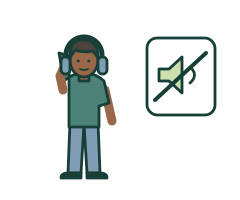
Look at what is around you
Noise, light or too many demands may feel difficult.
Some repeated movements help people feel calm or happy.
Harmless movements do not need to be stopped.

Get help that fits you
Ask your health or learning disability team for support.
You may need different communication, equipment or surroundings.
People should work together to understand what helps.

Make your plan together
Choose people to help with your support plan.
Include things you enjoy and goals that matter to you.
Your plan should explain what supporters will do.
Help when distress starts
Agree what helps you feel safer and calmer.
Your plan should say who can help in an emergency.
Call 999 if there is immediate serious danger.

Protect your rights
You should not be punished for being distressed.
Ask why any restriction is used and what else could help.
Tell someone you trust if you are unsafe or being hurt.
Ask about medicines
Ask why you take each medicine and when it will be reviewed.
Do not change medicines without clinical advice.

Check that support helps
Does support help you feel better and enjoy your life?
Ask for a review if things get worse.
Families and carers can ask for help and breaks.
An advocate may help you explain what needs to change.
What you can do next
Explain what has changed.
Ask for a plan made with the person.
Read about positive behaviour support Web pageThis link opens another website.
It may use harder words.
More useful links
- Challenging Behaviour Foundation: understanding behaviour Web page
Information about behaviour, unmet needs and finding support.
- Challenging Behaviour Foundation: family support Web page
Advice for relatives of people with severe learning disabilities whose behaviour challenges; not a crisis service.
- NICE: services and support Web page
Guidance and accessible information about support built around the person.
- NHS England: STOMP and STAMP Web page
Appropriate medication, questions for prescribers and review resources.
- Challenging Behaviour Foundation: communication Web pageFuller information
Ideas for understanding and supporting communication.
- National Autistic Society: understanding stimming Web page
How repeated movements can support comfort and self-expression.
These links open other websites.
They may use harder words.
Behaviour as communication: understanding distress
Listen to behaviour and other communication, check health and unmet needs, and agree support that improves everyday life.
Children and adults · England
What behaviour can tell us
Words are only one way to communicate. Facial expression, movement, withdrawal, refusal or changes in activity can give clues about someone’s experience. Behaviour is not always a deliberate message, and the same action can mean different things. “Challenging behaviour” describes actions that seriously affect safety, quality of life or opportunities; it is not a diagnosis or identity. Refusing an activity or expressing an unpopular view does not by itself mean behaviour needs changing.
Listen and make communication easier
Start with the person’s wishes, interests, strengths and ways of showing yes, no, pain, enjoyment or worry. Ask them directly in a way they understand, and involve chosen supporters. Give time and treat interpretations as possibilities. Words, signs, objects, pictures or communication aids may help. Speech and language therapy can assess understanding as well as expression. Practise useful ways to ask for help or a break when the person is comfortable.
Check health before making assumptions
New or increased distress can be a sign of pain, constipation, dental problems, infection, poor sleep, medicine effects, seizures or mental ill health. More than one cause may be present. Ask the GP or relevant clinician to investigate changes and review treatment. Do not assume everything is caused by learning disability or autism. Explain how the person’s health, eating, sleep or activities differ from usual. Concerning health changes need clinical help rather than waiting for a behaviour review.
Look at surroundings, relationships and comfort
Consider noise, lighting, crowds, unpredictability, boredom, demands, loss, trauma and whether support arrives when needed. Ask whether the person feels safe and has meaningful choices. Fear or distress can signal abuse or neglect; use safeguarding routes when concerned. Harmless stimming, such as rocking or hand flapping, may bring enjoyment or help someone feel calm. It does not need stopping simply because it looks different. If there is harm, seek support that addresses the cause and safer ways to meet the need.
Ask for skilled assessment
Contact the community learning disability team, GP or appropriate children’s service for help. A functional assessment explores how health, communication, life history, surroundings and responses relate to behaviour. Record factual observations before, during and afterwards, rather than blaming motives. Patterns suggest possibilities; an observation alone cannot prove a cause. Assessment should involve the person and lead to practical support. Ask who coordinates help when several teams are involved.
Make a plan that supports a better life
Agree goals that matter to the person, such as enjoying activities, communicating discomfort, relationships or feeling safe at home. Positive behaviour support should describe changes to surroundings and support, not just behaviour targets. Adapt tasks, offer genuine choices, prepare for change and include chosen activities. Occupational therapy may help assess sensory or environmental barriers. Record who will do what, staffing and training needs, how the person takes part and when the plan will be reviewed.
Respond early and plan for emergencies
Agree the person’s early signs of distress and what helps: fewer demands, more space, a quieter place or a familiar supporter may be useful. Keep explanations short and allow time to recover. Avoid crowding, arguing or unexpected touch. Responses must be individual, not a universal technique. Staff need training and an agreed crisis plan. Call 999 for immediate serious danger or a medical emergency. Arrange any needed healthcare after an incident and listen to the person when they are ready.
Protect rights and reduce restrictions
Punishment, humiliation and withholding basic care are not acceptable support. Restrictions need a lawful basis and must be necessary and proportionate, using the least restrictive suitable option. A behaviour-plan signature does not create legal authority. Consent and capacity safeguards still apply; rules differ with age and circumstances. Ask how restrictions will be recorded, reviewed and reduced. An advocate may help the person challenge instructions or explain wishes. Use the linked rights guide to scrutinise specific proposals.
Ask clear questions about medicines
Treating a physical or mental health condition may help. Medication should not replace suitable support simply because someone is distressed. If medication is considered for behaviour, ask the specialist about the reason, expected benefit, alternatives, side effects and review or stopping plan. NHS STOMP and STAMP promote appropriate prescribing; they are not anti-medication. Never stop or change prescribed medicines without clinical advice.
Review wellbeing and support the whole family
Review health, choice, relationships and enjoyable activities alongside incidents and restrictions. Fewer incidents do not necessarily mean better wellbeing: isolation or heavy sedation can reduce visible behaviour. Check that agreed support happened, and review sooner after injury, increased distress or restrictions. Families may need training, breaks, a carer’s assessment and emergency arrangements. The Challenging Behaviour Foundation supports relatives of people with severe learning disabilities; it is not a crisis service. If support is refused or unsuitable, ask for written reasons, review and independent advocacy.
Words you could use
“Please listen to how I communicate, check health and unmet needs, and agree support that helps me have a better life.”
More useful links
- Challenging Behaviour Foundation: understanding behaviour Web page
Information about behaviour, unmet needs and finding support.
- Challenging Behaviour Foundation: family support Web page
Advice for relatives of people with severe learning disabilities whose behaviour challenges; not a crisis service.
- NICE: services and support Web page
Guidance and accessible information about support built around the person.
- NHS England: STOMP and STAMP Web page
Appropriate medication, questions for prescribers and review resources.
- Challenging Behaviour Foundation: communication Web pageFuller information
Ideas for understanding and supporting communication.
- National Autistic Society: understanding stimming Web page
How repeated movements can support comfort and self-expression.
These links open other websites.
They may use harder words.
Where the information comes from
Links checked 9 November 2026.
These links open other websites.
They may use harder words.
- NICE NG11: behaviour that challenges Web pageProfessional guidance
Assessment, health factors, functional understanding, support planning and intervention safeguards.
- NICE NG93: service design and support Web page
Person-centred support, coordinated specialist services, communication, families and continuity.
- NICE QS101: personalised activities Web page
Meaningful daily activities and practical, shared behaviour support plans.
- Challenging Behaviour Foundation: what the term means Web page
Understanding behaviour in context and avoiding labels that blame the person.
- Challenging Behaviour Foundation: PBS questions Web page
Choice, participation, skills, supportive environments and avoiding punishment.
- NHS England: clinical care and learning disability Web pageProfessional guidance
Individual communication, health changes and avoiding diagnostic overshadowing.
- NHS England: STOMP and STAMP Web page
Stopping inappropriate psychotropic prescribing and promoting suitable treatment and review.
- Challenging Behaviour Foundation: Family Support Service Web page
Service scope and limits, including that it is not an emergency service.
- GOV.UK: making decisions in health and social care Web page
Decision-specific capacity, involvement and safeguards for people aged 16 and over.
- NHS: carer’s assessments Web page
Asking for support, training and breaks; separate assessment for carers.
- NHS: constipation Web page
Constipation, pain and changes in behaviour or bowel habits.
- Challenging Behaviour Foundation: communication Web pageFuller information
Understanding and expressing needs, accessible communication and useful skills.
- National Autistic Society: stimming Web page
The purposes of stimming and why harmless stimming should not be suppressed.
- National Autistic Society: sensory processing Web page
Reducing sensory demands, limiting speech and allowing time and space during overload.