Benefits & money · England
Asking a charity for a grant
Your browser or device provides the reading voice.
This guide is for people in England.
You can use it with someone you trust.

Start with what you need
A grant can help pay for something you need.
It can be money, an item or a service.
Each charity has its own rules.

Start with what matters to you.
Ask for help while keeping your own choices.
A learning disability does not remove your choices.

Find possible grants
Turn2us can help you search for grants.
Check whether the fund is open.
A search result does not promise money.

Ask your council if you cannot afford essentials.
There may be local crisis help.
You do not always need to receive benefits.

Family Fund has grants for some families with disabled children.
Its England programme currently accepts first-time applicants only.
Check the current programme rules.
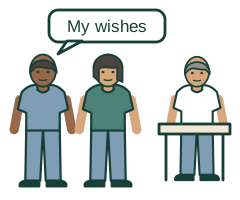
Some charities need a professional to apply for you.
Independence at Home and Percy Bilton have referral rules.
Ask who can help.

Ask for help applying
Tell the charity if you need help applying.
Ask for information you understand.
Ask about paper forms if online forms are difficult.
Agree what information a helper can share.
Ask how to send documents securely.
Do not share your bank password or PIN.

Prepare costs and information
You may need information about income and support needs.
Explain why the item would help.
Keep a copy of your application.

A quote tells you what something will cost.
Include delivery and other necessary costs.
Tell the charity about other funding.

Decisions, benefits and safe spending
Wait for approval before buying or booking.
The charity may not pay for things already bought.
Check any spending deadline.
A grant can affect some benefits.
Ask a benefits adviser about your award.
Keep the letter explaining the grant.
Ask when a decision is expected.
Funding is not guaranteed.
Ask about a review if the charity says no.

Use a grant only as agreed.
Keep any receipts the charity asks for.
Ask before changing your plans.
Pause if an unexpected message asks for a payment.
Check with the charity using its official contact details.
Ask for help if something seems wrong.
What you can do next
Find a possible fund, then read its current rules.
Ask for support with the application if needed.
Search for grants with Turn2us Web pageThis link opens another website.
It may use harder words.
More useful links
- Turn2us Grants Search Web page
Find possible funds; check each charity’s own application rules.
- Family Fund: England SFDC programme Web page
Current first-time applicant limit, age rules and eligible items.
- Family Fund: all programme openings Web page
Check whether a particular programme is accepting applications.
- Independence at Home: how to apply Web page
Information for an accepted professional applying on someone’s behalf.
- Percy Bilton: individual applications Web page
Referral requirements, eligible essential items and exclusions.
- GOV.UK: council help with living costs Web page
Find local Crisis and Resilience Fund and essential-cost help.
- Turn2us: find an adviser Web page
Look for independent benefits or application support.
- GOV.UK: charity register Web page
Check registered charity details; some legitimate charities are not listed.
These links open other websites.
They may use harder words.
Applying for charitable grants
Find possible grants, prepare an application and get support when applying for yourself, a child or another adult.
England · Charitable grants for individuals and families · Local crisis help
What a charitable grant can do
A grant can be money, an item or a service for a particular need. It is usually not a loan, but conditions still apply. Some funds help with essential household items; others support disability equipment or particular activities. Check benefits and NHS or council support too. Some charities expect those routes to be explored first, and will not fund something that a public service should provide.
Find a fund that matches the person
The free Turn2us Grants Search can suggest charities based on circumstances. Search using the person’s location, age, disability and current or previous work. A parent’s or partner’s employment history may open other routes. Read the actual charity’s rules, not just a search result. Check whether applications are open, the item is covered, and whether you can apply yourself or need an accepted professional referrer. A possible match is not an award.
Ask about local help when essentials are urgent
Do not wait for a charity decision if there is no food, heating or another essential. Ask your council about local welfare assistance and the Crisis and Resilience Fund, England’s current council crisis-support route. People do not have to receive benefits to seek this help. Local eligibility and application arrangements differ. GOV.UK says Crisis and Resilience Fund payments do not affect benefits; that specific protection must not be assumed for every charitable grant.
Family Fund: children and current application limits
Family Fund’s England Support for Families with Disabled Children programme is for qualifying low-income families with a disabled or seriously ill child aged 17 or younger. The main carer applies. It considers high support needs across at least three of its specified areas; a diagnosis or disability benefit award alone does not establish eligibility. From 24 September 2026 to the end of March 2027, this programme accepts first-time applicants only. Its separate Your Opportunity programme for ages 18–24 is listed as closed at this guide’s review. Use the current programme pages before starting.
Independence at Home: an adult or child living at home
Independence at Home may contribute towards eligible disability equipment or adaptations where disability or long-term illness seriously affects daily life and the person cannot afford the item. An accepted health, social care, housing or charity professional must apply; individuals cannot apply directly. Residency, savings and other conditions apply. The charity excludes people living in residential care or hospital. Public funding routes must be explored first. Its contribution may not cover the full cost.
Percy Bilton: essential household items
The Percy Bilton Charity considers specified essential items for people on low incomes in distressed circumstances, including children and adults with a physical or learning disability or serious long-term illness. Examples include appliances, beds and essential clothing. Applications must come through an accepted council or NHS Trust worker, such as a social worker, occupational therapist or community psychiatric nurse. It does not accept direct individual applications or applications from unrelated agencies. It does not fund debts, holidays or medical treatment.
Applying for someone else: choices and authority
Ask the person what they want and agree what help you will give. For a child, check who the charity accepts as their parent or carer applicant and involve the child as appropriate. Having a learning disability does not automatically mean an adult cannot decide. Check consent requirements before sharing medical or financial records. A parent, partner or worker does not automatically have authority over another adult’s finances. A DWP appointeeship concerns benefits, not every money decision. If the adult cannot make the relevant decision despite support, ask about the lawful decision process and any appropriate attorney or deputy authority.
Ask for access support and prepare relevant evidence
Ask for help with forms, accessible explanations, a paper route where offered, or an accepted referrer. Family Fund offers application help and a postal form route. Other funds may require a professional to submit online. Prepare only what the charity requests: income and savings evidence, relevant reports, and a clear explanation of the need. Describe the practical difference the item would make, using the person’s own priorities. Ask how documents can be sent securely. Keep a copy and application reference.
Get a complete price and wait for approval
Ask whether a written quote, professional assessment or approved supplier is required. Include delivery, installation and any necessary removal costs, and identify who will pay ongoing running or maintenance costs. Explain other funding already requested or awarded so the same cost is not funded twice. Family Fund, Independence at Home and Percy Bilton exclude items already bought. Do not order, pay a deposit or book work relying on a hoped-for grant; obtain the fund’s written agreement first.
Check effects on benefits and other financial assessments
A charitable award is not automatically ignored for every benefit. Cash, regular payments and goods can be treated differently, and money held in an account may matter. Ask a benefits adviser about the particular award before accepting or arranging payment. Keep the award letter and explain its purpose and any spending deadline. Ask what must be reported to the relevant benefit office. If the person pays assessed care charges, also ask the council how it will treat the award.
Understand the decision and use an award as agreed
Ask when to expect a decision and how to follow up. Funding can run out even when someone meets the criteria. If refused, ask for the reason and whether a review is available; there is no universal charitable-grant appeal right. Family Fund has an eligibility appeal route, while Percy Bilton states its decisions are final and does not routinely notify unsuccessful applicants. If awarded, check the payment method, permitted purchase, deadline and evidence required afterwards. Ask before changing the item or using unspent funds differently.
Protect personal information and watch for scams
Use contact details from the charity’s official website. The Charity Commission register can help verify registered charities, although some legitimate charities are exempt or too small to appear. A genuine application may need financial evidence, but a helper or fund should not need your bank PIN, password or one-time security code. Pause an unexpected request to pay to release a grant and verify it independently. Contact your bank promptly if you have shared banking information with a suspected scammer.
Words you could use
“Please help me find an open fund that matches my needs, explain its rules and agree what information and quotes are needed before I apply.”
More useful links
- Turn2us Grants Search Web page
Find possible funds; check each charity’s own application rules.
- Family Fund: England SFDC programme Web page
Current first-time applicant limit, age rules and eligible items.
- Family Fund: all programme openings Web page
Check whether a particular programme is accepting applications.
- Independence at Home: how to apply Web page
Information for an accepted professional applying on someone’s behalf.
- Percy Bilton: individual applications Web page
Referral requirements, eligible essential items and exclusions.
- GOV.UK: council help with living costs Web page
Find local Crisis and Resilience Fund and essential-cost help.
- Turn2us: find an adviser Web page
Look for independent benefits or application support.
- GOV.UK: charity register Web page
Check registered charity details; some legitimate charities are not listed.
These links open other websites.
They may use harder words.
Where the information comes from
Links checked 1 November 2026.
These links open other websites.
They may use harder words.
- Turn2us: grants explained Web page
Eligibility, evidence, discretion and different benefit treatment.
- Turn2us Grants Search Web page
Matching personal circumstances to possible funds without guaranteeing an award.
- GOV.UK: council cost-of-living help Web page
Current England crisis-support route, local rules and benefit protection for those payments.
- Family Fund: England SFDC Web page
Programme rules and September 2026–March 2027 first-time applicant restriction.
- Family Fund: eligibility Web page
High support needs and household eligibility; diagnosis or benefit award alone is insufficient.
- Family Fund: programme availability Web page
Your Opportunity is listed as closed at review.
- Family Fund: applying Web page
Evidence, accessible support and the paper application option.
- Family Fund: grant questions Web page
Restrictions on previous purchases, eligibility appeals and changes to an award.
- Independence at Home: frequently asked questions Web page
At-home, financial and residency conditions; exclusions and contributions.
- Independence at Home: how to apply Web page
Accepted referrers, evidence, complete quotations and supplier or agency payments.
- Percy Bilton: individual grant rules Web page
Accepted applicants, low-income disability groups, approved purposes and final decisions.
- NHS: Mental Capacity Act Web pageFuller information
Support for a specific decision and no automatic incapacity because of diagnosis.
- GOV.UK: DWP appointees Web page
The role concerns making and managing benefit claims.
- GOV.UK: Universal Credit capital Web page
Money held, reporting and possible disregards require individual consideration.
- GOV.UK: charity register Web page
Registered charity details and exceptions to registration.
- Home Office: shared personal information Web page
Protect passwords and security codes; contact the bank after suspected disclosure to a fraudster.
A page for you to fill in
You can type your answers and download a copy.
You can also print a page to write or draw on.
Someone you trust can help you.