Mental health · England
Exhaustion and burnout
Your browser or device provides the reading voice.
You may feel very tired and overwhelmed.
You deserve help to understand what has changed.

Notice what has changed
Daily tasks or talking may feel much harder.
Tell someone you trust about the changes.

Words people use
Some autistic people call this experience autistic burnout.
Some people with ADHD use the words ADHD burnout.

Check your health
These words do not explain every health change.
A GP can check for other reasons you feel unwell.
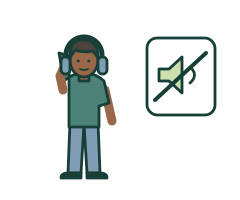
Reduce overload
Noise, light or busy places may feel too much.
Ask for a quieter space if it helps.

Reduce demands
Agree which tasks can wait or be shared.
Ask for help with important daily needs.
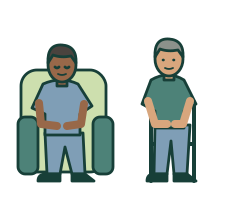
Make room for rest
Rest and activities you enjoy may help.
You do not have to recover to someone else’s deadline.

Communicate your way
You can use pictures, writing or a communication aid.
Ask people to give you time.

Check your support
Talk about what helps and what is getting harder.
Ask for another health review if things worsen.

Urgent help
Sudden confusion needs immediate help: call 999 or go to A&E.
For urgent mental health help, call 111 and select the mental health option.
If you cannot keep yourself or someone else safe, call 999 or go to A&E.
What you can do next
Ask for a health check and support that fits your needs.
Read about autistic fatigue and burnout Web pageThis link opens another website.
It may use harder words.
More useful links
- National Autistic Society: autistic fatigue Web page
Experiences of exhaustion and practical ways to reduce pressure.
- NHS: tiredness and fatigue Web page
Possible causes and when to see a GP.
- NHS: ADHD in adults Web page
Assessment, support and adjustments.
- NHS: urgent mental health help Web page
Urgent and emergency routes.
These links open other websites.
They may use harder words.
Autistic burnout and ADHD-related exhaustion
Understand burnout language, reduce overwhelming demands and get changes in health checked.
Adults · England · Individual needs and assessment matter
What these terms mean
Autistic burnout is a developing research concept, informed by autistic people’s accounts of prolonged exhaustion, reduced ability to manage daily tasks and greater sensitivity to sensory input. ADHD burnout is a less clearly defined, informal description of overwhelm and exhaustion associated with managing daily demands. Neither is a formal standalone diagnosis. These terms can help explain experiences, but do not establish their cause.
Notice changes from your usual self
Everyday tasks, communicating or coping with noise may become harder. You may need more help or recovery time. Listen to what the person says has changed instead of labelling them lazy or uncooperative. Signs differ between people; an online checklist cannot tell whether burnout, illness, depression or another difficulty is responsible.
Get physical and mental health checked
Speak to a GP if tiredness persists, affects everyday life or comes with other symptoms. Ask for an assessment of new or worsening difficulties, including sleep, pain, mood, medicines and possible physical illness. Depression and anxiety can occur alongside neurodivergence. Do not assume a loss of skills or new withdrawal is simply part of being autistic or having ADHD.
Reduce demands and sensory strain
Discuss what is most exhausting: noise, unexpected changes, social pressure, masking autistic traits or an unmanageable workload. Agree which demands can be reduced, postponed or shared. Quieter spaces, predictable information and breaks may help. Support should change the environment as well as expecting the person to cope. Avoid forcing eye contact, conversation or the suppression of harmless stimming.
Make everyday support manageable
Choose a small number of priorities and ask for practical help with food, shopping or appointments. For ADHD-related organisation difficulties, written steps and help planning tasks may be useful. Rest and chosen enjoyable activities can both matter. A flexible record of what drains or restores energy may help; it should not become another demanding task.
Keep communication and choice accessible
Offer pictures, writing or a communication aid if speaking is harder. Give time to respond and check what support the person wants. Agree who can help and what information may be shared. A supporter should not take over every decision because someone is exhausted. Ask for reasonable adjustments at work, in healthcare or in other relevant settings.
Review support without a recovery deadline
There is no single recovery timetable or proven programme that works for everyone. Much autistic-burnout research uses self-reports, with some groups under-represented. Agree regular, manageable reviews of health, daily needs and what is helping. If things worsen or the plan is not helping, seek further assessment rather than simply adding more pressure to perform.
When help is urgent
Sudden confusion needs immediate assessment: call 999 or go to A&E. For urgent mental health help, call NHS 111 and select the mental health option or ask for an urgent GP appointment. Call 999 or go to A&E if life is at risk or you cannot keep someone safe.
Words you could use
“Please take these changes seriously, check my health and help reduce demands while we agree support that works for me.”
More useful links
- National Autistic Society: autistic fatigue Web page
Experiences of exhaustion and practical ways to reduce pressure.
- NHS: tiredness and fatigue Web page
Possible causes and when to see a GP.
- NHS: ADHD in adults Web page
Assessment, support and adjustments.
- NHS: urgent mental health help Web page
Urgent and emergency routes.
These links open other websites.
They may use harder words.
Where the information comes from
Links checked 9 November 2026.
These links open other websites.
They may use harder words.
- Raymaker and colleagues: defining autistic burnout Web page
Exploratory community-partnered study of exhaustion, functioning, sensory tolerance and support; not diagnostic criteria.
- Bougoure and colleagues: measuring autistic burnout Web page
Research measurement and the need for validation across more diverse samples.
- National Autistic Society: autistic fatigue Web page
Sensory and social pressures, rest, energy management and reducing demands.
- NHS: tiredness and fatigue Web page
Assessment of persistent or unexplained fatigue and other health causes.
- NHS: ADHD in adults Web page
Coexisting difficulties, written information and support with planning.
- NHS: work-related stress Web page
Stress-related exhaustion and seeking help when daily life is affected.
- NICE CG142: autistic adults Web page
Communication, sensory adjustments, participation and assessment of coexisting conditions.
- NHS: sudden confusion Web page
Immediate assessment for sudden confusion.
- NHS: urgent mental health help Web page
Urgent GP or NHS 111 mental health advice and emergency thresholds.