Advocacy · England
Help to complain about NHS care
Your browser or device provides the reading voice.
The NHS provides health services.
You can get free advocacy help with a complaint about care paid for by the NHS.
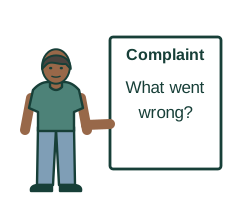
A complaint tells a service that something has gone wrong.
You can explain what happened and what you want put right.

An NHS complaints advocate can help you.
You can ask before you make a complaint.
You can also ask after you have started.

The advocate can help you understand the complaints process.
They can help you write your complaint.

The advocate can help you prepare for meetings.
You decide what you want to complain about.
The advocate is independent of the service you are complaining about.
Hospital staff who help with concerns have a different role.
You can sometimes complain for someone else.
Ask about their agreement and the rules before you do this.

If the problem continues, ask the advocate about the next step.
Ask about time limits for taking your complaint further.
Your council or local Healthwatch can help you find the advocacy service.
Healthwatch helps people share their experiences of health and care.
What you can do next
Ask for the independent NHS complaints advocacy service.
Explain how you would like them to contact you.
Find your local Healthwatch Web pageThis link opens another website.
It may use harder words.
Help to make an NHS complaint
Free, independent support if you are considering or making a complaint.
Complaints about NHS-funded care · England
Support with your complaint
The advocate can help you understand the process, organise the points you want to raise, write a complaint and prepare for meetings. You remain in control of what you want to complain about.
Independent of the service complained about
Councils arrange access to independent NHS complaints advocacy. The service is different from the hospital's Patient Advice and Liaison Service, known as PALS. PALS can help resolve concerns informally, but is not a substitute for an independent advocate.
Who can ask
This route is for people making or considering complaints about NHS-funded services. You do not have to qualify for Care Act advocacy or lack mental capacity. If you want to complain for someone else, ask about consent and the rules for representatives.
What it does not cover
An advocate does not give medical advice, decide the complaint or automatically provide legal representation. A clinical negligence compensation claim is a different process. Ask for specialist advice if that is what you need.
Taking a complaint further
After the local NHS complaints process, unresolved complaints may be taken to the Public Service Ombudsman. Ask the advocate about the correct route and time limits. A complaint does not pause a separate legal deadline.
The Ombudsman’s new name
The Public Service Ombudsman was previously called the Parliamentary and Health Service Ombudsman, or PHSO. The name changed on 1 October 2026. Its legal powers and complaint processes stayed the same. Older letters and information may use the former name.
Words you could use
“I would like independent support to understand the NHS complaints process and explain what I want put right.”
Where the information comes from
Links checked 26 October 2026.
These links open other websites.
They may use harder words.
- NHS England: feedback and complaints Web page
Complaints routes, free advocacy, PALS and representatives.
- Public Service Ombudsman: advocacy and support Web page
Distinguishes independent complaints advocacy from specialist legal and other support.
- Local Government and Public Involvement in Health Act 2007, section 223A Web page
The local authority duty to arrange independent advocacy for relevant health-service complaints.
- Public Service Ombudsman: name change Web page
Official announcement on 1 October 2026; name changed, powers and processes unchanged.