Safety & safeguarding · England
Getting support in prison and on probation
Your browser or device provides the reading voice.
This guide is for people in England.
You can ask someone you choose to read it with you.

Ask for clear information
Tell staff if reading or understanding is difficult.
Ask them to explain what happens next.

Keep communicating
Explain how you communicate.
Ask for suitable aids, information and support.

Tell the healthcare team
Tell them about health needs and medicines.
Say straight away if important treatment is missing.

Ask about daily care
You may need help with washing, dressing or eating.
Ask for a council care-needs assessment.

Speak up if you are unsafe
Tell prison staff about bullying, abuse or urgent problems.
Ask them to act and record what happened.

Family and friends can raise concerns
They can contact the prison’s Safer Custody Team.
They should explain if the concern is urgent.

Plan before release
Agree where you will stay and how you will get there.
Check medicines, care and appointments.

Ask about RECONNECT
RECONNECT can help some adults reach health and support services after custody.
Ask healthcare or probation about referral.

Understand probation meetings
Ask for dates and rules in a format you understand.
Ask for reminders and access support.

Tell probation about problems
Contact your practitioner if you cannot attend.
Do not assume you can miss a required appointment.

Check support after release
Confirm your GP, care services and other contacts.
Tell the named team if support is missing.
Use the right help route
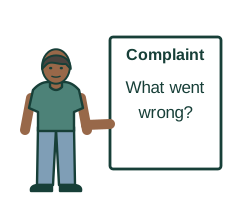
Ask how to complain about the particular problem.
Ask a solicitor about legal decisions and deadlines.
What you can do next
Use the links below for more information.
You can use the worksheet to prepare questions and plan support.
Read NHS RECONNECT information Web pageThis link opens another website.
It may use harder words.
More useful links
- GOV.UK: arriving at prison Web page
Reception, assessment and getting information about prison arrangements.
- NHS England: learning disability and prison healthcare Web page
Professional guidance about accessible care for adults with a learning disability and autistic adults. The page links to a PDF.
- NHS England: RECONNECT after custody Web page
Who the service supports, what it does and how to ask about referral.
- GOV.UK: probation meetings Web page
Appointments, the sentence plan and explaining difficulties following requirements.
- GOV.UK: raising a concern about a prisoner Web page
How family or friends can contact prison staff or the Safer Custody Team.
- Prisons and Probation Ombudsman: complaints Web page
What it can consider after the internal complaint route and matters outside its role.
These links open other websites.
They may use harder words.
Support in prison, on probation and after release — Easy Read
Ask for accessible information, healthcare and social care in prison, prepare for release and get help to understand probation requirements.
Adults aged 18 and over · Prisons and probation in England
Get help from the start
At reception, ask for explanations of where you are, what happens next and how to request help. Say if you cannot read forms, follow spoken instructions or use the usual application system. Ask staff to record your communication and support needs and help you contact your solicitor. Being on remand is not the same as being convicted. This guide concerns adults; under-18s have different services and safeguards.
Keep your communication available
Explain how you understand questions and express pain, choices or distress. Ask about Easy Read information, extra time, an interpreter, suitable communication equipment and help with forms. Identify how an aid can be used safely within prison arrangements, and a usable alternative if access is restricted. An appropriate adult at a police station is a specific safeguard; it does not create an automatic right to the same person at every prison or probation meeting. Ask which communication support fits the actual process.
Ask the prison healthcare team
Tell healthcare staff promptly about medicines, epilepsy, diabetes, swallowing needs, mental health, substance dependence and any other important condition. Explain if a medicine or treatment has been interrupted. Ask for assessment, an accessible care plan and appropriate specialist referrals. Prison healthcare and prison officers have different roles: HMPPS must help enable access, while clinicians make clinical decisions. A learning disability does not automatically remove your ability to consent to treatment.
Ask about adult social care
If you need help with washing, dressing, eating, communication or other daily living, ask for a council care-needs assessment through the prison. In England, the council where the prison is located is responsible for assessing and meeting eligible social care needs under the relevant rules. Ask for an accessible decision and plan showing who will help, when and how to raise missing support. Healthcare assessment does not replace a social care assessment. Discuss any financial assessment and charges rather than assuming every care arrangement is free.
If you are unsafe or cannot get essential help
Tell an officer or healthcare worker immediately about abuse, bullying, a serious health problem or an urgent failure of care. Ask for the concern and response to be recorded. Families or friends worried about someone can contact the prison’s Safer Custody Team using the prison’s official contact details. A voicemail may not be checked immediately: explain urgency to prison staff directly where possible. Prison safeguarding arrangements differ from ordinary community procedures; ask who is responsible for action.
Prepare for release before the day
Ask the prison, probation, healthcare and social care teams for a joined-up plan. Cover where you will stay, travel, medicines and prescriptions, GP registration, communication aids, care visits, benefits, money and appointments. Confirm who will meet you or help you get to the first appointment. Ask who receives referrals and what happens if a service is not ready. A planned referral is not the same as confirmation that support will start.
Ask about NHS RECONNECT
RECONNECT helps eligible adults with identified health needs connect with community health and support services after custody. It provides coordination, advocacy and practical engagement support; it is not a clinical treatment service. Ask prison healthcare or probation how to contact the local team. People and their families can also ask about referral. The service assesses suitability and seeks the person’s agreement; it is not an automatic substitute for the care you need.
Understand your probation or licence
Ask your probation practitioner, sometimes called an offender manager, to explain the exact appointments, conditions and required activities in a way you understand. Request a simple timetable, reminders and suitable communication or access adjustments. Explain travel, health and support barriers early. If you cannot attend or have missed an appointment, contact the practitioner promptly and explain why; keep relevant evidence. Do not assume that a request for an adjustment cancels a condition or gives permission to miss an appointment.
Keep support working in the community
Confirm GP and relevant specialist contacts, council support and any agreed RECONNECT follow-up. Ask someone you choose to help organise appointments without taking over decisions. Tell services when an address, phone number or support arrangement changes, following any probation conditions about notification. Ask about education, paid work, housing and relationships as well as health. If the plan breaks down, contact the named teams promptly rather than waiting for a review date.
Choose the correct complaint and legal route
Ask for help using the prison or probation complaints process for treatment, access or administration concerns. Prison and probation complaints may need separate submissions. The Prisons and Probation Ombudsman can consider eligible complaints normally after the full internal process; it does not overturn convictions or sentences. Clinical complaints use the relevant NHS process, and council care decisions use the social care route. Ask your solicitor promptly about a charge, sentence, licence, recall or legal deadline; a complaint does not suspend those requirements.
Words you could use
“I need information and support that I can use. Please record my communication and care needs, explain who is responsible and agree a practical plan for appointments, daily support and release.”
More useful links
- GOV.UK: arriving at prison Web page
Reception, assessment and getting information about prison arrangements.
- NHS England: learning disability and prison healthcare Web page
Professional guidance about accessible care for adults with a learning disability and autistic adults. The page links to a PDF.
- NHS England: RECONNECT after custody Web page
Who the service supports, what it does and how to ask about referral.
- GOV.UK: probation meetings Web page
Appointments, the sentence plan and explaining difficulties following requirements.
- GOV.UK: raising a concern about a prisoner Web page
How family or friends can contact prison staff or the Safer Custody Team.
- Prisons and Probation Ombudsman: complaints Web page
What it can consider after the internal complaint route and matters outside its role.
These links open other websites.
They may use harder words.
Where the information comes from
Links checked 7 November 2026.
These links open other websites.
They may use harder words.
- GOV.UK: arriving at prison Web page
Reception assessments and explanations.
- GOV.UK: prison healthcare Web page
Healthcare and specialist support in custody; individual consent rules require separate consideration.
- NHS England: meeting healthcare needs in prison Web page
Guidance specifically concerning adults with a learning disability and autistic adults.
- HMPPS access to health and social care framework, June 2026 Web page
Operational access duties and the distinct responsibilities of healthcare providers and councils.
- Care Act factsheets: people in prison Web pageFuller information
Council responsibility, assessment, eligibility, charging and continuity.
- GOV.UK: vulnerable prisoners Web page
Reporting safety concerns to prison staff and Safer Custody.
- NHS England: RECONNECT Web page
Eligibility, consent, care coordination and referral.
- GOV.UK: probation meetings Web page
Requirements, explaining difficulties and missed appointments.
- Probation Service: complaints Web page
Separate prison and probation complaint routes.
- PPO: complaint remit Web page
Internal procedures, eligible matters and limits.
- GOV.UK: support after leaving prison Web page
Support with returning to the community.
A page for you to fill in
You can type your answers and download a copy.
You can also print a page to write or draw on.
Someone you trust can help you.