Rights & choices · England
Taking your complaint to an ombudsman
Your browser or device provides the reading voice.
An ombudsman is an independent complaints service.
It can look at some complaints that remain unresolved.

What an ombudsman does
The ombudsman looks at information from both sides.
It does not take sides.

Using an ombudsman is free.
You do not have to pay someone to complain.
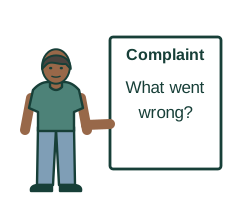
Use the organisation’s complaints process
Usually, complain to the organisation first.
Ask for its complaint process.

Keep your complaint and the replies.
Ask whether the latest reply is its final answer.

Find the right ombudsman
Different ombudsmen deal with different problems.
Ask which one can help with your complaint.

For NHS complaints, contact the Public Service Ombudsman.
First use the NHS complaint process.
Council and adult social care complaints use a different ombudsman.
It is the Local Government and Social Care Ombudsman.

Housing, money and legal services have other complaint routes.
Check the correct service using the links below.

Deadlines and asking for support
There are deadlines for making complaints.
Check your deadline straight away.
Do not assume every service uses the same deadline.

Explain what happened and how it affected you.
Say what you want put right.

Ask for information in a way you understand.
Explain what help you need to communicate.

You can ask someone you trust to help you.
Ask about an independent advocate.
Decisions and urgent problems
The ombudsman checks whether it can investigate.
It cannot investigate every complaint.
Read the outcome with support if you want.
Ask what happens if you accept a decision.

Do not wait for a complaint if you are unsafe.
Ask for urgent help when you need it.
What you can do next
The directory lists different complaint services.
Check that the service covers your complaint in England.
Find the right ombudsman Web pageThis link opens another website.
It may use harder words.
More useful links
- Find an ombudsman Web page
Directory of schemes. Check the country, subject and organisation covered.
- Public Service Ombudsman: Easy Read information Web pageEasy Read
Easy Read complaint forms and guidance for NHS and government complaints.
- LGSCO: how to complain Web page
Council services and privately funded adult social care.
- Which ombudsman for housing? Web page
Landlord complaints compared with council housing functions.
- Financial Ombudsman: time limits Web page
Check waiting periods, the final-response deadline and older-complaint rules.
- Legal Ombudsman: complaint process Web page
Complaining to a legal-service provider and escalating in time.
- Energy Ombudsman: process Web page
When and how to escalate an energy dispute.
- Ofcom: phone and broadband dispute schemes Web page
Find the correct approved ADR scheme and current waiting period.
These links open other websites.
They may use harder words.
Going to an ombudsman: choosing the right complaints service
Find the right independent complaints service, understand deadlines and prepare an accessible complaint.
England · Public services, housing, money and consumer complaints
What an ombudsman does
An ombudsman is an independent complaints service. It considers evidence from you and the organisation, then decides what it can investigate and whether something should be put right. It does not take your side or the organisation’s side. The service is free to use; you do not have to pay a solicitor or claims company to bring a complaint. Each scheme covers particular organisations and issues, and not every complaint will be investigated.
Start with the organisation
Usually, first complain to the organisation responsible and follow its complaint stages. Keep your complaint, the date it was received and each response. Ask for a final response when the process ends. Some businesses call this a deadlock letter: it means they cannot resolve the disagreement. You may also be able to approach the relevant scheme when an organisation takes too long. The waiting period depends on the scheme; there is no single eight-week rule for everything.
NHS services: Public Service Ombudsman
For unresolved complaints about NHS services in England, including relevant ICB complaints, contact the Public Service Ombudsman directly after the local process. An ICB is an integrated care board. You do not need an MP referral for an NHS complaint. The usual limit is 12 months from becoming aware of the problem, not 12 months after the final response. Contact the Ombudsman promptly if delay or illness has affected this; exceptions can be considered. CHC eligibility has additional review steps, explained in our CHC challenge guide.
A recent change of name
On 1 October 2026 the Parliamentary and Health Service Ombudsman changed its name to the Public Service Ombudsman. Its powers and complaint routes stayed the same. Older letters and guidance may use the previous name or the letters PHSO. They refer to the same organisation.
UK government services: usually through an MP
Complaints about UK government services normally go through the department’s complaint stages and then need referral by a Member of Parliament, called an MP. You should normally get the complaint to your MP within 12 months of knowing about the problem. Ask for help early if time is running out. There are exceptions: qualifying Victims’ Code complaints can now go directly to the Public Service Ombudsman without an MP referral. A complaint about service quality is different from a benefit decision appeal or another statutory review.
Councils and adult social care
The Local Government and Social Care Ombudsman, or LGSCO, can consider many council-service complaints and complaints about privately arranged adult social care. Usually complain to the council or care provider first. The usual limit is 12 months from first knowing about the problem. If the organisation is not replying, contact LGSCO for advice: it generally considers up to 16 weeks a reasonable response period, but some statutory processes take longer. It can sometimes consider matters earlier. Do not wait to seek urgent help where safety or essential care is at risk. If NHS and social care issues overlap, ask whether a joint investigation is appropriate.
Housing: check which ombudsman
The Housing Ombudsman considers complaints about landlords in its scheme, including council and housing-association landlords. Examples include repairs and how the landlord handles a complaint. Council homelessness functions and statutory housing-allocation schemes generally fall to LGSCO instead. The route depends on the function, not just the organisation’s name. Use any relevant statutory review or appeal promptly. For Housing Ombudsman investigation, normally complete the landlord’s two-stage process and refer within 12 months of the stage 2 response. It can also help when the landlord is not responding.
Banks, insurance and other financial services
The Financial Ombudsman Service considers eligible complaints about financial businesses, including some banking, insurance, credit and scam-reimbursement disputes. Complain to the business first. Most businesses have eight weeks to respond; some payment-related complaints have shorter limits. You can usually refer after the final response or the applicable waiting period. Normally refer within six months of the final response. Other limits also apply to older events, so check its time-limit guide immediately rather than waiting for the six months to expire.
Solicitors and legal services
The Legal Ombudsman considers eligible complaints about legal-service providers, such as poor service or fees. Give the provider a chance to respond first. You can normally approach the Ombudsman after its final response or after eight weeks. Generally, the complaint must be within one year of the problem or when you became aware of it, and within six months of the provider’s final response. Exceptions are limited. A professional-conduct report to a regulator is a different route and does not automatically preserve a service-complaint deadline.
Gas and electricity
For a dispute within the Energy Ombudsman’s scheme, complain to the energy company first. You can usually take it further after a deadlock letter or eight weeks without resolution. Refer within 12 months of receiving a deadlock letter. Check whether the company and the particular issue are covered. Ask the scheme about urgent access needs and any deadline for sending your evidence after registration.
Phone and broadband
Phone and broadband providers must belong to an approved alternative dispute resolution scheme, called ADR. Ofcom currently approves Communications Ombudsman and CISAS. Use the scheme your provider belongs to. Since 8 April 2026, eligible unresolved complaints can normally go to ADR after six weeks, or earlier with a deadlock letter. Ofcom’s guidance also sets a 12-month limit after the deadlock letter. Check the provider’s complaints code and the scheme’s current instructions. Ofcom itself does not decide individual billing disputes.
Other purchases and services
Not every trader belongs to an ombudsman or other independent dispute scheme. Check the final response and the Ombudsman Association directory, choosing a scheme that covers England and your issue. The Association lists schemes; it does not investigate your complaint or review its members’ decisions. Our consumer-rights guide explains help with shopping and services. Be cautious about adverts offering to handle an ombudsman complaint for a fee.
Prepare the handover
Explain the main unresolved points, what happened and when, the effect on you and what would put matters right. Include the original complaint, final response, a short timeline and relevant evidence. Identify factual mistakes or unanswered questions. Keep your own copies and proof of submission. Use the scheme’s official contact details and secure submission route. Do not send passwords, PINs or unnecessary personal details. The worksheet below helps organise a handover after the local complaint process.
Ask for help to take part
Tell the service what would help: Easy Read, a telephone explanation, more time, your communication aid, accessible documents or a named contact. Ask it to confirm agreed adjustments. You can ask a trusted person or advocate to help. If someone acts for another adult, the scheme will need appropriate permission or authority; being a relative does not automatically give unlimited authority. The Public Service Ombudsman provides Easy Read forms, and free NHS complaints advocacy may help with NHS matters.
What happens after you submit
The scheme first checks whether it covers the organisation and issue, whether complaint stages and deadlines are met, and whether it should investigate. It may ask for more information or try to resolve the dispute. Keep to any evidence or response deadlines and request adjustments promptly. Explain immediately if you cannot meet a date; do not assume an extension has been agreed. Ask when you should expect the next update, rather than assuming every investigation takes the same time.
Possible outcomes and accepting a decision
Depending on its powers, an ombudsman may recommend or require an apology, explanation, correction, payment or service improvement. A payment is not guaranteed. Read the outcome and any acceptance deadline carefully. For example, accepting a Financial Ombudsman final decision makes it binding and is likely to prevent a further court claim for more compensation about the same complaint. Get advice if you are unsure before accepting a settlement or binding decision.
A complaint is not an appeal or emergency response
An ombudsman does not automatically replace a tribunal appeal, court claim, urgent safeguarding action or clinical care. Using a complaint process does not automatically pause separate legal deadlines or stop changes to care, housing or benefits. Tell the responsible service about immediate risks and seek appropriate urgent help. Ask a solicitor promptly where essential support, a home or a legal deadline is at risk.
If you disagree with the ombudsman
Ask for its explanation and any available review route, including the deadline and permitted reasons. Disagreeing with the result does not necessarily give a right to a new investigation. A complaint about the ombudsman’s own service is different from challenging its decision. Do not assume the Ombudsman Association can overturn it. Specialist legal advice may be needed for a court challenge, and time limits can be short.
Words you could use
“Please confirm whether your scheme can consider my complaint. I complained to [organisation] on [date] and received [response or no response]. These points remain unresolved: […]. Please tell me the deadline, the information needed and how you can meet my communication needs.”
More useful links
- Find an ombudsman Web page
Directory of schemes. Check the country, subject and organisation covered.
- Public Service Ombudsman: Easy Read information Web pageEasy Read
Easy Read complaint forms and guidance for NHS and government complaints.
- LGSCO: how to complain Web page
Council services and privately funded adult social care.
- Which ombudsman for housing? Web page
Landlord complaints compared with council housing functions.
- Financial Ombudsman: time limits Web page
Check waiting periods, the final-response deadline and older-complaint rules.
- Legal Ombudsman: complaint process Web page
Complaining to a legal-service provider and escalating in time.
- Energy Ombudsman: process Web page
When and how to escalate an energy dispute.
- Ofcom: phone and broadband dispute schemes Web page
Find the correct approved ADR scheme and current waiting period.
These links open other websites.
They may use harder words.
Where the information comes from
Links checked 1 November 2026.
These links open other websites.
They may use harder words.
- Ombudsman Association: what is an ombudsman? Web page
Free, independent complaint services and limits of coverage.
- Ombudsman Association: its own role Web page
The Association is a directory and membership body, not an investigator or appeal body.
- Public Service Ombudsman: NHS complaints Web page
Local process, complaint checker, 12-month awareness limit and accessible formats.
- Public Service Ombudsman: new name Web page
Name changed on 1 October 2026; legal powers and processes unchanged.
- Public Service Ombudsman: government complaints Web page
Usual MP referral, time limit and Victims’ Code exception.
- LGSCO: how to complain Web page
Scope, complaint stages, delay, 12-month limit and alternative legal remedies.
- LGSCO: adult social care Web page
Privately arranged care, exceptional earlier involvement and joint health/social-care complaints.
- Housing Ombudsman: which service? Web page
Boundary between landlord functions, allocations and homelessness.
- Housing Ombudsman: landlord complaint process Web page
Two stages, referral after the final response and help with non-response.
- Housing Ombudsman: final responses over a year old Web page
Current 12-month referral limit after the stage 2 response.
- Financial Ombudsman: time limits Web page
Business response periods, six-month final-response rule and older complaints.
- FCA: how to complain Web page
Payment and e-money complaints have different response limits from the usual eight weeks.
- Financial Ombudsman: accepting a decision Web page
Consequences of acceptance or rejection and possible effect on court action.
- Legal Ombudsman: complaint process Web page
Eight-week provider stage and one-year/six-month limits.
- Energy Ombudsman: its process Web page
Eight-week/deadlock escalation, 12 months from deadlock and evidence deadlines.
- Ofcom: ADR schemes Web page
Approved telecoms schemes and six-week/deadlock route.
- Ofcom: change from 8 April 2026 Web page
Six-week telecoms waiting period commenced on 8 April 2026.
- LGSCO: reasonable adjustments Web page
Accessible contact, Easy Read, more time, representatives and agreed adjustments.
- Public Service Ombudsman: Easy Read support Web pageEasy Read
Easy Read forms and explanatory leaflets.
- House of Commons Library: ombudsmen Web page
Different powers, outcomes, court routes and complaints about decisions.
A page for you to fill in
You can type your answers and download a copy.
You can also print a page to write or draw on.
Someone you trust can help you.