Everyday life · England
Getting around by bus and train
Your browser or device provides the reading voice.
Plan a journey that works for you.
You can ask for help and choose support.

Plan your route
Check where you will start and finish.
Plan any changes and the journey home.
Keep your route and useful contacts with you.

Check tickets
Ask which ticket or pass you need.
Check when you can use it.
Your supporter may need a separate ticket.

Using a bus
Check the bus number and where it is going.
Ask the driver if you are unsure.
Ask for help with the ramp or your stop.

Using a train
Check the train and platform before boarding.
Ask for help if the platform changes.
Check how you will change trains.

Ask for train assistance
Passenger Assist can arrange help on your train journey.
This assistance is free.
You can also ask staff for help without booking.
Check access and space
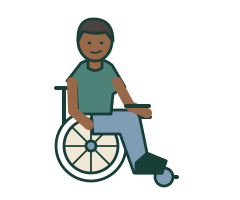
Check the vehicle can carry your wheelchair or scooter.
Ask about ramps and wheelchair spaces.
Ask what happens if the space is full.

If plans change
Check live travel information.
Tell staff if a lift or replacement vehicle is unsuitable.
Ask for a suitable alternative and help with the next step.

Check toilets and other needs
Check for toilets you can use.
Changing Places toilets have extra space and equipment.
Contact the venue before you travel.

Choose the support you need
You could practise a journey with someone you trust.
Ask about local travel training.
Support should fit your needs and choices.
What you can do next
Explain what helps you travel.
Ask what to do if your journey changes.
Read about travel support Web pageThis link opens another website.
It may use harder words.
More useful links
- National Rail Passenger Assist Web page
Request assistance and find train-company contact details.
- Find a Changing Places toilet Web page
Search facilities and confirm details with the venue.
- Check your local bus-pass route Web page
Find the council responsible for applications.
- National Rail: accessible travel and facilities Web page
Check wheelchair spaces, mobility aids and station access.
- National Rail: ticket types Web page
Check ticket conditions and which trains you can use.
- National Rail: rail replacement services Web page
Check access when a bus, coach or other vehicle replaces a train.
- GOV.UK: help on buses and coaches Web page
Accessible features, driver help and wheelchair spaces.
These links open other websites.
They may use harder words.
Getting around and planning accessible journeys
Plan buses and trains step by step, arrange assistance, and prepare for changes or access problems.
Adults and supporters · England · Local arrangements vary
Plan the whole journey
Choose the destination, route, departure time and return journey. Check walking distances, bus stops, station entrances, step-free routes, lifts, toilets and changes between services. A station being step-free does not always mean boarding the train is step-free. Allow time for connections and breaks. Keep a simple route, contact details and any assistance confirmation in a form you can use, including on paper if helpful.
Check tickets and payment
Ask which ticket or pass covers your actual journey and whether your supporter needs a separate ticket. Advance train tickets normally restrict you to the specified train; other tickets can have time, route or operator restrictions. Check the return journey too. Keep tickets and any required Railcard available. If disability prevents you using ticket-buying facilities, ask the operator for help and explain the barrier rather than assuming you cannot travel.
Take a bus step by step
Check the stop, route number, direction and destination before boarding. Ask the driver to confirm if you are unsure. Explain if you need the ramp, time to sit down or help knowing when to get off. Pay or show your pass as required. Watch the stops or announcements, and use the stop button in time where provided. Wait until the bus stops before getting off. If you miss your stop, ask for help to plan the next step.
Use a station and change trains
Check the departure board and ask staff to confirm the platform and train. Platforms can change. Find a safe waiting place and allow enough time to reach the train. Check any seat or wheelchair-space reservation and boarding help. For an interchange, confirm who will meet you and how to reach the next platform. Tell staff if a changed platform or short connection makes the route inaccessible.
Arrange Passenger Assist
Passenger Assist can coordinate help across train companies, including boarding, ramps, finding platforms and changing trains. Explain non-visible needs as well as mobility needs. Requests can be made up to two hours before the journey starts. You can also turn up without booking and ask staff or use a Help Point, although help may take longer. Assistance is free and separate from tickets. Ask where and when to meet staff and what to do if help is missing.
Check wheelchair and mobility-aid space
Check your wheelchair or scooter’s size, ramp limits and the operator’s rules. Train wheelchair spaces are limited; reserve one where available. On buses, ask the driver for access to the wheelchair space. Another wheelchair already using the space or vehicle capacity can affect boarding. Drivers must take appropriate steps when other passengers or belongings occupy it; a space is not guaranteed on every departure. Ask the operator about alternatives if you cannot board.
Prepare for disruption
Check live departures and access updates shortly before travel and during the journey. A cancelled service, broken lift or replacement coach can change what is accessible. Ask staff or the operator for a suitable alternative and help rearranging assistance. Rail operators must explain how they provide appropriate alternative accessible transport without extra charge when their service is inaccessible to you. Agree arrangements before paying for a taxi yourself. Keep someone you trust informed if you want their support.
Consider taxis, community and education transport
Ask the council about community transport and disabled bus passes; check eligibility, booking and charges. When booking a taxi or community vehicle, explain wheelchair dimensions, access and any securement needs. A Blue Badge is a separate parking concession with its own rules. School and college transport also have separate arrangements: ask for the council’s current policy and review route. Do not assume previous school transport continues unchanged at college.
Find suitable toilet facilities
A Changing Places toilet has space and specialist equipment, including an adult-sized changing bench and hoist. Use the official map, then contact the venue to check opening, access and equipment suitability. The consortium advises users to bring their own sling. Follow the person’s assessed moving-and-handling arrangements; do not assume venue staff will provide personal care or hoisting support.
Build confidence and protect your choices
You might choose a practice trip, route pictures, a quieter time or someone travelling with you. Ask the council or support team about local travel training; availability and eligibility vary. Agree support around your goals and actual needs rather than assuming you must travel alone or must always be accompanied. Review what worked. Ask for reasonable adjustments and report access problems to the operator. Ask for a response and the next complaints step if the problem remains.
Words you could use
“I need help planning this journey. Please explain the access arrangements, assistance, costs and what happens if there is a disruption.”
More useful links
- National Rail Passenger Assist Web page
Request assistance and find train-company contact details.
- Find a Changing Places toilet Web page
Search facilities and confirm details with the venue.
- Check your local bus-pass route Web page
Find the council responsible for applications.
- National Rail: accessible travel and facilities Web page
Check wheelchair spaces, mobility aids and station access.
- National Rail: ticket types Web page
Check ticket conditions and which trains you can use.
- National Rail: rail replacement services Web page
Check access when a bus, coach or other vehicle replaces a train.
- GOV.UK: help on buses and coaches Web page
Accessible features, driver help and wheelchair spaces.
These links open other websites.
They may use harder words.
Where the information comes from
Links checked 9 November 2026.
These links open other websites.
They may use harder words.
- GOV.UK: transport support for disabled people Web page
Travel access, transport modes, concessions and complaint routes.
- National Rail: Passenger Assist Web page
Assistance across rail journeys, including non-visible needs.
- GOV.UK: disabled person's bus pass Web page
Council applications and eligibility in England.
- GOV.UK: Blue Badge applications Web page
Eligibility, council decisions and application routes.
- Department for Education: post-16 transport Web page
Separate arrangements for education and training journeys.
- Changing Places: important visitor information Web page
Facilities, advance checks and bringing an appropriate sling.
- National Rail: accessible travel and facilities Web page
Wheelchair dimensions, limited spaces, reservations and scooter policies.
- National Rail: Advance tickets Web page
Train-specific ticket conditions.
- National Rail: Off-Peak ticket terms Web page
Time, route and operator restrictions.
- GOV.UK: help on buses and coaches Web page
Driver assistance, stop buttons, displays and wheelchair-space duties and limits.
- Office of Rail and Road: disabled passengers Web page
Free assistance, two-hour booking notice and turn-up-and-go support.
- Office of Rail and Road: accessible travel policy guidance, October 2025 Web page
Alternative accessible rail transport without additional charge when stations, trains or replacement transport are inaccessible.
- National Rail: rail replacement services Web page
Vehicle differences and arrangements for accessibility needs.
- NHS: transport support Web page
Local community transport and possible registration and charges.
- Hounslow Council: travel training service Web page
An example of adult travel training. Local criteria and provision vary; it is not a national service.
- GOV.UK: rights of disabled passengers Web page
Transport rights and reasonable assistance.