Everyday life · England
Checking access before visiting a shop or venue
Your browser or device provides the reading voice.
You can ask a shop or venue about access.
Explain what would help you use the service.

Choose where you want to go.
Think about what would help you enjoy the visit.

Ask for an access guide.
Pictures and measurements can help you plan.
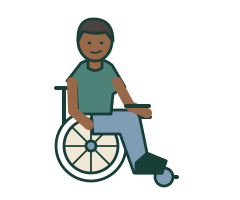
Check the entrance, rooms and lifts.
Ask what happens if equipment is broken.
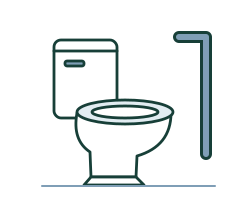
Check the toilet has the equipment you need.
Some people need a hoist and an adult changing bench.

Ask about noise, lights and crowds.
You might want a quieter time or space.

Tell staff how you communicate.
Ask for the help and time you need.

Ask for changes that reduce disability-related difficulties.
These are called reasonable adjustments.

A required reasonable adjustment must not cost you extra.
Not every request must be agreed.
Ask staff to explain their decision.

Check booking rules and any supporter tickets.
Ask about all the costs.

Get the arrangements confirmed before visiting.
Know who to ask for when you arrive.
Tell staff if the arrangements do not work.
You can ask for help to complain.
What you can do next
Choose the help that works for you.
You can ask someone you trust to help.
Explore detailed access guides Web pageThis link opens another website.
It may use harder words.
More useful links
- AccessAble: how detailed access guides work Web page
Photographs, measurements and individual decisions about suitability.
- Changing Places: important visitor information Web page
Confirm facilities directly and plan your own suitable sling and support.
- GOV.UK: reasonable adjustments for services Web page
Planning ahead, substantial disadvantage, reasonableness and no adjustment surcharge.
These links open other websites.
They may use harder words.
Checking access before visiting a shop or venue
Ask clear questions about access, agree useful changes and plan the visit you want.
Shops, leisure venues and public-facing services in England
Start with the visit you want
Decide what you want to do, whether that is shopping, seeing a film, going to a concert or meeting friends. List the barriers that might stop you. You can contact the venue by your preferred method or ask a chosen supporter to help. Staff should speak to you directly and respect how you communicate.
Ask for facts, not just an accessible label
Look for an access guide or access statement on the venue’s website. AccessAble provides detailed guides with photographs and measurements for many places, but cannot decide what suits each person. Ask about missing information and recent changes. A wheelchair symbol alone does not confirm step-free entry, suitable toilets or accessible activities.
Check the whole route
Ask about parking or the drop-off point, the route to the entrance, steps, ramps, door widths and lifts. Check access to the part you actually want to use, including upstairs rooms, changing rooms, seating and counters. Explain your wheelchair or mobility needs if relevant. Ask what happens if the lift is broken and who can help when you arrive.
Check toilets and personal care space
A standard accessible toilet may not have a hoist or adult changing bench. If you need a Changing Places toilet, check its location, opening times, access arrangements and equipment with the venue. Check compatibility with your own sling and care arrangements. A listing does not guarantee equipment will work on the day. Agree a suitable alternative if essential facilities are unavailable.
Ask about sensory and communication needs
You might want a quieter appointment, less waiting, somewhere to sit, a quiet space, clear signs or help finding goods. Ask about music, lighting, announcements and crowds. Request plain-language information, time to answer or support using your communication aid. A quiet hour may help, but check what changes actually happen and whether those times suit you.
Explain the adjustment you need
Describe the barrier, its effect and a possible solution: for example, “Standing in a long queue causes difficulty; can I wait seated and keep my place?” Service providers must anticipate disability-related barriers and make reasonable adjustments. Reasonableness depends on the circumstances, including effectiveness, practicality and resources. There is no automatic right to every requested change. A required reasonable adjustment must not be charged to you.
Check bookings, companions and ordinary costs
Ask whether booking is essential, how a supporter can sit beside you and what any companion-ticket scheme covers. These schemes have different rules; do not assume every supporter enters free or every venue requires the same proof. Explain what assistance you need and ask what information is necessary. Confirm ticket, activity, food and transport costs before paying.
Get a usable confirmation
Ask staff to confirm the agreed changes, the contact person, the arrival point and any unresolved issue. Keep the reply in a format you can use. Share relevant access information only with people who need it. You do not need to send an entire medical history to explain an access barrier; discuss any necessary evidence securely. Recheck important arrangements shortly before travelling.
If the visit is inaccessible
Tell the duty manager what has gone wrong and ask for a practical solution. You can leave or pause if you need to. Keep the booking, access promises and notes about the problem. Ask for an accessible written explanation if a change is refused. The discrimination guide explains complaints and advice; consumer rights may also apply to a paid booking. Complaining does not automatically stop a court deadline.
Words you could use
“I want to visit on … My access needs are … Please confirm what you can arrange, who I should contact and any remaining barriers.”
More useful links
- AccessAble: how detailed access guides work Web page
Photographs, measurements and individual decisions about suitability.
- Changing Places: important visitor information Web page
Confirm facilities directly and plan your own suitable sling and support.
- GOV.UK: reasonable adjustments for services Web page
Planning ahead, substantial disadvantage, reasonableness and no adjustment surcharge.
These links open other websites.
They may use harder words.
Where the information comes from
Links checked 1 November 2026.
These links open other websites.
They may use harder words.
- AccessAble: how detailed access guides work Web page
Photographs, measurements and individual decisions about suitability.
- Changing Places: important visitor information Web page
Confirm facilities directly and plan your own suitable sling and support.
- GOV.UK: reasonable adjustments for services Web page
Planning ahead, substantial disadvantage, reasonableness and no adjustment surcharge.
- Equality Act 2010, section 20 Web page
The legal reasonable-adjustment requirements, including charging rules.
A page for you to fill in
You can type your answers and download a copy.
You can also print a page to write or draw on.
Someone you trust can help you.