Advocacy · England
Helping each other speak up
Your browser or device provides the reading voice.
Advocacy means support to understand choices and have your views heard.
Peer advocacy is help from someone with similar experiences.
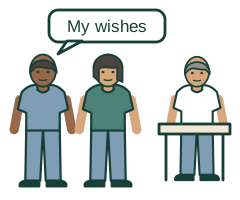
Your peer advocate might also have a learning disability.
You can want different things.
Your views matter.

Self-advocacy means speaking up for yourself.
You can have support to do this.
Group advocacy means people speaking up together.
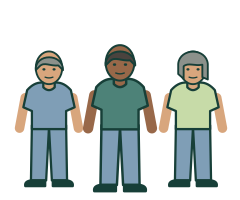
Some groups help people make friends.
Some help people speak up about their rights.
Ask what support the group offers.

A peer advocate could help you understand a letter.
They could help you prepare for a meeting.
Agree what you want help with.
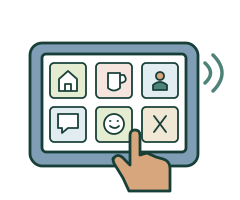
Tell the group how you communicate.
You can use pictures, signs or a communication device.
Ask for information you understand.

An advocate helps people hear your wishes.
Being your advocate does not let someone decide for you.
Having a learning disability does not mean you cannot decide.
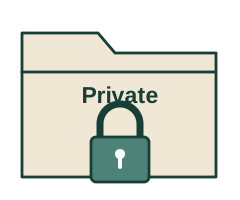
Ask who can see your information.
Agree what the advocate can share.
They may need to share information to help keep someone safe.
Ask them to explain this before you start.
The law gives some people a right to an advocate.
A peer group does not automatically replace this right.
Ask which advocacy rights apply to you.

Ask a local self-advocacy group about peer advocacy.
Check who can join.
Ask about any costs and support you need.

You might want to become a peer advocate.
Ask about paid jobs or volunteering.
Ask for training and support with difficult situations.

Check whether the support is helping you.
You can ask for changes or stop the support.
Ask how to complain if something is wrong.
What you can do next
The link helps you find groups in England.
Ask what peer advocacy each group offers.
Find a self-advocacy group Web pageThis link opens another website.
It may use harder words.
More useful links
- Learning Disability England: self-advocacy map Web page
Find groups in England. Check directly what support each group currently provides.
- People First: member organisations Web page
A UK network map of self-advocacy organisations. Look for groups in your part of England.
- Speakup: self, group and peer advocacy Web page
An organisation that explicitly describes peer advocacy. Contact it about current opportunities and availability.
- My Life My Choice: about the organisation Web page
A self-advocacy organisation run by adults with learning disabilities in Oxfordshire.
- Sunderland People First: getting involved Web page
Information about joining its self-advocacy work. Ask about current roles and support.
- NDTi: Advocacy Charter and Easy Read poster Web pageEasy Read
The principles of good independent advocacy, including accessible information.
- SCIE: learning from a peer-led support project Web page
Resources from the completed 2018–2021 Supporting Each Other Equals Power project; not a current referral service.
- BILD: Working Together Checker — Easy Read (PDF) PDFEasy Read
A free Easy Read checker about involving people with lived experience in a project or service. BILD calls this working together, or coproduction.
- BILD: the Buddies Project Web page
Peer befriending for people with learning disabilities and autistic people in mental health hospitals. Ask the ward or BILD whether the project is available locally. It is not an independent advocacy service.
- BILD: how to use the Working Together Checker — Easy Read (PDF) PDFEasy Read
Free Easy Read instructions to use alongside the checker.
These links open other websites.
They may use harder words.
Peer advocacy: helping each other speak up
Support from people with shared experiences, finding a group and becoming a peer advocate.
Peer advocacy and learning-disability-led groups · England
What peer advocacy means
A peer is someone with relevant experiences in common with you. For example, another person with a learning disability may understand barriers you face when dealing with services. Peer advocacy uses that understanding to help you express your wishes and exercise your rights. It may involve trained paid workers or volunteers. Shared experience can help build trust, but does not mean everyone has the same needs, culture, opinions or choices.
Self-advocacy, group advocacy and other peer support
Self-advocacy means expressing your own views and standing up for your rights, with support if wanted. Group advocacy brings people together around shared concerns, such as inaccessible transport. Peer advocacy helps another person have their say. These activities can overlap. Befriending focuses on company and friendship. Peer support within a mental health service can focus on wellbeing and recovery. Neither automatically includes independent advocacy. Ask what the particular role covers and whether it is independent of the service involved.
Help with a meeting, letter or everyday decision
You might practise asking for more support, prepare questions about a care plan or work out what a confusing letter means. With your agreement, a peer advocate could attend a meeting, remind you of your questions or help explain your views. Afterwards, check what was agreed, who will act and by when. A useful starting point is one change you want: for example, choosing when you go out. Ask for specialist advice when the issue needs it.
Support that fits your communication
Explain how you communicate. Ask about pictures, communication devices, signing, an interpreter, breaks or a quiet room. Ask for understandable information and time to consider it. Your views matter without a confident speech. A group should make room for different communication methods, rather than letting its most confident speakers decide for everyone.
Your wishes and decisions remain yours
Agree what your peer advocate may do and who they may contact. Being your advocate does not give someone legal authority to consent to treatment, sign a contract or control your money. A learning disability does not automatically mean you cannot decide. Capacity concerns a particular decision at a particular time, after support to decide. If someone cannot instruct an advocate, seek suitably skilled advocacy that explores their communication, preferences and rights. Other people should not simply choose what they prefer.
Privacy, sharing information and keeping safe
Before sharing personal information, ask what is recorded, where it is kept and who can see it. Agree what may be shared and with whom. An advocate should explain confidentiality and its limits, including safeguarding concerns or a legal requirement to disclose. Group members should agree privacy rules, but a group cannot promise that every member will keep information private. You can discuss sensitive matters separately.
Clear boundaries and independence
Ask who supports the advocate and what happens if they know someone involved in your complaint. A conflict of interest means another relationship or interest could interfere with supporting you. The organisation should address this, sometimes by finding someone else. Advocacy should not pressure you into agreeing with staff or joining a campaign. Agree contact times and what help is outside the role. Do not share bank passwords or PINs, or lend money as part of an advocacy arrangement.
Keep your right to statutory advocacy
Statutory advocacy means advocacy provided because the law requires it. Care Act advocacy generally applies to relevant care and safeguarding processes when you have substantial difficulty being involved and no appropriate person to support you; exceptions also exist. Mental capacity, mental health and NHS complaints advocacy have different rules. Attending a peer group does not automatically meet those duties. Ask the council or NHS to consider the correct entitlement. A peer advocate could undertake a statutory role only if the legal and service requirements for that role are met.
Find learning-disability-led groups in England
Learning Disability England links to a searchable map of self-advocacy groups. People First also lists member organisations. Speakup explicitly describes self, group and peer advocacy. My Life My Choice is a user-led self-advocacy organisation in Oxfordshire. Sunderland People First supports self-advocates in the North East. These are examples of different organisations, not a promise of individual advocacy everywhere. Ask each group what it currently offers, who can join, the area covered and whether it supports your particular issue.
Questions before you start
Ask whether you can approach the group yourself, whether there is a waiting list and whether any fees or activity costs apply. Check travel, online access, support-worker arrangements and any expenses available. Ask who will help if your usual advocate is away. Agree what success would look like and when you will review progress. If you face a legal deadline or urgent care decision, tell the organisation immediately and seek the appropriate specialist help alongside peer support.
Becoming a peer advocate
You can ask a self-advocacy organisation about paid work, volunteering or supported ways to begin. Roles vary; joining a group is not automatically a job offer. Ask for an accessible role description and training in listening, rights, communication, confidentiality, safeguarding and boundaries. You should have someone experienced to discuss the work with, manageable hours, breaks and emotional support after difficult situations. Agree pay or expenses and access support before starting. If you receive benefits, check how a particular paid role could affect them.
Review the support or raise a concern
Check whether your views are being represented accurately. You can ask for a different approach, request another advocate or end the arrangement. Ask the organisation how to complain and how to get support with doing so. A quality mark is not a guarantee that nothing will go wrong. If there is abuse, pressure or a threat to your safety, use safeguarding or emergency help as appropriate; you do not have to wait for the advocacy complaint to finish.
Peer befriending in mental health hospitals
BILD’s Buddies Project offers peer befriending to people with learning disabilities and autistic people detained in mental health hospitals. Trained volunteers have their own experience of detention. This can provide a connection with someone who understands hospital life. It is a different role from independent advocacy and does not replace any right to a statutory advocate. Ask the ward or BILD whether the project is available through the service; the information page does not guarantee a place.
Words you could use
“I would like support from someone with similar experiences. What peer advocacy is available, and do I also have a legal right to an independent advocate?”
More useful links
- Learning Disability England: self-advocacy map Web page
Find groups in England. Check directly what support each group currently provides.
- People First: member organisations Web page
A UK network map of self-advocacy organisations. Look for groups in your part of England.
- Speakup: self, group and peer advocacy Web page
An organisation that explicitly describes peer advocacy. Contact it about current opportunities and availability.
- My Life My Choice: about the organisation Web page
A self-advocacy organisation run by adults with learning disabilities in Oxfordshire.
- Sunderland People First: getting involved Web page
Information about joining its self-advocacy work. Ask about current roles and support.
- NDTi: Advocacy Charter and Easy Read poster Web pageEasy Read
The principles of good independent advocacy, including accessible information.
- SCIE: learning from a peer-led support project Web page
Resources from the completed 2018–2021 Supporting Each Other Equals Power project; not a current referral service.
- BILD: Working Together Checker — Easy Read (PDF) PDFEasy Read
A free Easy Read checker about involving people with lived experience in a project or service. BILD calls this working together, or coproduction.
- BILD: the Buddies Project Web page
Peer befriending for people with learning disabilities and autistic people in mental health hospitals. Ask the ward or BILD whether the project is available locally. It is not an independent advocacy service.
- BILD: how to use the Working Together Checker — Easy Read (PDF) PDFEasy Read
Free Easy Read instructions to use alongside the checker.
These links open other websites.
They may use harder words.
Where the information comes from
Links checked 1 November 2026.
These links open other websites.
They may use harder words.
- SCIE: commissioning independent advocacy Web page
Describes peer advocacy through shared experience and trained, supported workers or volunteers.
- Local Government Association: commissioning self-advocacy Web page
Published June 2025. Learning-disability-led groups, collective voice and local variation.
- Local Government Association: commissioning advocacy Web page
Peer and self-advocacy, preparation, confidence and support at meetings.
- NICE NG227: advocacy recommendations Web page
Communication access, person-led advocacy, confidentiality and safeguarding.
- Care and support statutory guidance: chapter 7 Web page
Eligibility, appropriate support, exceptions and requirements for Care Act advocates.
- NHS: Mental Capacity Act Web pageFuller information
Support to decide and capacity for a particular decision at the relevant time.
- NDTi: Advocacy Code of Practice Web page
Role boundaries and conflicts. The hosted 2014 code is being updated; current law takes precedence.
- NDTi: concerns about an advocacy service Web page
Feedback and complaint routes. A quality mark is not a regulatory complaints service.
- South West London and St George's NHS Trust: peer support Web page
An example of mental health peer support, which has a different remit from independent advocacy.
- SCIE: peer-led project evaluation Web page
Learning from a completed project about practical support, peer workers and emotional support.
- BILD: Working Together Checker — Easy Read (PDF) PDFEasy Read
A free Easy Read checker about involving people with lived experience in a project or service. BILD calls this working together, or coproduction.
- BILD: the Buddies Project Web page
Peer befriending for people with learning disabilities and autistic people in mental health hospitals. Ask the ward or BILD whether the project is available locally. It is not an independent advocacy service.
- BILD: Working Together Checker and instructions Web page
Free standard-text and Easy Read versions of the 2025 checker and its instructions. Use the instructions to help review a project or service together.
A page for you to fill in
You can type your answers and download a copy.
You can also print a page to write or draw on.
Someone you trust can help you.