Health · England
Going into a mental health hospital
Your browser or device provides the reading voice.
This guide is about mental health hospitals in England.
Some specialist hospitals are called assessment and treatment units.
Ask why hospital care is being suggested.
Ask what treatment you need there.

Ask what help could be provided at home.
Having a learning disability does not mean you need hospital.

Staff should check your physical health too.
Pain or illness can change how you feel and behave.

Ask what law is being used for your stay.
Ask whether you can leave.
Ask for help to understand the answer.

Explain how you communicate and show pain.
Ask for your communication aid and information you understand.

Tell staff about noise, light and other sensory needs.
Ask for changes that help you feel safe.
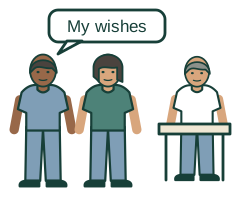
Ask for an advocate to help you speak up.
Ask for legal advice about being kept in hospital.
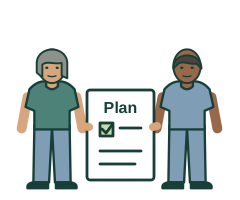
Ask for a review of your care and treatment.
C(E)TR means Care, Education and Treatment Review.
This review can recommend changes to your care.

Keep contact with people who matter to you.
Ask staff to explain any restrictions.
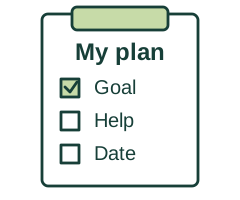
Plan your return home from the start.
Agree what support you will need.
Ask who will arrange each part.

Ask when you should be able to leave hospital.
Ask for a meeting if your discharge is delayed.
Peer support in hospital
It may help to talk to someone who has been in a mental health hospital.
BILD has a peer befriending project called Buddies.
Ask your ward whether it is available.
A buddy has a different role from an independent advocate.
What you can do next
Use the worksheet to prepare for a hospital meeting.
Someone you trust can help you record the answers.
Read the NHS inpatient care guide Web pageThis link opens another website.
It may use harder words.
More useful links
- NHS: Mental Health Act Easy Read factsheets Web pageEasy Read
Download accessible explanations about detention, treatment, advocacy and leaving the ward.
- NHS England: inpatient care for learning disability and autism Web page
Detailed guidance about admission purpose, adjustments and discharge.
- Government: discharge from mental health inpatient settings Web page
Planning support, accommodation, funding and responsibilities.
- NHS England: C(E)TR and Dynamic Support Register guidance Web page
Reviews and coordinated support before, during and after admission.
- BILD: the Buddies Project Web page
Peer befriending for people with learning disabilities and autistic people in mental health hospitals. Ask the ward or BILD whether the project is available locally. It is not an independent advocacy service.
- BILD: Homes Not Hospitals Web page
Information about improving community support, helping people leave hospital and preventing unnecessary admissions. Includes routes to free webinars and separate professional development.
These links open other websites.
They may use harder words.
Assessment and treatment units and mental health hospital stays
Understand why admission is proposed, community alternatives, your rights and planning to return home.
Mental health inpatient care · England
What is an assessment and treatment unit?
An assessment and treatment unit, often called an ATU, is a specialist inpatient service. Some support people with a learning disability and autistic people. Other people receive inpatient mental healthcare on a general or specialist psychiatric ward. Names vary. Ask what the service actually provides, which clinicians will help and what needs it can meet. Learning disability and autism are not themselves mental illnesses. A person may also have a mental health condition.
Ask why hospital is needed
NHS England guidance says admission should have a specific mental health assessment or treatment purpose that requires inpatient care. A diagnosis of learning disability or autism alone is not a reason for admission. Ask for the purpose, expected benefits, possible harms and signs that hospital care is no longer needed. Admission should be a last resort when appropriate community support cannot safely meet the need. A care provider giving notice does not, by itself, establish a clinical reason for psychiatric admission. Urgent assessment or treatment should not be delayed while meetings are arranged.
Explore help in the community
Ask the community learning disability team and mental health crisis service about intensive support, home treatment, adapted psychological support and extra support at home. Review staffing skills, communication, housing, sensory needs and support for family carers. Ask which options have been tried, why they were unsuitable and what could change. Use the urgent health help guide when someone needs urgent assessment. Community alternatives must be adequate and safe for that person; they should not simply transfer an unsafe burden onto family members.
Look for pain and unmet needs
A change in behaviour can communicate distress or physical illness. Ask for assessment of pain, constipation, infection, epilepsy, sleep, eating and drinking, medicine effects and other physical health needs. Consider trauma, abuse, sensory overload and communication barriers alongside mental health. Record the person’s usual presentation and what has changed. Do not assume all distress is psychiatric or part of a learning disability. Hospital teams should maintain existing physical healthcare and respond promptly to deterioration.
Request a Care (Education) and Treatment Review
Ask the ICB or responsible commissioner for a Care (Education) and Treatment Review, also called a C(E)TR. This brings independent clinical and lived-experience input to questions about safety, care, hospital need and discharge barriers. Ask about the Dynamic Support Register and what consent or capacity process applies. A review should normally happen before a planned admission. Urgent situations have emergency arrangements and reviews after admission. A C(E)TR makes recommendations; it does not itself authorise detention or order discharge. Ask who owns each action and when it will happen.
Understand consent and your legal status
Ask whether admission is voluntary, under a Mental Health Act section, or subject to another legal authority. Ask for the exact power and an explanation you can understand. An adult’s capacity is assessed for the particular decision, with communication support; a diagnosis does not establish incapacity. Family agreement alone does not authorise detaining an adult. An informal patient can generally leave, but staff may use a lawful holding or detention power where its conditions are met. Ask for specialist advice if someone is being stopped from leaving without a clear legal explanation.
Make support fit the person
Take a communication or hospital passport and record how the person expresses pain, agreement, refusal and distress. Ask for familiar communication aids, predictable routines, accessible information, time to process questions and sensory adjustments. Explain important foods, cultural needs, interests and relationships. Ask for a named nurse and access to relevant learning disability and therapy expertise. The person should help shape care; behaviour plans should not punish disability-related needs or demand compliance for its own sake.
Keep contact and question restrictions
Agree visits, private conversations, phone or video contact and support to keep relationships and activities. Ask for reasons, legal authority and review dates for any restriction, including restrictions on leaving, contact or belongings. Care should use the least restrictive lawful approach. Ask how staff prevent distress and reduce restraint, seclusion or segregation. Record concerns and raise possible abuse through safeguarding. An independent mental health advocate can support eligible patients. A mental-health solicitor can explain detention challenges and deadlines.
Start the discharge plan immediately
From admission, ask for a named discharge coordinator, an expected discharge date and an agreed destination. Plan housing, trained support staff, medicines, physical healthcare, communication, meaningful activities and crisis support. Include the person and the people they want involved. Arrange introductions and transition visits where appropriate. Ask whether section 117 aftercare applies and who will arrange funding. A funding dispute should be escalated between organisations rather than left for the person to resolve.
If discharge is delayed
Ask for a meeting with the hospital, commissioner, council and community team. Request written reasons for each delay, a named person responsible and a completion date. Ask what is preventing the person leaving when they no longer need hospital treatment. Request a C(E)TR or follow-up of its recommendations, advocacy and an accessible care plan. Use the complaints routes for unresolved service failures. A complaint does not replace an urgent legal challenge to detention.
Children and young people
The same focus on suitable community support and early discharge planning matters for children. Ask for age-appropriate care, education during admission and coordinated planning with children’s services and the school or college. Ask about the ICB’s learning disability and autism keyworker service and a Care, Education and Treatment Review. Consent, parental responsibility and detention rules need individual advice; adult consent rules should not simply be applied to every child.
Use the hospital meeting worksheet
The worksheet below is an original Clearer conversation aid. Take it to admission or review meetings and record answers, names and dates. It is not an official clinical assessment or discharge plan. Share only the information needed for the meeting.
Ask about peer support and community-focused resources
BILD’s Buddies Project connects some people detained in mental health hospitals with trained peer volunteers who have experienced detention themselves. Ask the ward or BILD about local availability and how to take part. Peer befriending is different from independent advocacy and does not replace it. BILD’s Homes Not Hospitals work shares learning about community support, discharge and preventing unnecessary admission. These resources do not replace an individual care plan or a route to challenge a detention decision.
Words you could use
“Please explain why inpatient care is needed, the community options considered, my legal status and the plan for returning home. Please arrange advocacy and a C(E)TR where appropriate.”
More useful links
- NHS: Mental Health Act Easy Read factsheets Web pageEasy Read
Download accessible explanations about detention, treatment, advocacy and leaving the ward.
- NHS England: inpatient care for learning disability and autism Web page
Detailed guidance about admission purpose, adjustments and discharge.
- Government: discharge from mental health inpatient settings Web page
Planning support, accommodation, funding and responsibilities.
- NHS England: C(E)TR and Dynamic Support Register guidance Web page
Reviews and coordinated support before, during and after admission.
- BILD: the Buddies Project Web page
Peer befriending for people with learning disabilities and autistic people in mental health hospitals. Ask the ward or BILD whether the project is available locally. It is not an independent advocacy service.
- BILD: Homes Not Hospitals Web page
Information about improving community support, helping people leave hospital and preventing unnecessary admissions. Includes routes to free webinars and separate professional development.
These links open other websites.
They may use harder words.
Where the information comes from
Links checked 1 November 2026.
These links open other websites.
They may use harder words.
- NHS England: acute mental health inpatient care Web page
Purpose of admission, alternatives, holistic assessment, specialist input and timely discharge.
- Government: mental health inpatient discharge Web page
Joint planning, family involvement, education, housing and continuity.
- NHS England: autism-informed inpatient care Web page
Sensory and communication adjustments; understanding distress and avoiding compliance-based approaches.
- NHS England: Dynamic Support Register and C(E)TR guidance Web page
Review pathways, community support and urgent arrangements.
- NHS England: C(E)TR policy and guide PDF
C(E)TR recommendations do not determine admission or discharge and must not delay urgent care.
- Mental Health Act Code of Practice Web page
Least restrictive care, consent, capacity, advocacy and the use of legal powers. Read with commenced amendments.
- NHS: Mental Health Act Web page
Hospital status, detention, treatment and ways to challenge decisions.
- BILD: the Buddies Project Web page
Peer befriending for people with learning disabilities and autistic people in mental health hospitals. Ask the ward or BILD whether the project is available locally. It is not an independent advocacy service.
- BILD: Homes Not Hospitals Web page
Information about improving community support, helping people leave hospital and preventing unnecessary admissions. Includes routes to free webinars and separate professional development.
A page for you to fill in
You can type your answers and download a copy.
You can also print a page to write or draw on.
Someone you trust can help you.