Rights & choices · England
Getting help from a solicitor
Your browser or device provides the reading voice.
A solicitor gives legal advice.
They can help explain your choices and rights.

Choose a solicitor
Different solicitors help with different problems.
Ask whether they can help with your problem.

Check the solicitor and firm on the official register.
You can ask someone to help you check.

Tell the solicitor about important dates straight away.
Ask whether they have agreed to take your case.

Check costs and free help
Ask what the work will cost.
Ask whether you can get help to pay.

Legal aid helps pay for some legal work.
The rules depend on the problem and your circumstances.
Free legal advice is available for police interviews.
Ask the police to arrange it.
Later court work may have different funding rules.

Prepare and ask for support
Bring important letters and a list of questions.
Explain what you want to happen.

Tell the solicitor how you communicate.
Ask for words and information you understand.
Ask for more time or breaks if needed.

You can ask someone you trust to support you.
Agree what information can be shared with them.

Decisions and next steps
Ask about your choices and the possible risks.
Ask questions before agreeing to a plan or signing something.

Write down what everyone has agreed to do.
Ask when you will hear from the solicitor again.
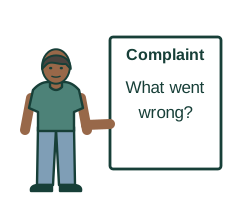
You can complain if the service is poor.
Start with the firm.
Ask about the Legal Ombudsman if it stays unresolved.
What you can do next
The official guide explains ways to find legal help.
Use the worksheet to prepare for a meeting.
Find legal advice Web pageThis link opens another website.
It may use harder words.
More useful links
- SRA: Solicitors Register Web page
Check the solicitor, firm and regulatory record.
- GOV.UK: check legal aid Web page
Free eligibility checking, accessible contact options and other advice sources.
- Legal Ombudsman: complain to your service provider Web page
Firm first, escalation and time limits for poor-service complaints.
These links open other websites.
They may use harder words.
Using a solicitor: finding advice, costs and accessible support
How to find appropriate legal help, understand costs, prepare for meetings and ask for accessible communication.
England · Legal advice and representation
What a solicitor can do
A solicitor is a regulated legal professional. They can explain the law, advise on options, write letters, negotiate and arrange representation where needed. The help depends on what you agree they will do. Different solicitors specialise in different subjects, such as criminal law, family cases, community care, housing or discrimination. A solicitor is different from a support worker, independent advocate or intermediary. You may need more than one kind of help.
Find someone with the right experience
Use the official legal-advice routes and check the solicitor and firm on the Solicitors Regulation Authority register. Ask about experience with your type of problem and with people who have learning disabilities or communication needs. Say immediately if there is a hearing, eviction, police interview or other urgent deadline. A first enquiry does not mean a solicitor has accepted your case. Ask for confirmation of what they will do and when.
Free advice when police suspect an offence
Ask police to arrange free independent legal advice for a police interview, including a voluntary interview under caution. This police-station scheme is not means-tested. You can request the duty solicitor, who is independent of the police, or an eligible solicitor you know. If you privately instruct someone outside the free arrangements, check charges. Police-station advice does not automatically mean all later court work is free; ask about criminal legal aid for representation.
Check other ways to pay for advice
For other work, ask whether legal aid covers the type of case and whether you meet its conditions. Financial rules usually apply, but exceptions exist. The adviser should check the specific case rather than assume a learning disability or receiving benefits settles eligibility. Ask about any contribution or repayment. You can also ask about a free advice clinic, pro bono help, union assistance or legal-expenses insurance where relevant. Availability and what each service covers vary.
Get the agreement and costs explained
Before agreeing work, ask for written information about the service, who will do it and how fees are calculated. Ask whether VAT, court fees, experts and other expenses are included. Check what a fixed fee covers, when extra charges could arise and how you will be told. If a conditional or “no win, no fee” arrangement is offered, ask what you might still pay and what happens if you stop or lose. Agree a budget and review points; do not assume every first appointment is free.
Ask for communication and access support
Tell the firm what makes legal information difficult and what helps. You might need short explanations, pictures, accessible documents, an interpreter, extra time or breaks. Ask for one issue at a time and a short written record of actions. Solicitors must consider reasonable adjustments for disability. A diagnosis does not by itself mean you cannot give instructions. Ask the solicitor to support your understanding and explain any concern about capacity for the particular legal decision.
Prepare without making a perfect bundle essential
Bring the key letter or decision, important dates, a short account of what happened and the outcome you want. List the questions you need answered. Ask beforehand what documents, identification or financial evidence are needed. Mark anything you are unsure about rather than guessing. Do not delay an urgent request because you cannot yet organise every document. Tell the solicitor which papers are missing.
Agree who can be involved
You can ask to have someone you trust support you, but agree their role and what information the solicitor can share. The solicitor needs to know who the client is and whose instructions they are taking. A relative, advocate or person paying the bill does not automatically control an adult’s case. Confidential legal advice has particular protection; ask before sharing it more widely. If formal decision-making arrangements are needed, the solicitor should explain the relevant rules.
Understand options and keep track
Ask the solicitor to explain the strengths, risks, possible outcomes and alternatives, including ways to resolve matters without court where appropriate. Ask about deadlines and what you need to do. Keep a record of agreed actions, documents sent and the next contact date. If advice is unclear, ask them to explain again in a different way. Ask for time to understand a proposed settlement or document before agreeing it, while checking any deadline.
Check unexpected messages and payment requests
Criminals sometimes copy a real firm’s name or email style. Verify unexpected messages or changed bank details using contact details you already know or have independently checked. Do not rely only on the phone number or link in the unexpected message. If you think money has gone to a scam, contact your bank urgently and use the scams guide. The SRA register helps verify a solicitor; it cannot prove that every message using their name is genuine.
If the service is poor
Tell the firm what went wrong and what would put it right. Ask for its complaints procedure and an accessible response. If unresolved, the Legal Ombudsman may consider poor service, including communication, delays or fees, within its rules and time limits. You usually approach it after the final response or after eight weeks without resolution. Serious professional misconduct, such as dishonesty, may instead or also need an SRA report. These routes do not replace urgent action in your underlying case.
If you want to change solicitor
Ask what work remains, any approaching deadlines, outstanding fees, transfer of papers and effects on legal aid or insurance. Confirm that a new solicitor has accepted the work before assuming they are protecting a deadline. Get independent advice if costs or a serious dispute make a change difficult. A complaint or request to transfer does not automatically stop a court timetable.
Words you could use
“Please explain my legal options in a way I understand. What will you do, what might it cost, what funding is available, and which dates must I act by?”
More useful links
- SRA: Solicitors Register Web page
Check the solicitor, firm and regulatory record.
- GOV.UK: check legal aid Web page
Free eligibility checking, accessible contact options and other advice sources.
- Legal Ombudsman: complain to your service provider Web page
Firm first, escalation and time limits for poor-service complaints.
These links open other websites.
They may use harder words.
Where the information comes from
Links checked 1 November 2026.
These links open other websites.
They may use harder words.
- GOV.UK: find legal advice Web page
Finding an adviser with relevant expertise and considering options early.
- SRA: Solicitors Register Web page
Check the solicitor, firm and regulatory record.
- SRA: what to expect from a solicitor Web page
Information, confidentiality, costs and reasonable adjustments.
- SRA: understanding costs Web page
Written cost information, budgets and options for help with costs.
- SRA: getting the best from a solicitor Web page
Clear instructions, preparation, records and agreed actions.
- SRA: questions about legal services Web page
Service complaints and regulatory concerns have different routes.
- SRA: bogus solicitors Web page
Verify identity and contact details rather than trusting an unexpected approach.
- GOV.UK: police-station legal advice Web pageFuller information
Free independent advice, the duty solicitor and changing an initial refusal.
- GOV.UK: voluntary interview rights Web pagePlain-text official guidance
Free advice, leaving unless arrested, and interview safeguards.
- GOV.UK: legal aid Web page
Which problems may be covered and how to check eligibility.
- GOV.UK: legal aid financial eligibility Web page
Financial assessment, exceptions and possible contributions.
- GOV.UK: check legal aid Web page
Free eligibility checking, accessible contact options and other advice sources.
- GOV.UK: criminal legal aid Web page
Police advice and the separate question of legal aid for court representation.
- Legal Ombudsman: complain to your service provider Web page
Firm first, escalation and time limits for poor-service complaints.
A page for you to fill in
You can type your answers and download a copy.
You can also print a page to write or draw on.
Someone you trust can help you.